History
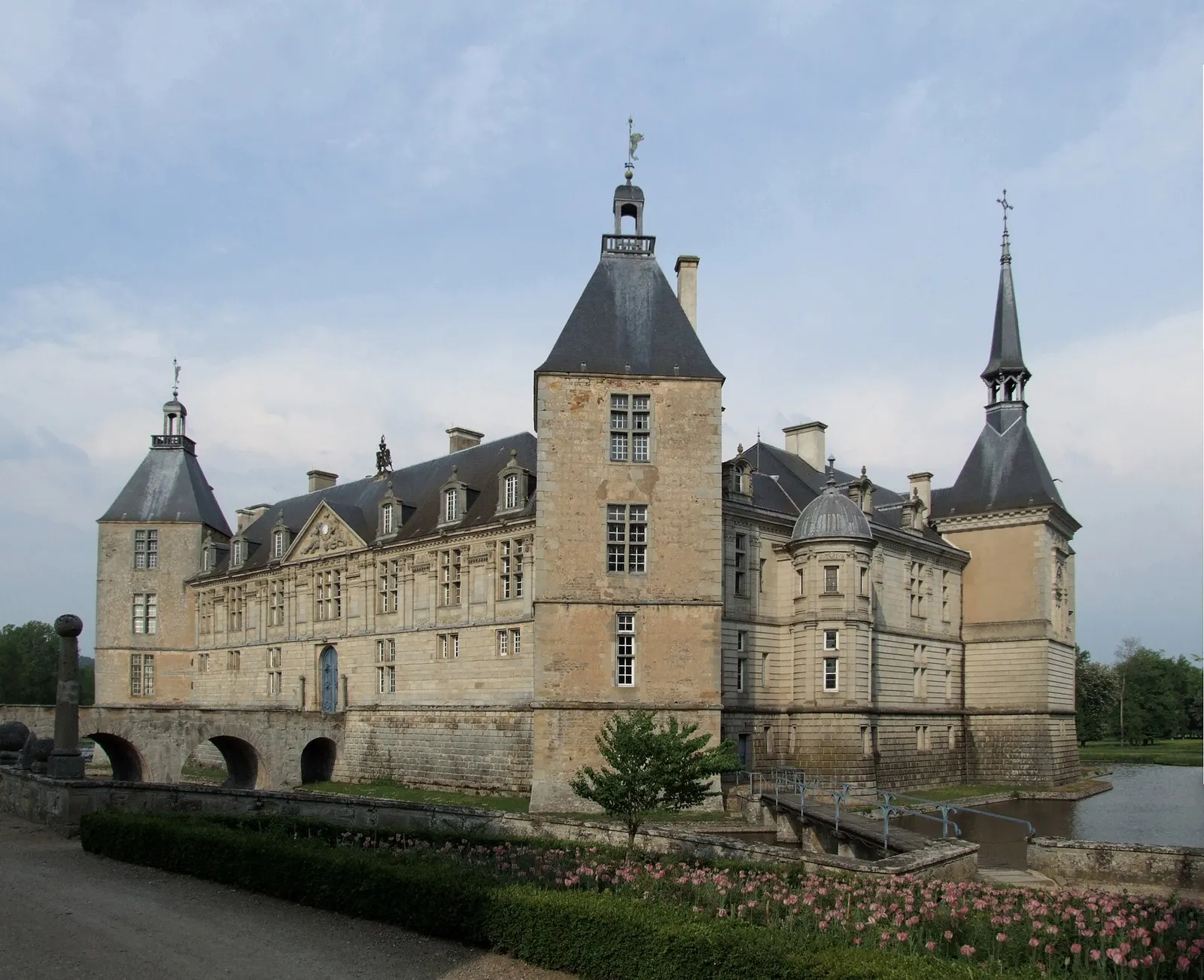
Gaspard de Saulx-Tavannes, a marshal of France, commissioned the château around 1570, to designs by the architect Nicolas Ribonnier. Building went on for half a century and was finished between 1616 and 1621. The new house was built in front of an older medieval residence, and parts of its walls still survive behind one of the courtyard façades, a reminder of the earlier castle.
In 1714 Claude de Morey bought the estate and rebuilt the north façade and its terraces. The château then passed to the Mac-Mahon family, who still own it. Patrice de Mac-Mahon was born here in 1808. He became a Marshal of France, was made Duke of Magenta after his victory there in 1859, and served as President of the Republic from 1873 to 1879.
In the 19th century the interiors were largely remodelled, and a landscape garden was laid out around 1890. The family also fitted out a small private theatre in the north outbuildings. Later used as a workshop, it was restored and reopened in 2024. In 1995 the whole estate was classified as a historic monument, from the moats, bridges and chapel to the theatre, stables, orangery, farm, kitchen garden and park.
Architecture
Four wings enclose a central courtyard, with square towers set at an angle at each corner, all surrounded by moats fed by the Drée. The courtyard façades are fully Renaissance, with rusticated arches below, Ionic pilasters, niches and carved heads above. A stone bridge leads to the west front, and the park holds a chapel, stables, an orangery and a dovecote.