Opening hours and tickets
- Opening hours
- 1 April to 5 November: every day, 10:00 to 12:30 and 14:00 to 18:30
- Admission
- Adults €6.50, reduced €3
- Booking
- Not needed
Checked on on the official site.
Salt springs used for 4,000 years below Vézelay, with Neolithic oak well casings and Gallo-Roman baths.
At the Fontaines Salées, below Vézelay, you walk among salt springs people have used for more than 4,000 years. Neolithic oak well casings, the foundations of Gallo-Roman baths and a Gaulish sanctuary lie in the open air, with a discovery centre to explain them. Allow an hour or so; it suits families and history lovers, and children aged 8 to 12 have a game trail.
The visit has two parts. In the discovery centre, lit panels with texts and drawings trace 4,300 years of history, and models, plans and finds from the excavations explain what people did here. Outside, you walk freely among the remains with a plan-guide, available in English, German, Dutch, Italian and Spanish: the pools of the baths, the sacred enclosure around a spring and the hollowed oak trunks still sunk in the sand. The game trail runs on the free Guidigo app.
About 4,300 years ago, at the end of the Neolithic, people sank hollowed oak trunks into the sand to catch the salty water, and some of these casings are still in place. The water holds 9 to 12 grams of salt per litre, and from the Iron Age it was boiled to make salt. The Gauls built a circular sanctuary around one of the springs. After the Roman conquest a sanctuary with baths grew up here, enlarged in the 2nd century with heated rooms and an exercise court.
Invaders destroyed the baths in the second half of the 3rd century, but salt making went on in the ruins. The salt tax of the Middle Ages put an end to it, and the site disappeared under silt and earth. In 1934 the medievalist René Louis, looking for a battlefield from the epic of Girart de Roussillon, began excavating and uncovered the baths. The site was protected as a historic monument in 1936 and 1942, and a new visitor centre by the architect Jean-Paul Philippon opened in 2017.
Pair it with Vézelay: the basilica in the morning, lunch on the hill, then the Gothic church of Saint-Père and the Fontaines Salées in the afternoon, with a glass at Domaine La Croix Montjoie on the way back. Parking is free, the site is accessible to wheelchair users, and dogs on a lead are welcome; guided tours can be booked.
Checked on on the official site.
From Beaune, a day out: 1 h 35 each way by road (119 km). There and back, your driver waiting up to 3 hours: €580 for the car, up to 4 guests.
From Paris (Charles de Gaulle, Orly or your address): about 2 h 18 from central Paris, 2 h 48 from Charles de Gaulle; €750 for the car, and the same fare back for your flight.
From Lyon airport and the stations too: all fares Book this ride
What to combine with Site archéologique des Fontaines Salées on the same day, nearest first.
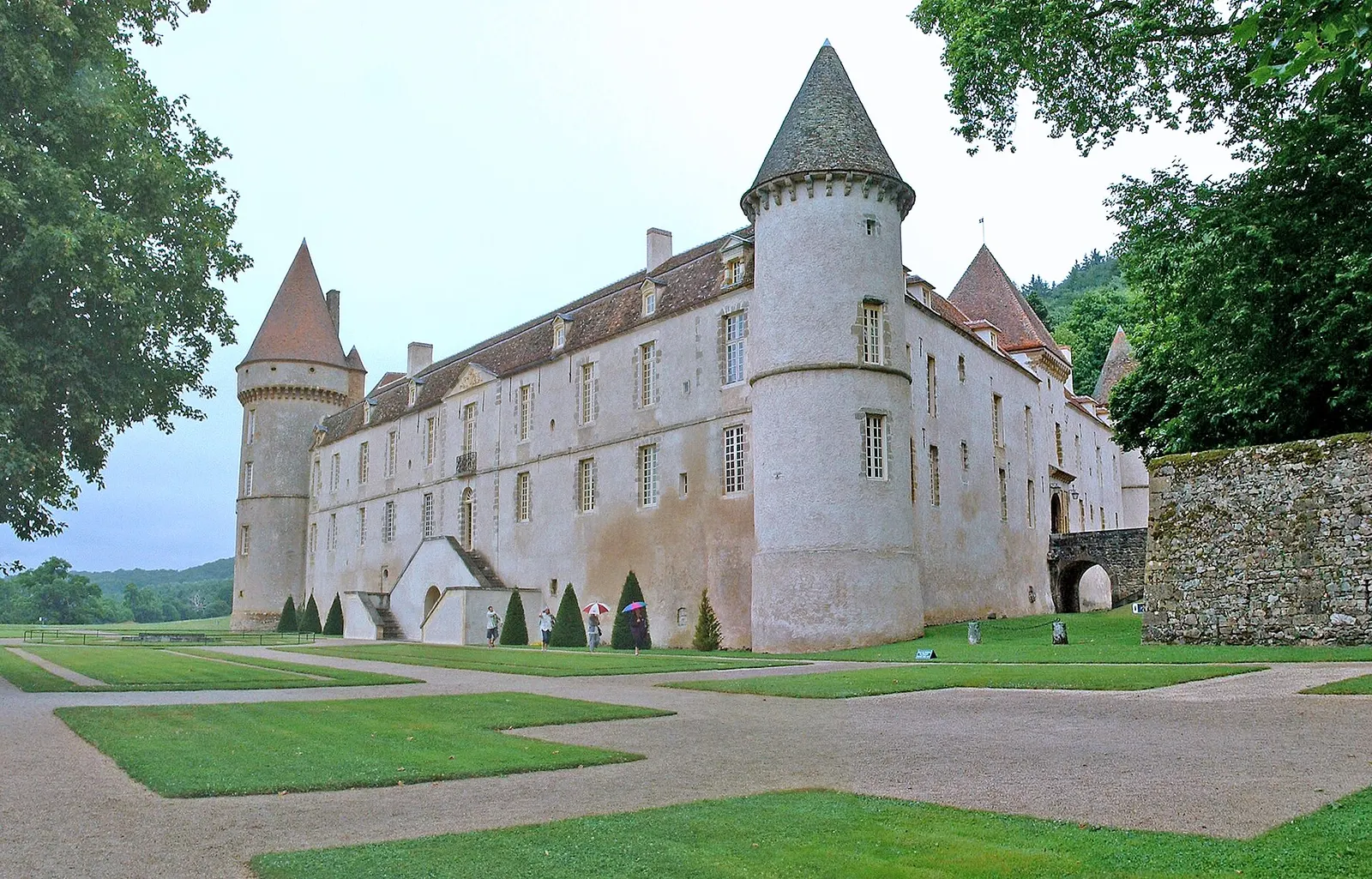
The castle Vauban bought with a royal reward, and turned into a workshop for his military engineers.
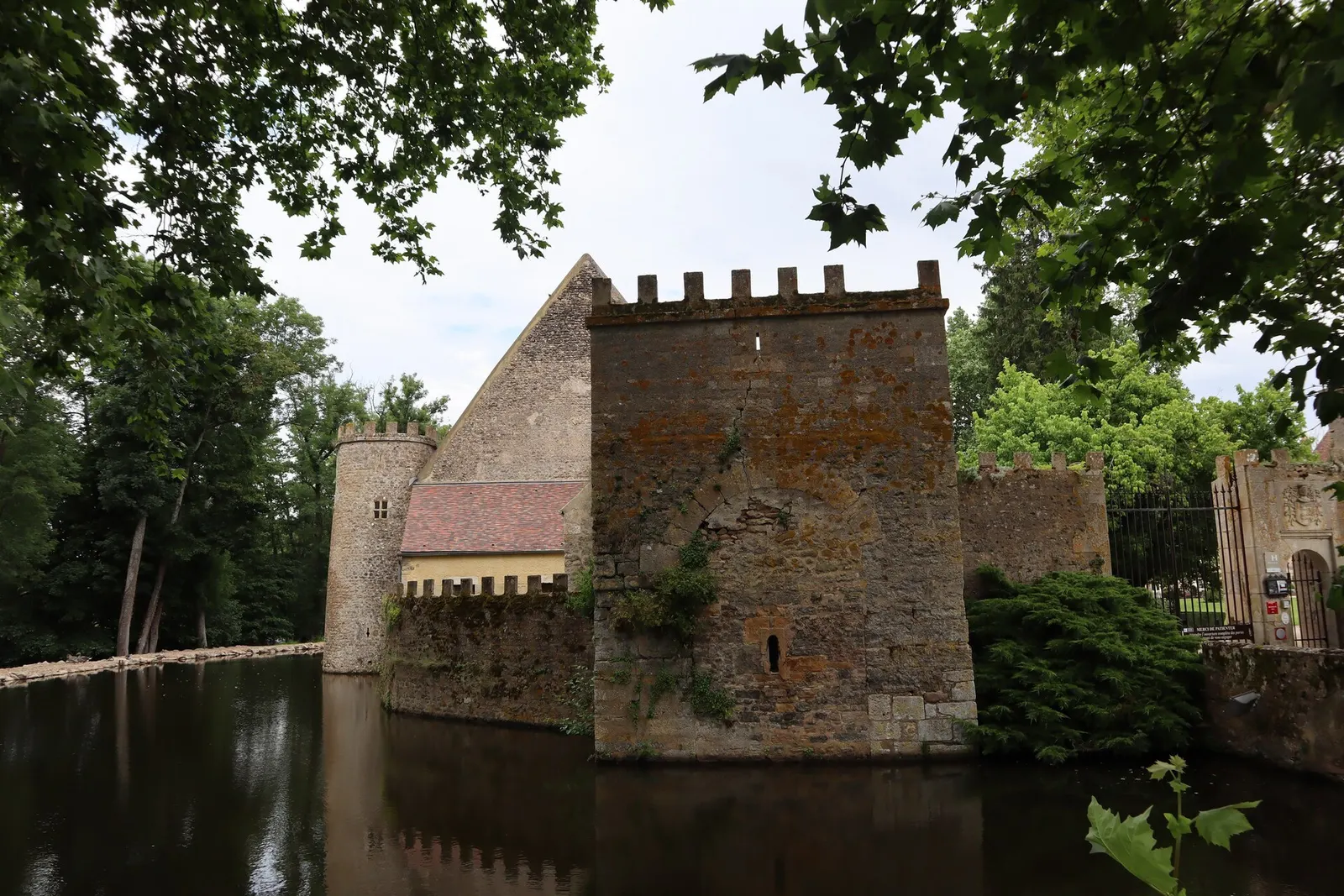
8 km awayA moated castle with a 19-metre keep near Avallon, now a five-star hotel of 16 rooms with a starred restaurant.
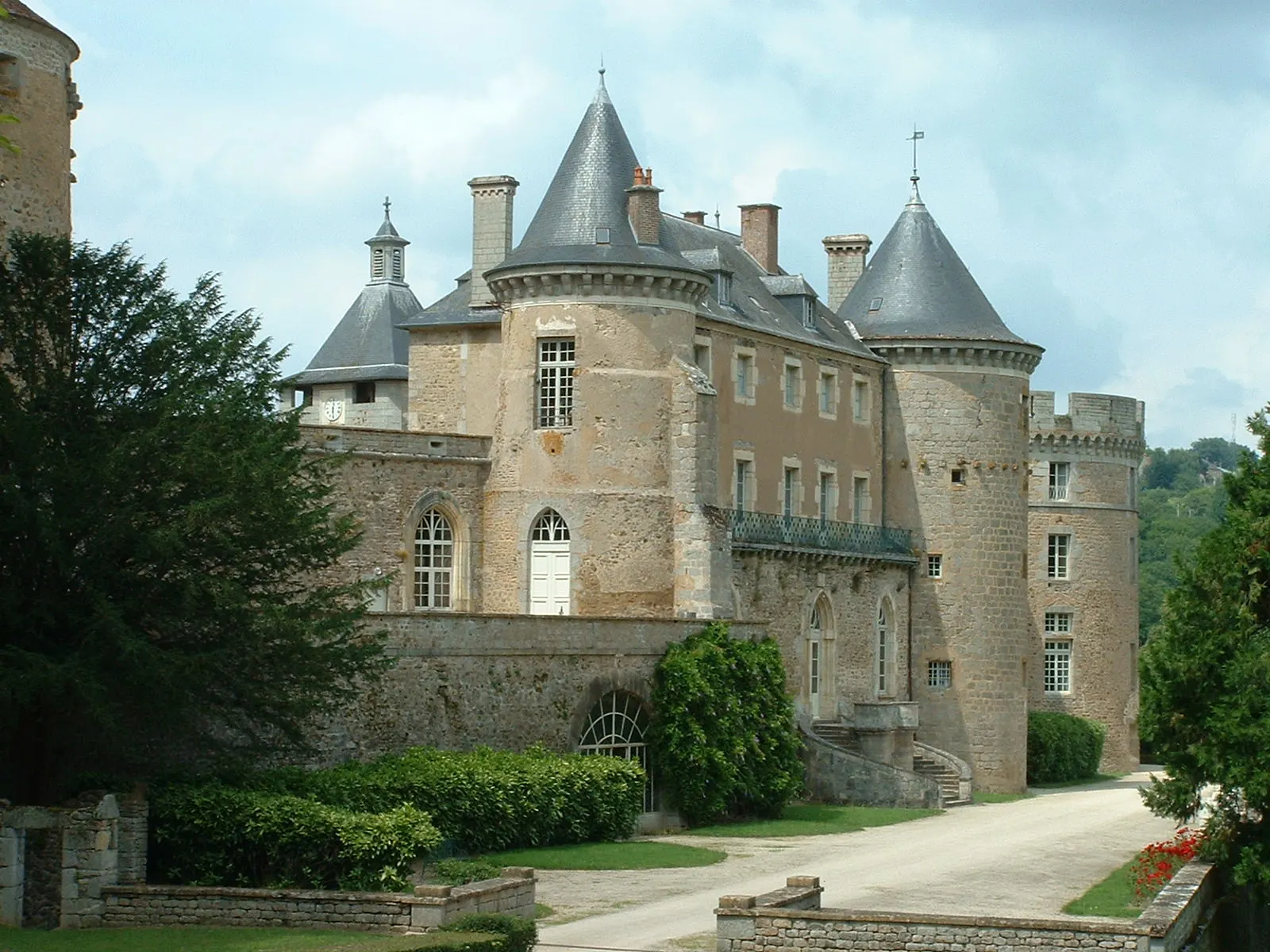
8 km awayA towered fortress at the gateway to the Morvan, still lived in by the family of its name.
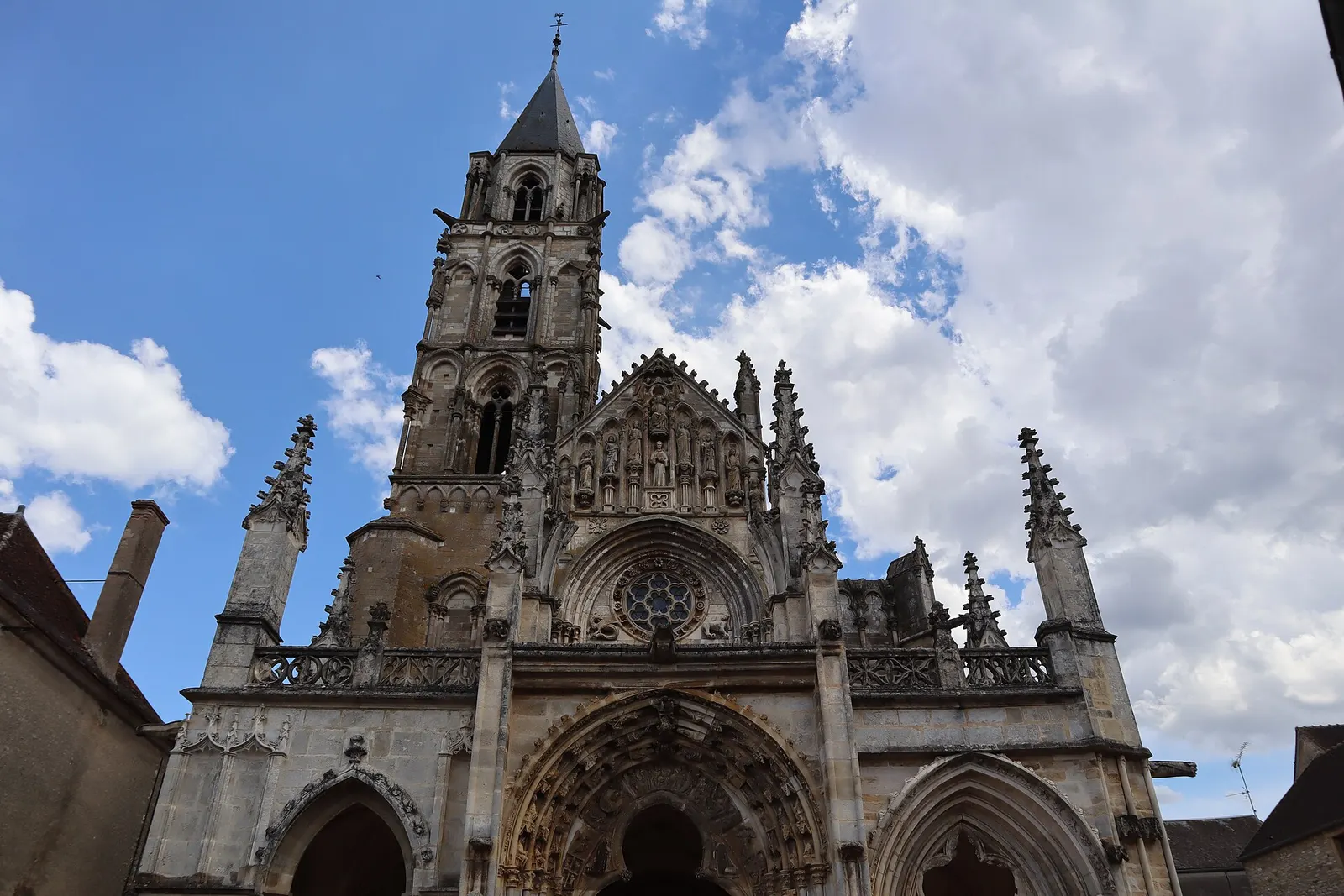
11 km awayA bright Gothic church below Vézelay, with a 50-metre bell tower and a porch carved with its founders.
1 km awayWhite Vézelay tasted on a terrace facing the basilica, with sunset evenings at the summer wine bar.
2 km awayA Romanesque masterpiece crowning a hill, where Saint Bernard preached the Second Crusade.
3 km awayMauritian spices and Burgundian produce inside a moated castle with a tall square keep, near Avallon
8 km awaySite archéologique des Fontaines Salées is about 1 h 35 from Beaune by road (119 km). The fares for the car are under “Getting there”, above.
Did you know? One of the wells still gives off bubbles of gas from time to time, mostly nitrogen with more than 6 percent helium.
Sources
A fixed fare for the car · 1–4 guests · tolls and parking included