History
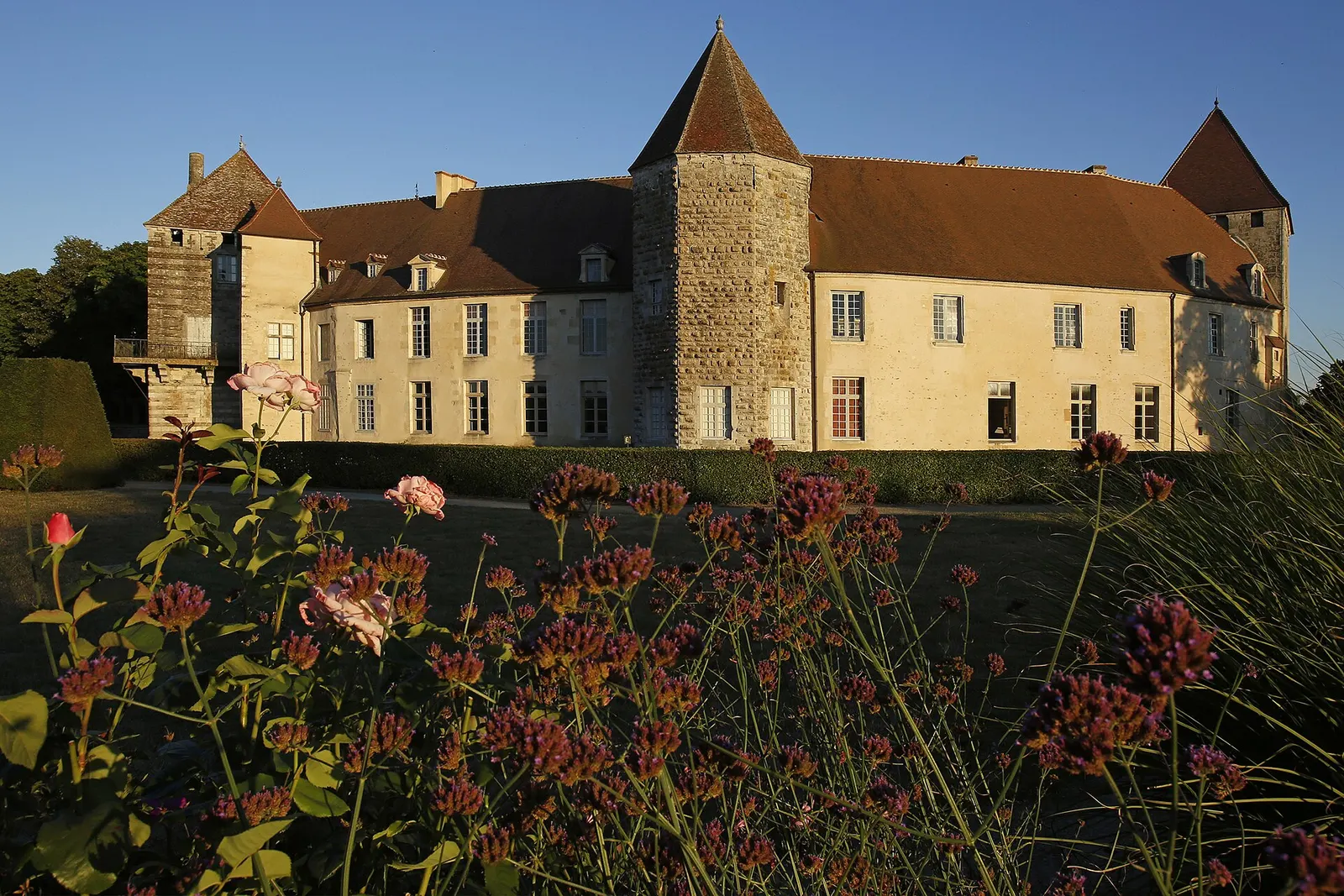
Local tradition links Époisses with the 6th century and the Frankish queen Brunehaut. The estate became a lordship in the 12th century under the Montbard family, and the Mello family held it from 1237 to 1421. In 1561 Jacques de Savoie, Duke of Nemours, sold Époisses to the Maréchal de Bourdillon. The tower that still bears his name, the Tour Bourdillon, was restored in his time.
In 1661 Madeleine de La Grange d'Arquien brought Époisses to her husband, Guillaume de Pechpeyrou-Comminges de Guitaut. He received many friends here, among them the Marquise de Sévigné, several of whose famous letters were written to the Guitaut family. During the Revolution, the authorities decided that half of the château should be destroyed. The family kept the rest, and their descendants still own and live in it today.
Architecture
The castle is ringed by two walls with moats and bridges. The outer enclosure holds outbuildings, the village church and a large dovecote lined with nesting holes. Beyond the inner moat stand the residence and its towers, including a 13th-century keep and the Tour Bourdillon, restored in 1560. The whole ensemble, with its enclosures, moats and bridges, has been a listed monument since 1992.