History
Tradition says the first castle was built in 1132 by Jean de Chaudenay for his younger son, who took the name of Châteauneuf. His family held it until the 15th century, when the line ended in tragedy. In 1456 Catherine de Châteauneuf, the last heiress, was burned alive after being convicted of poisoning her second husband. In 1457 Philip the Good, Duke of Burgundy, gave the fortress to his knight Philippe Pot.
Philippe Pot, a knight of the Golden Fleece, turned the fortress into a comfortable residence in the taste of the Burgundian court. His chapel was consecrated in 1481. After his death in 1493 the castle passed to his brother Guy, then through marriages to other families, including the Vienne and the Vogüé. In 1936 Count Georges de Vogüé gave it to the French State. It has belonged to the Region since 2008, and a major restoration was carried out from 2022 to 2024.
Architecture
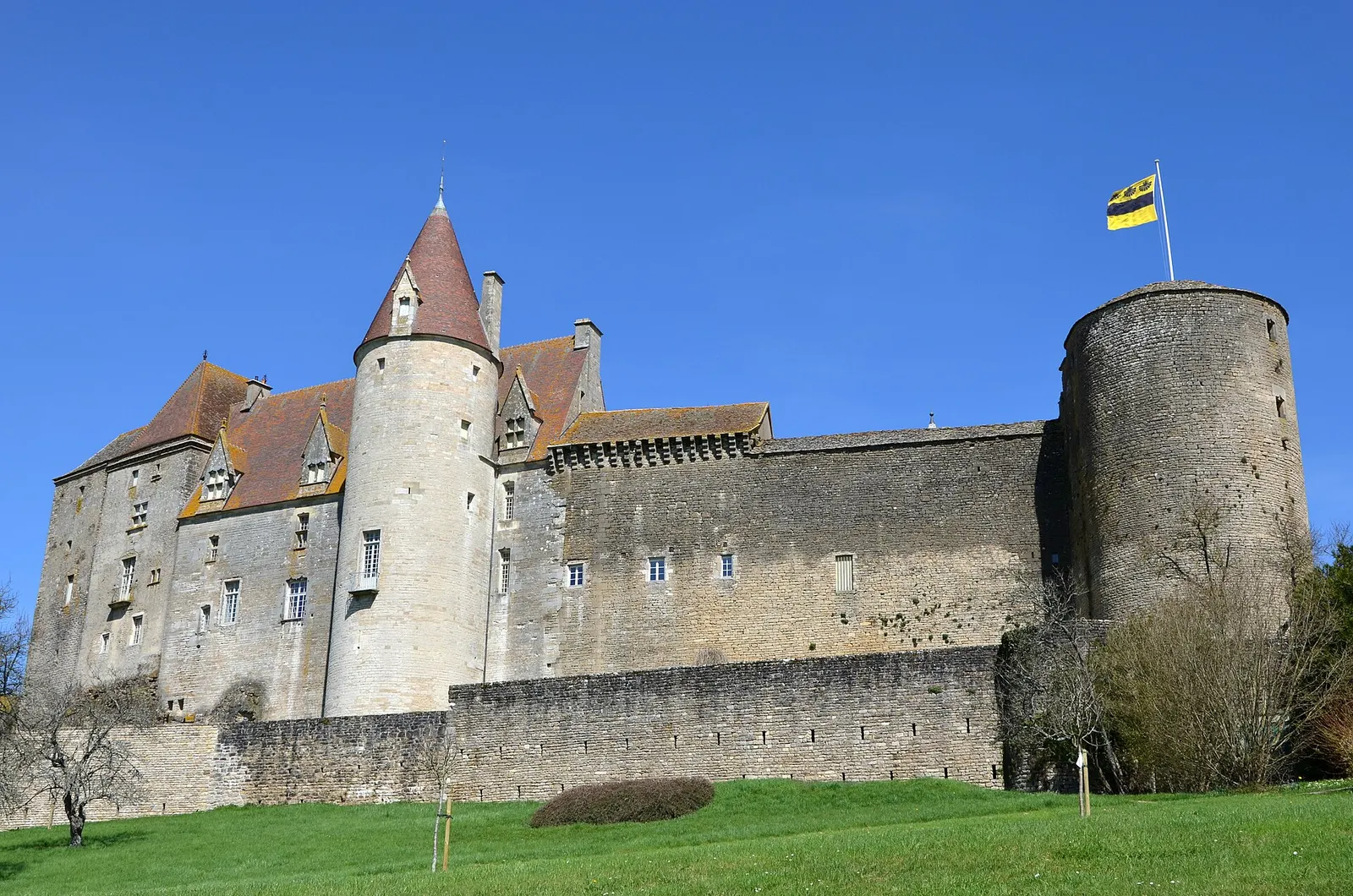
The castle follows the shape of the rock: an oblong enclosure about 75 metres long, with five round towers linked by curtain walls. A square keep survives from the earliest castle. Inside stand two late Gothic residences, the Grand Logis and the Logis de Philippe Pot, and the chapel of Notre-Dame and Saint John. The entrance, cut through the south-east wall, is closed by a drawbridge.