History
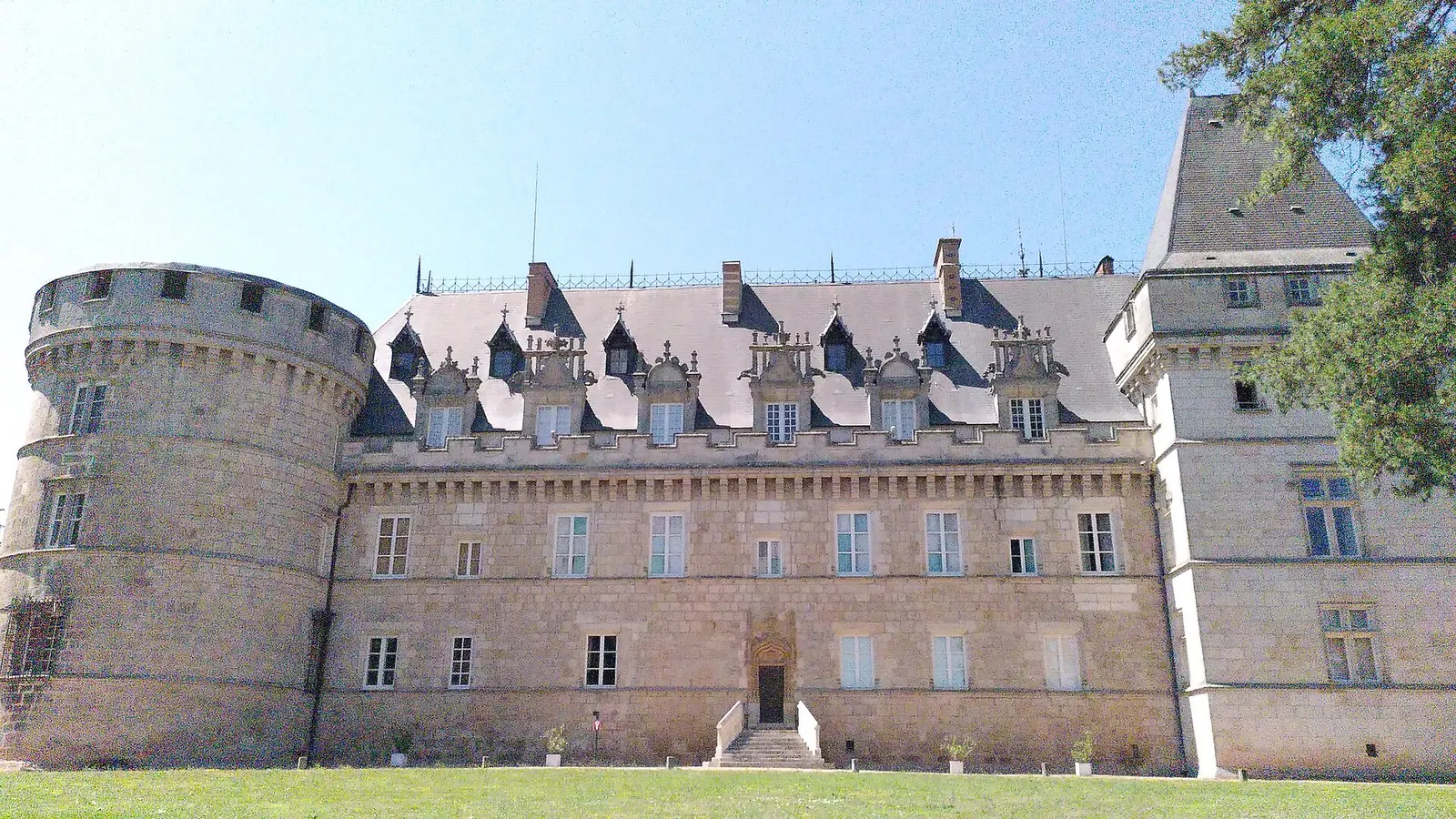
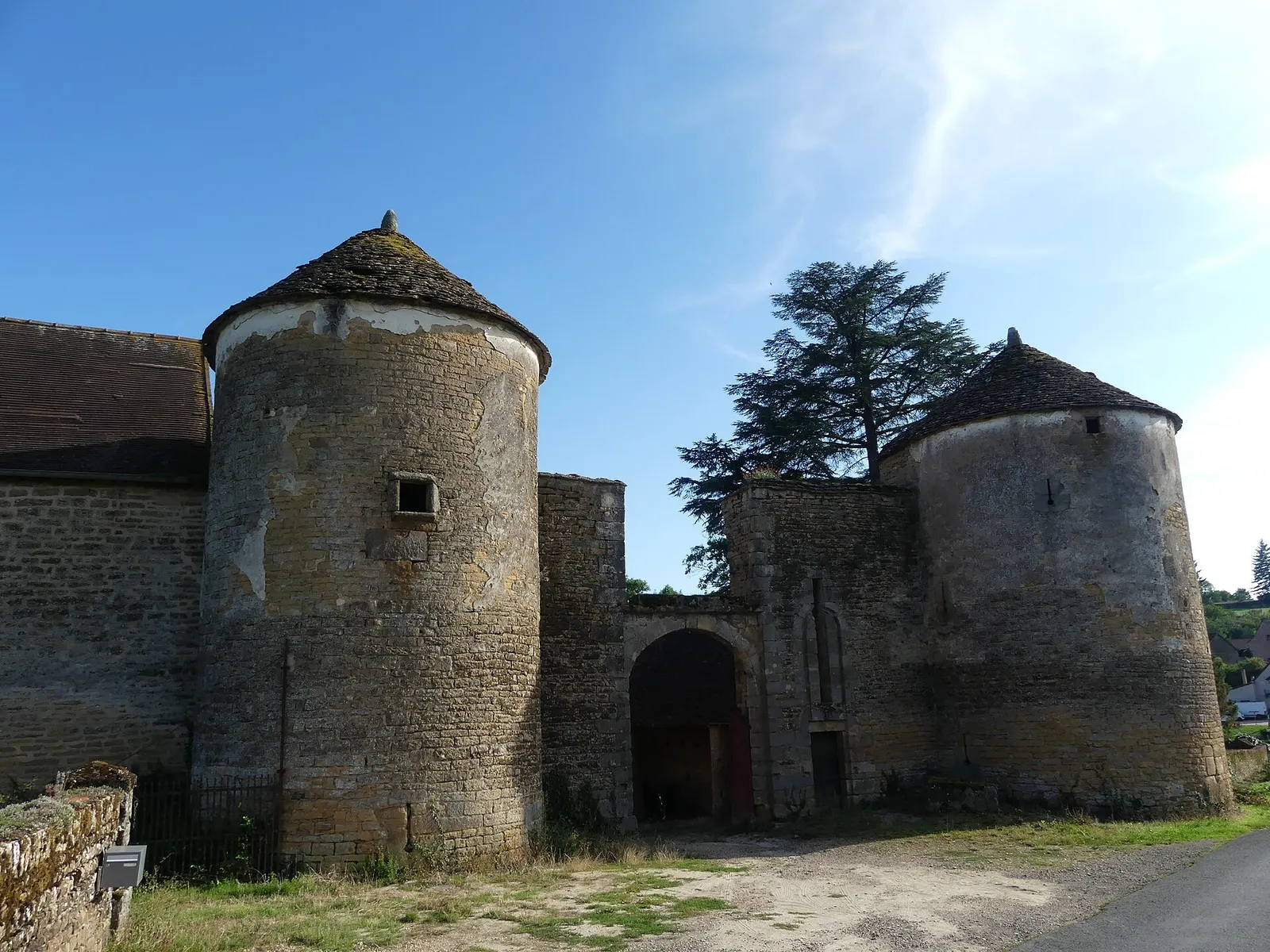
An old fortress on the borders of the Charolais, Chaumont was bought in 1416 by Girard de La Guiche. After Claude de La Guiche backed Charles the Bold, his castle was pillaged and razed in 1477. His son Pierre served the kings of France as an ambassador and, from about 1500, began a new château in the style of the early French Renaissance, advised by his wife's uncle, Jacques d'Amboise, abbot of Cluny.
In 1584 Philibert de La Guiche, grand master of the artillery, completed the château. His daughter Henriette built the stables between 1648 and 1652 for the guard of her husband, Louis-Emmanuel de Valois, duke of Angoulême and a grandson of King Charles IX. The château fell into ruin at the Revolution, and in 1801 all but its Renaissance east wing was pulled down.
The landscape designer Châtelain laid out the English-style park, and from 1850 the architect Charles Laisné added a neo-Gothic west front. In June 1944 the marquis de La Guiche, mayor of the village, was arrested in the château, then occupied by German troops. The stables were classified in 1982, and the park and stables opened to the public in 2015.
Architecture
The stables have the proportions of a vast Burgundian barn dressed as a palace. Two tall chimney stacks rise above the richly carved façade, which is set off by two monumental outside staircases. Above the main door, a niche holds the equestrian statue of Philibert de La Guiche. Inside, three vaulted aisles held two rows of horses, a layout said to follow an ideal stable designed by Leonardo da Vinci.