What you will see
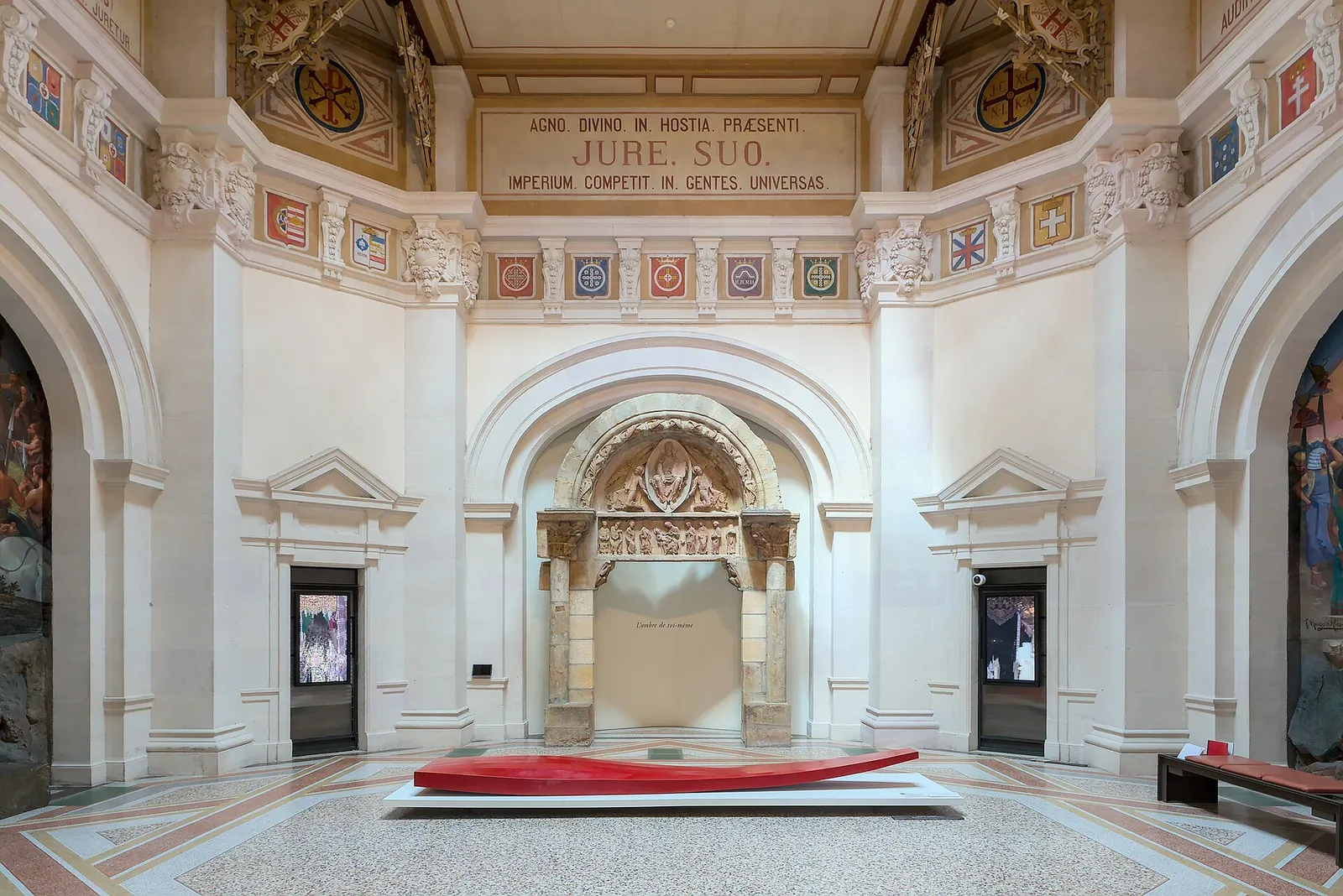
The visit starts in the central hall, under the metal roof, where the carved Romanesque portal from Anzy-le-Duc, nearly 900 years old, stands at the end of the room. Around it, bright galleries lit from above hang Italian, Spanish, Flemish and French paintings of the 17th and 18th centuries, many on the theme of the Eucharist, together with sculpture and goldsmiths' work. Each year a contemporary art exhibition sets new work among the old masters, and concerts are sometimes held under the glass roof.
History
The idea came from the Jesuit Victor Drevon, who wanted a museum and library devoted to the Eucharist in the town of the Sacred Heart. Baron Alexis de Sarachaga, born in Bilbao in 1840, met him during the pilgrimage of 1873 and gave his fortune to the project, gathering works of art from across Europe between 1881 and 1884. The Paris architect Noël Bion built the museum between 1890 and 1893. Its name comes from the Greek hieros, sacred.
The library was sold in 1948, and the building closed in the early 1990s after water damage. The town restored it completely in 2005 and made it a municipal museum with the Musée de France label; the building has been listed as a historic monument since 2015. In November 2024 armed robbers stole parts of its most precious piece, the Via Vitae by the Paris jeweller Joseph Chaumet, a national treasure since 2000, and the town plans to show the work again once it is restored.