Musée Paul Charnoz
Two giant rose designs of coloured tiles from the Paris World's Fairs, in a Paray tile factory museum.
- Museum
- 1 h 20 from Beaune
- Allow about 1 hour
- Paray-le-Monial

At a glance
- Official website
- museepaulcharnoz.com
About the place
The Musée Paul Charnoz in Paray-le-Monial tells the story of a tile factory that ran from 1877 to 2005, in its old lodge and workers' housing near the station: guides explain inlaid stoneware tiles with the factory's own machines, and you see two giant rose designs built entirely of small coloured tiles for the Paris World's Fairs, of 21.4 and 122 square metres. An hour for lovers of design and industrial heritage.
What you will see
Guides explain the technique of inlaid stoneware tiles, for which the museum now holds the know-how, with machines and documents from the factory. The two rose designs, of 21.4 and 122 square metres, are protected as historic monuments, and their patterns are built entirely from small coloured tiles. Other rooms follow the later history of the firm, from screen-printed tiles to the Cerabati workers' housing estate, the subject of a space opened in 2026.
History
Paul Charnoz, born in Metz in 1845, had worked for the Boch ceramics company in Dresden and in northern France before he bought a long strip of land between the railway and the canal at Paray. His factory, founded in 1877, made stoneware floor tiles whose pattern was inlaid through the body of the tile, so that it could not wear away. At the Paris World's Fair of 1889, his firm won a gold medal for a rose of coloured tiles.
The firm went bankrupt in 1890 and was bought in 1891 by a group of leading French ceramic makers, with Charnoz staying on as director until 1901. For the World's Fair of 1900 he made a far larger rose, of 122 square metres, which was honoured hors concours. The factory later belonged to the Cerabati group, from 1921 to 1992, and ended as Paray Céramiques, which closed at the end of 2005.
Planning your visit
Tips for your visit
Individual visitors come in July and August, on Easter Monday and on Ascension Day; the rest of the year, groups of at least six adults book a guided visit through the Paray-le-Monial tourist office six days ahead. Walk there from the tourist office along the golden studs of the Chimère trail, after the basilica, the Musée du Hiéron and the town hall's carved façade, and lunch at Maison Doucet in Charolles.
Getting there
From Beaune, a day out: 1 h 20 each way by road (109 km). There and back, your driver waiting up to 3 hours: €540 for the car, up to 4 guests.
From Paris (Charles de Gaulle, Orly or your address): about 3 h 28 from central Paris, 3 h 58 from Charles de Gaulle; €835 for the car, and the same fare back for your flight.
From Lyon airport and the stations too: all fares Book this ride
Around here
What to combine with Musée Paul Charnoz on the same day, nearest first.
- Classical château
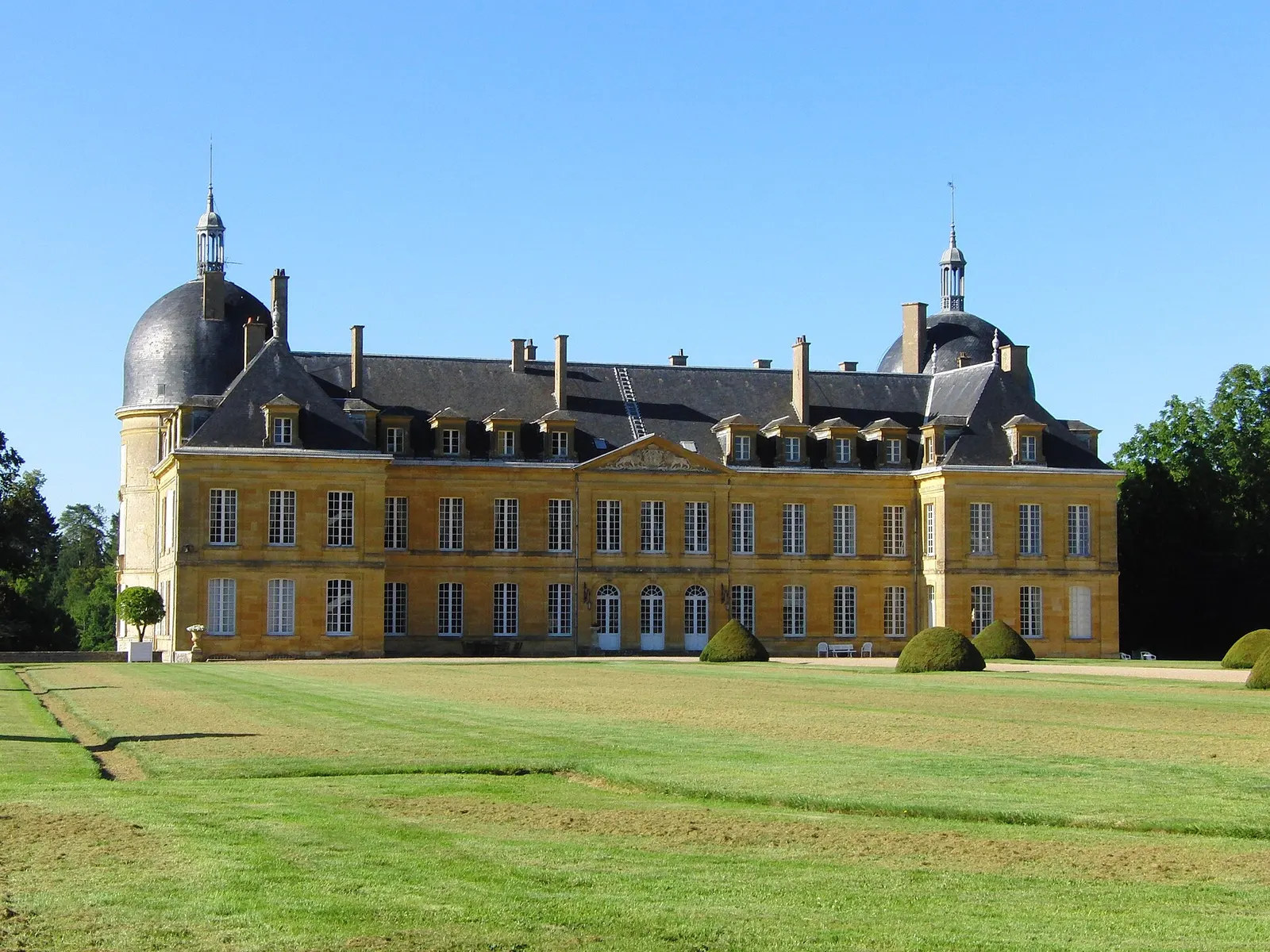
Château de Digoine
A furnished 18th-century château with its own little theatre, where Sarah Bernhardt rehearsed in 1900.
12 km away - Classical château
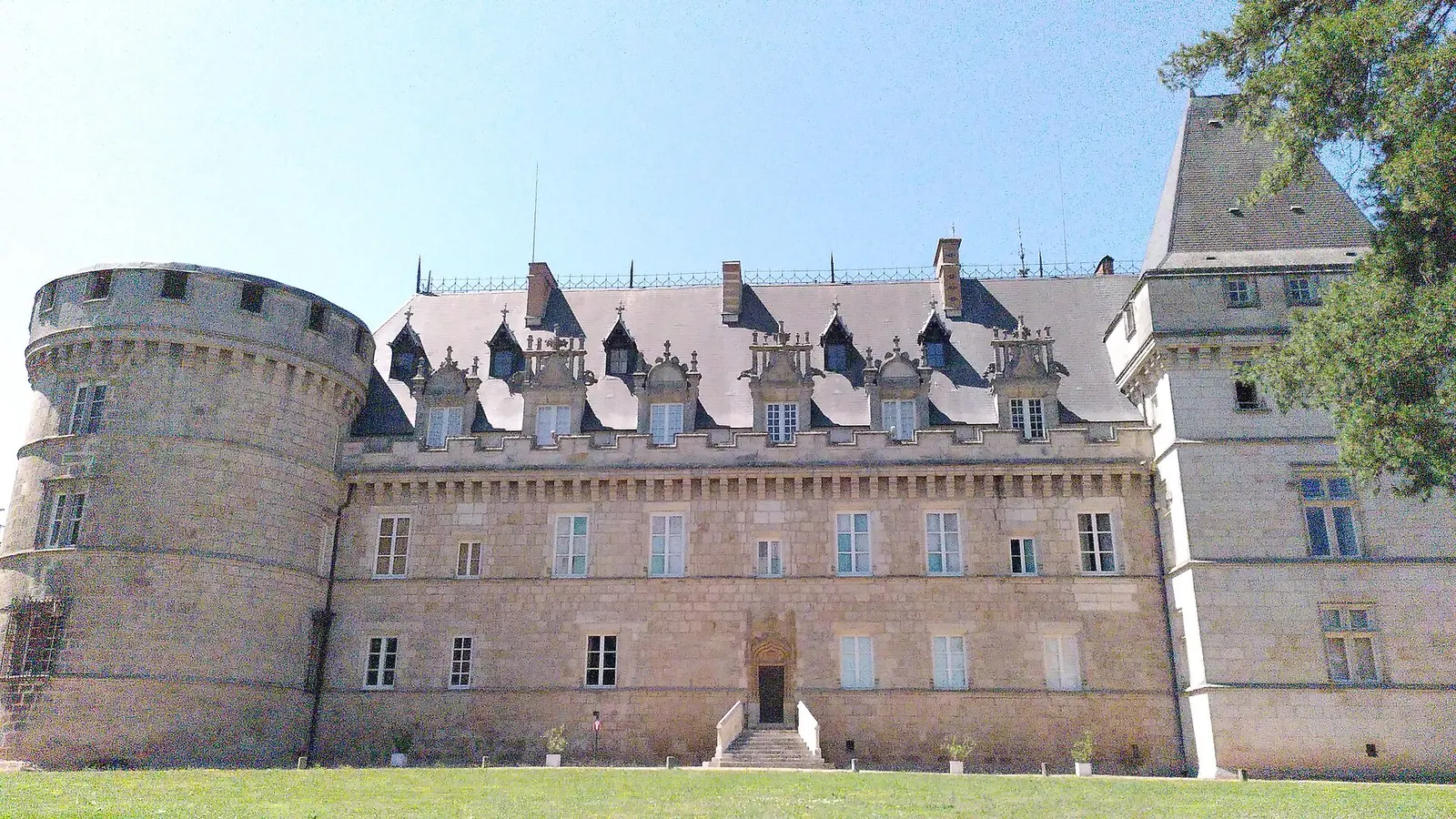
Château de Chaumont
Home of the La Guiche family since 1416, with one of the largest private stables in France.
24 km away
- Abbey or church
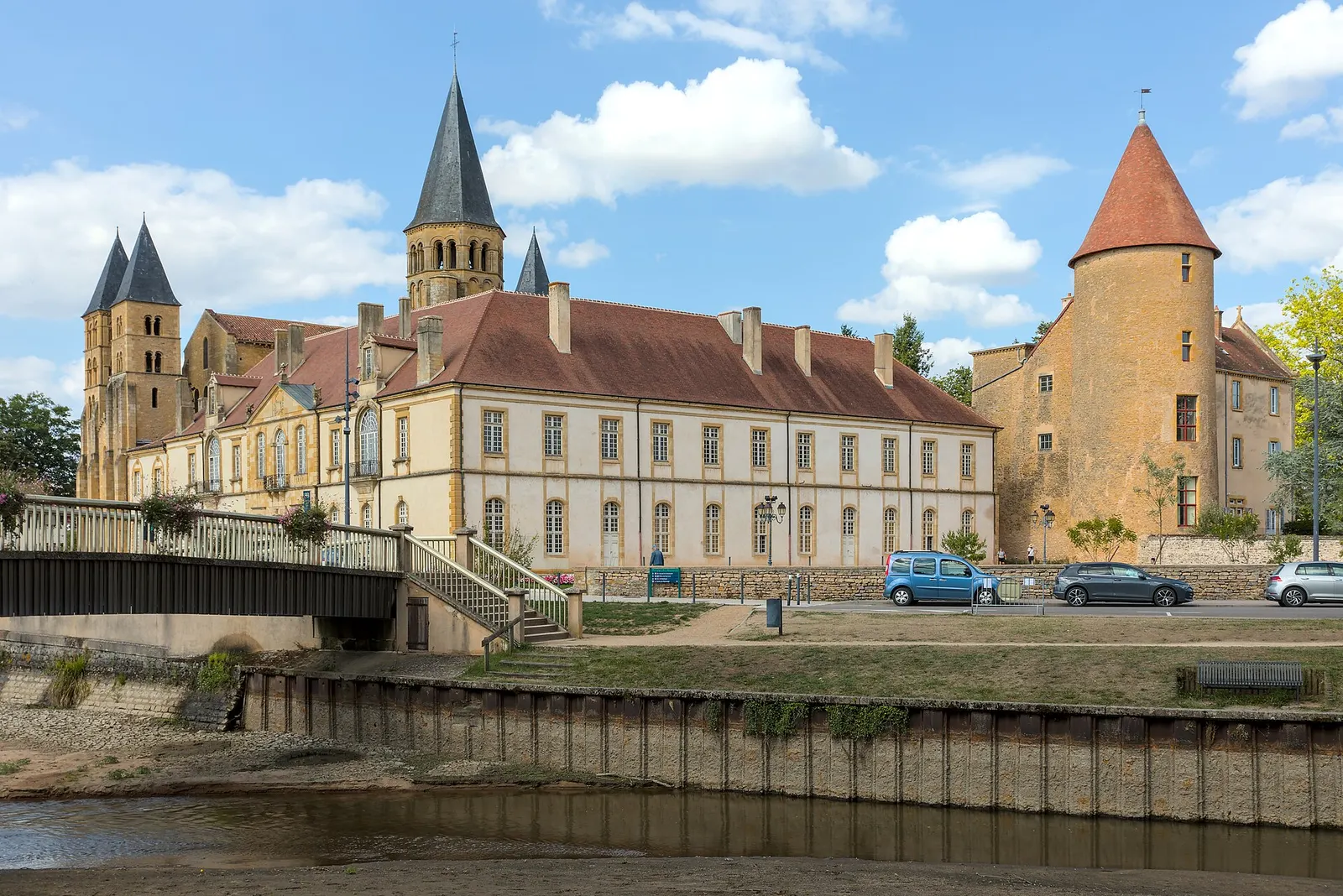
Basilique du Sacré-Cœur de Paray-le-Monial
Cluny in miniature: the clearest idea of the lost abbey church, under 22-metre vaults beside the Bourbince.
1 km away - Heritage site
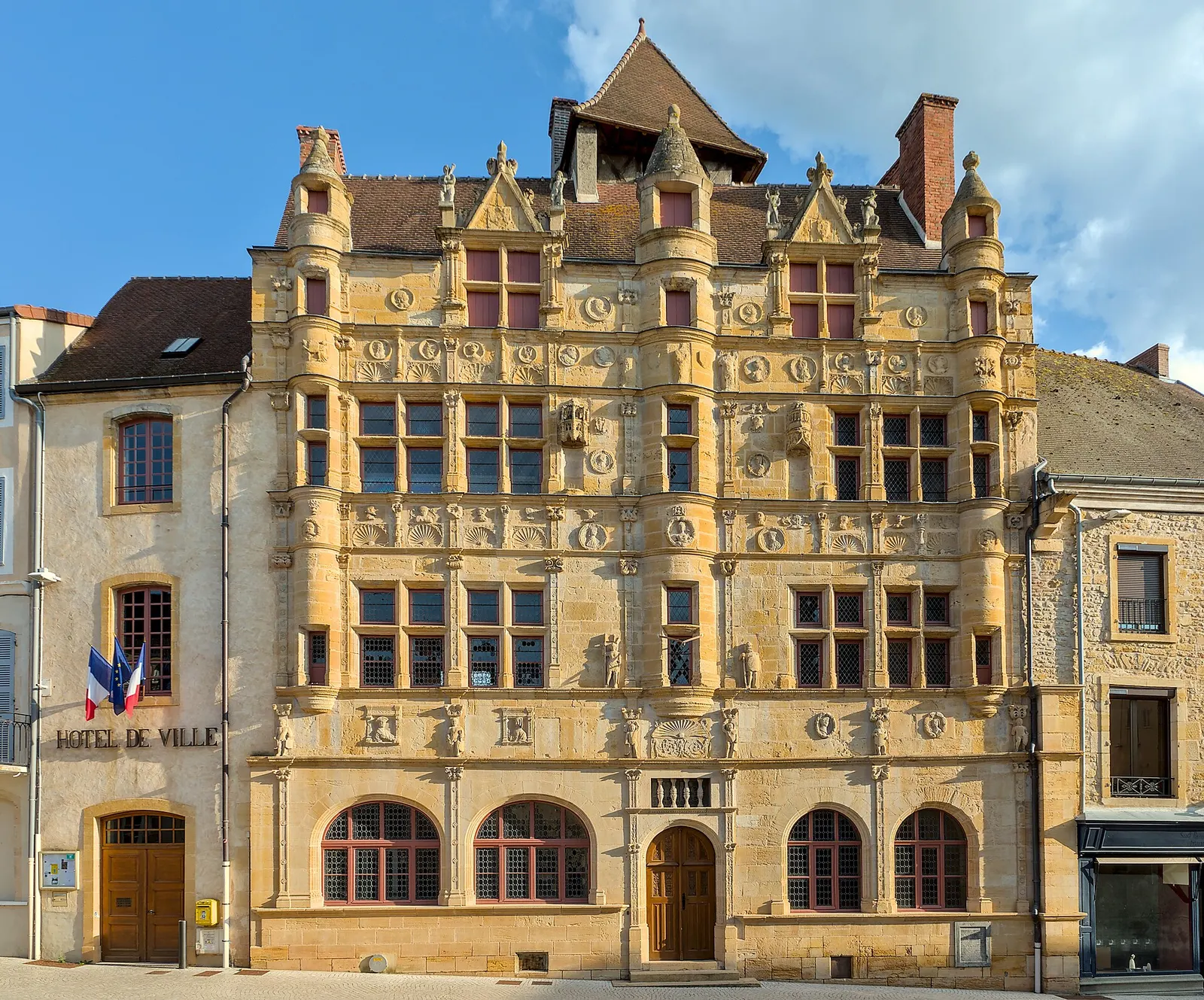
Hôtel de ville de Paray-le-Monial (Maison Jayet)
A Renaissance façade carved from ground to dormers with kings, knights and cherubs, on Paray's main square.
1 km away - Heritage site
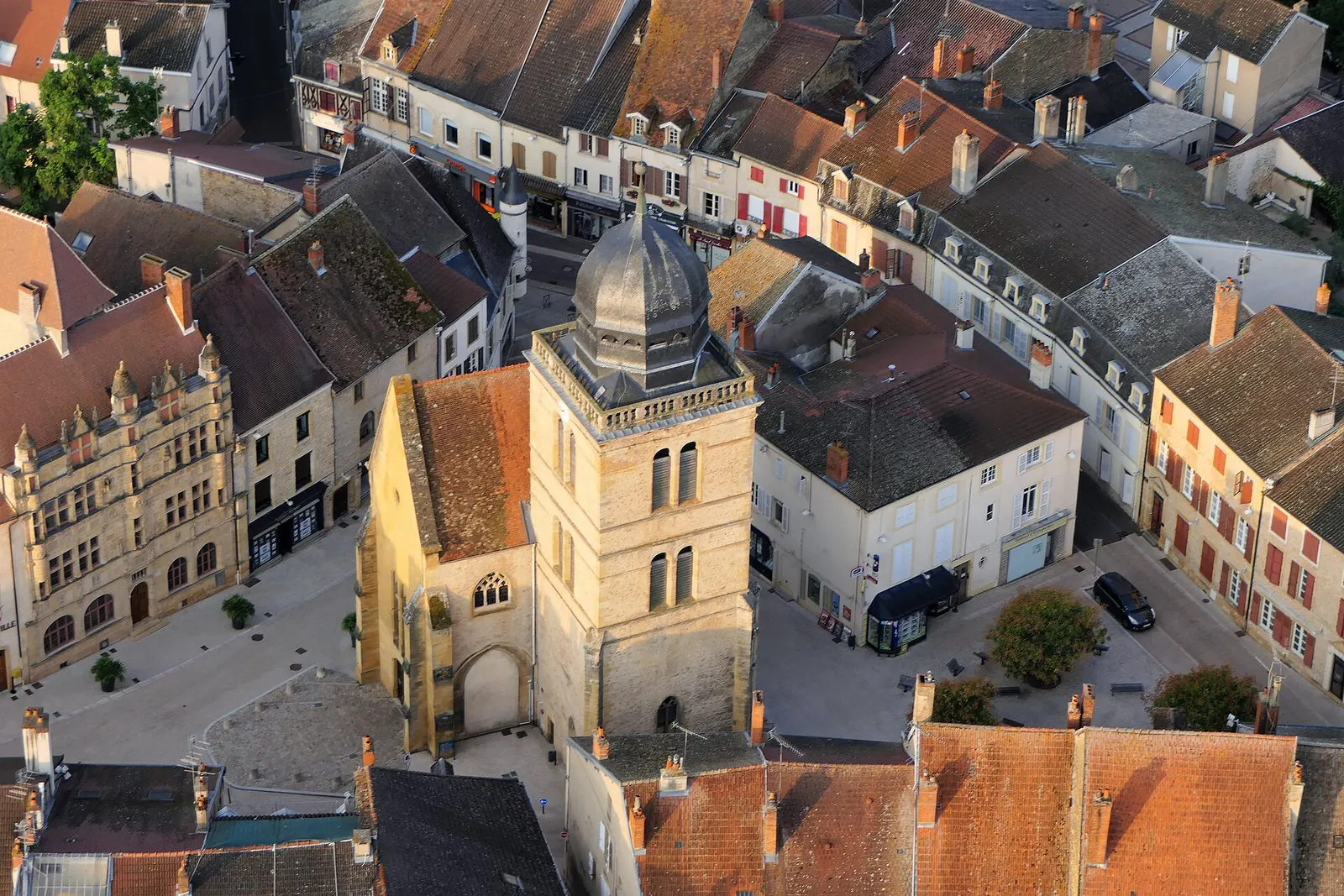
Tour Saint-Nicolas
A 1530s church tower crowned by a dome and lantern, facing Paray's carved Renaissance town hall.
1 km away
- Charolles
Maison Doucet
Two stars since 2026 and a tasting menu that follows Charolais beef from start to finish, in Charolles
13 km away
Questions
Musée Paul Charnoz is about 1 h 20 from Beaune by road (109 km). The fares for the car are under “Getting there”, above.
Did you know? The rose of 1900, at 122 square metres, is almost six times the size of the one that won a gold medal in 1889.
Sources
Musée Paul Charnoz with a private driver
A fixed fare for the car · 1–4 guests · tolls and parking included