History
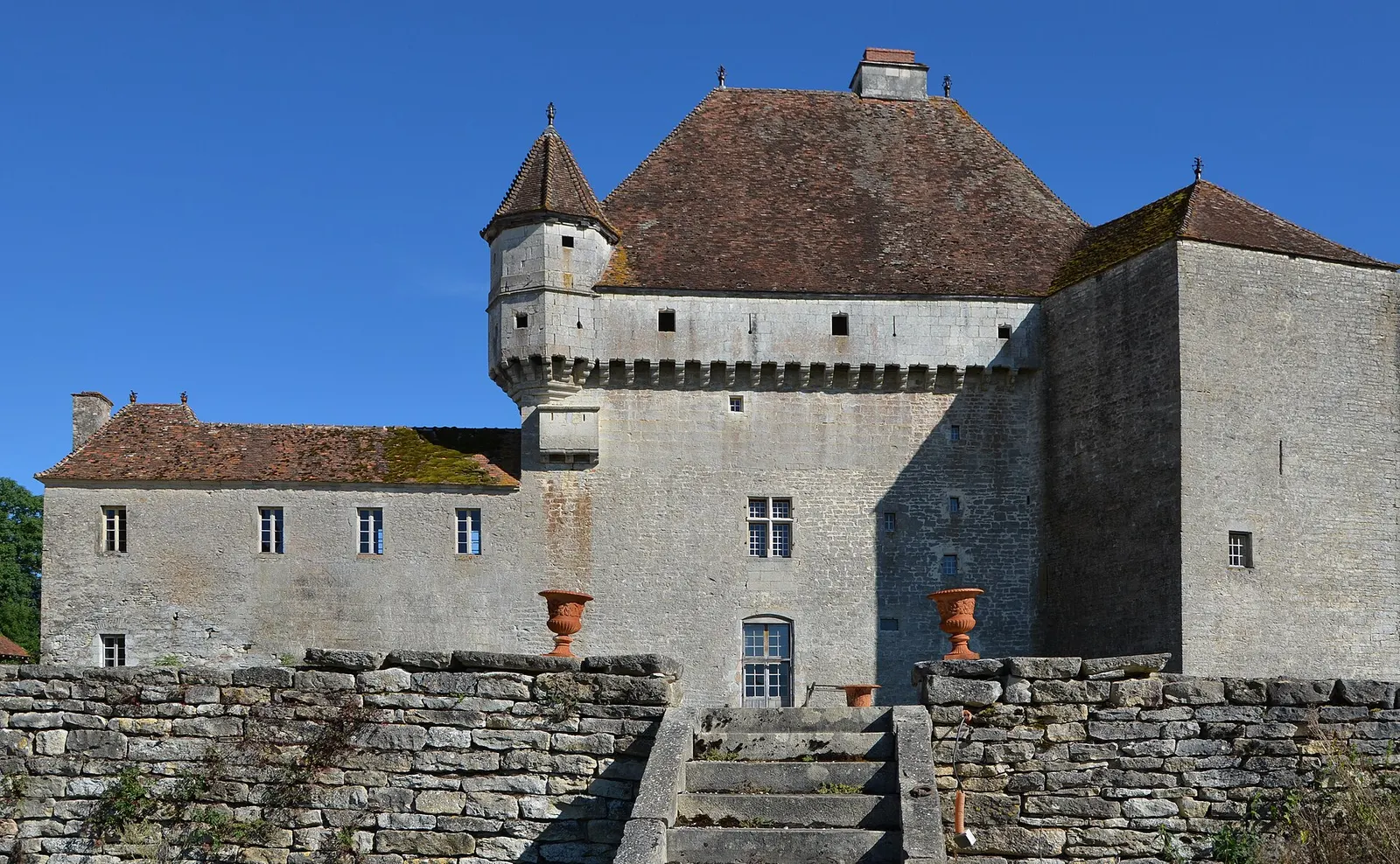
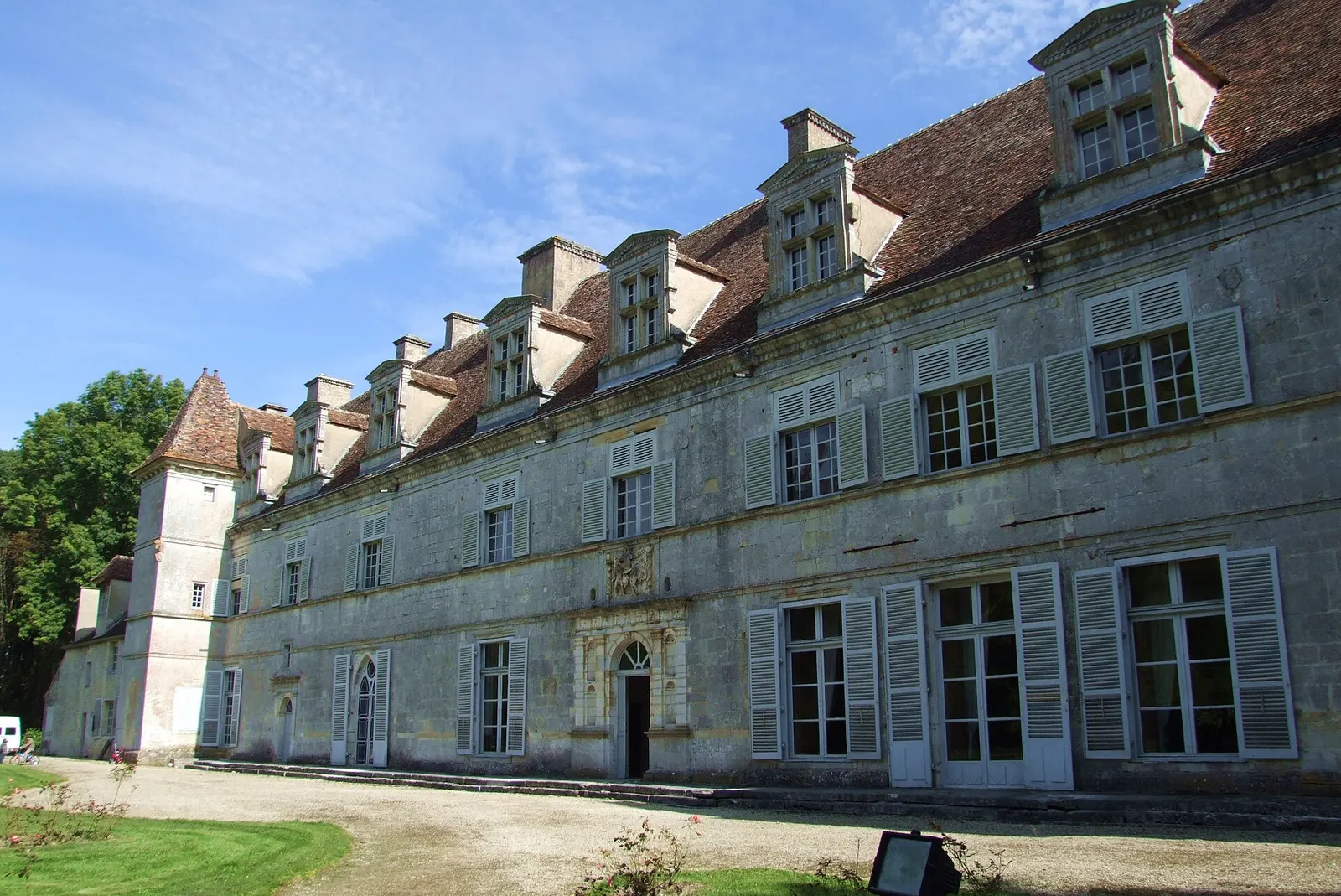
The medieval castle, probably built in the early 13th century, had a walled enclosure with corner towers and a keep. In the 16th century its co-lords included Cardinal Claude de Longwy de Givry and his niece Françoise de Longwy, wife of Admiral Philippe Chabot. The cardinal transformed the castle around 1540 to 1550, and King Francis I stayed here in 1534 and 1535.
On 5 June 1595 Henri IV won the battle of Fontaine-Française against the League and the Spanish army. The fighting took place east of the village, and the king himself charged into the fray to rescue his outnumbered advance guard. Once Franche-Comté became French in 1678, the fortress lost its role on the border. In 1754 François-David Bollioud de Saint-Jullien, receiver general of the French clergy, decided to turn it into a more comfortable classical residence.
The Parisian architect Souhard carried out the work over four years, reusing much of the old walls. Madame de Saint-Jullien welcomed writers from her Paris salon, including Voltaire, her friend and correspondent for twelve years, and Madame de Staël is said to have begun her novel Corinne here in 1805. The château later passed to the Chabrillan family, whose arms now decorate the pediment. It was classified in 1945 and its park in 2023.
Architecture
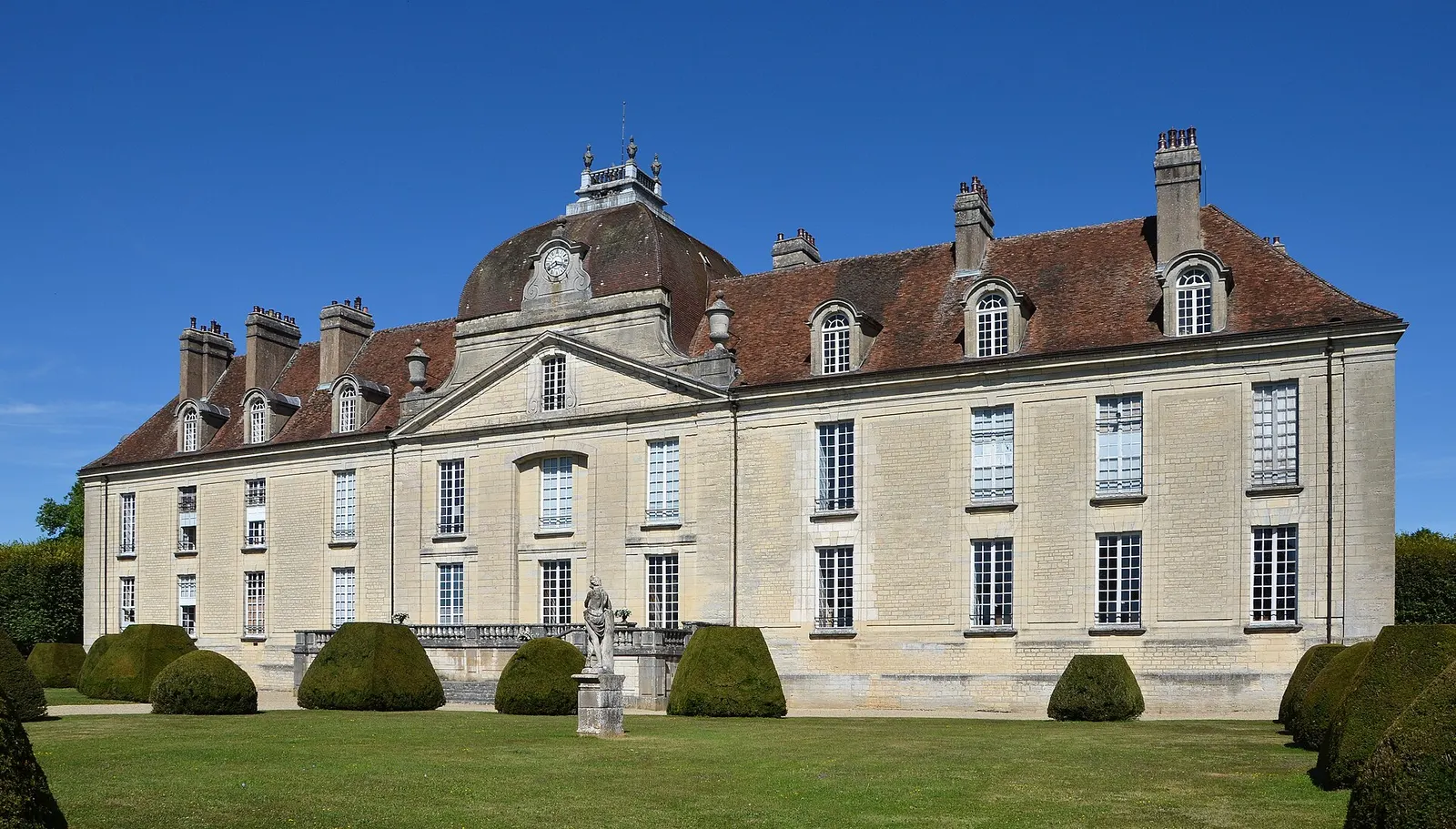
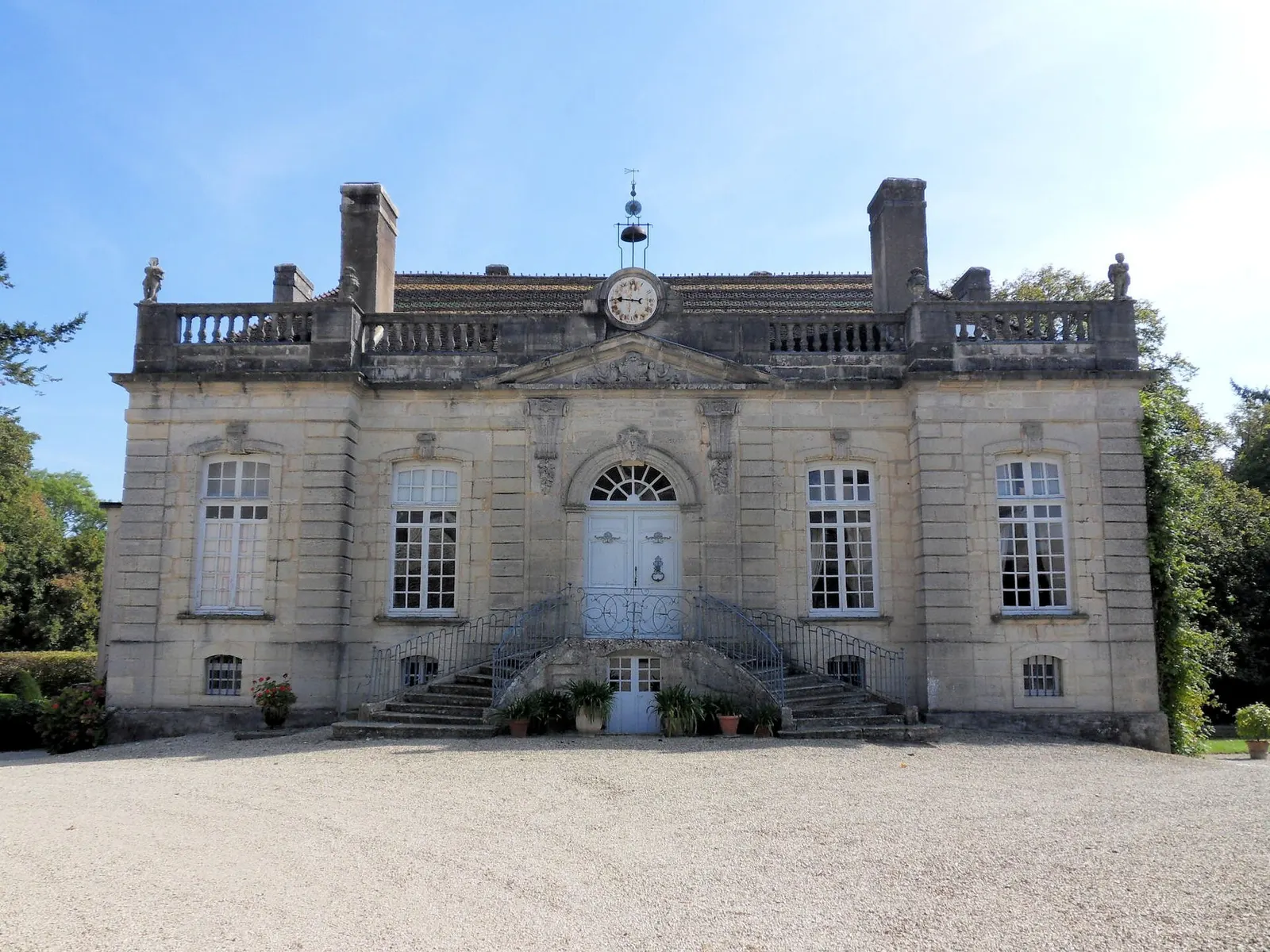
The château has a central block with two wings around a courtyard. Its windows, 4.5 metres high, are decorated with allegorical masks, and a dome with two clocks rises above the centre. Inside, a double stone staircase leads to a long gallery. The formal park has 372 lime trees trained as arcades, clipped yews and a monument to Henri IV.