Opening hours and tickets
- Opening hours
- 3 April to 1 November: every day, 10:00 to 18:00
- 2 November to 2 April: every day, 10:00 to 12:00 and 14:00 to 17:00
- Admission
- Paid
- Booking
- Not needed
Checked on on the official site.
The complete 12th-century Cistercian abbey, from church to forge, alone in a wooded valley (UNESCO).
Fontenay Abbey is a complete 12th-century Cistercian monastery alone in a wooded valley: you walk from the bare, luminous church into the cloister, up to the dormitory under its roof frame shaped like an upturned hull, and out to the forge by the stream, where a water-driven hammer is on show. Worth a half-day trip, it suits anyone who wants to feel how the monks actually lived.
The visit follows the monks' day in the order they lived it: church, cloister and vaulted chapter house, then the dormitory upstairs and the forge, a long workshop beside the stream. Formal gardens and the quiet valley frame it all. Where Cluny shows the scale of what was lost and Cîteaux is a living monastery, Fontenay is whole and silent; UNESCO listed it in 1981.
Bernard of Clairvaux founded Fontenay in 1118. In 1130 the monks settled in a marshy valley fed by springs, drained the land and built a church between 1139 and 1147. Pope Eugene III consecrated it in 1147. One early resident was Ebrard, a former bishop of Norwich, who retired here around 1145. The monks lived from the fields, woods and streams of their valley. In 1259 King Louis IX freed the abbey from taxes, and in 1269 it became a royal abbey.
The Revolution emptied the abbey, and in 1791 it was sold and turned into a paper mill. In 1820 the paper maker Élie de Montgolfier, nephew of the balloon inventors, bought it. The mill closed in 1905. The Lyon banker Édouard Aynard, who had married into the Montgolfier family, bought the site in 1906 and removed the industrial additions. His descendants still own and run the abbey, which UNESCO listed as a World Heritage Site in 1981.
Fontenay fits a day in the Auxois: the abbey in the morning, lunch in Flavigny-sur-Ozerain, then the aniseed sweet works of Flavigny or the MuséoParc Alésia in the afternoon. You walk round on your own without booking; guided tours can be booked on the abbey's website. Wear comfortable shoes for the gravel paths and gardens.
Checked on on the official site.
From Beaune, a day out: 1 h 20 each way by road (100 km). There and back, your driver waiting up to 3 hours: €495 for the car, up to 4 guests.
From Paris (Charles de Gaulle, Orly or your address): about 2 h 26 from central Paris, 2 h 56 from Charles de Gaulle; €750 for the car, and the same fare back for your flight.
From Lyon airport and the stations too: all fares Book this ride
Trips that stop here: Abbeys and châteaux of northern Burgundy (4 days, from Paris)
What to combine with Fontenay Abbey on the same day, nearest first.
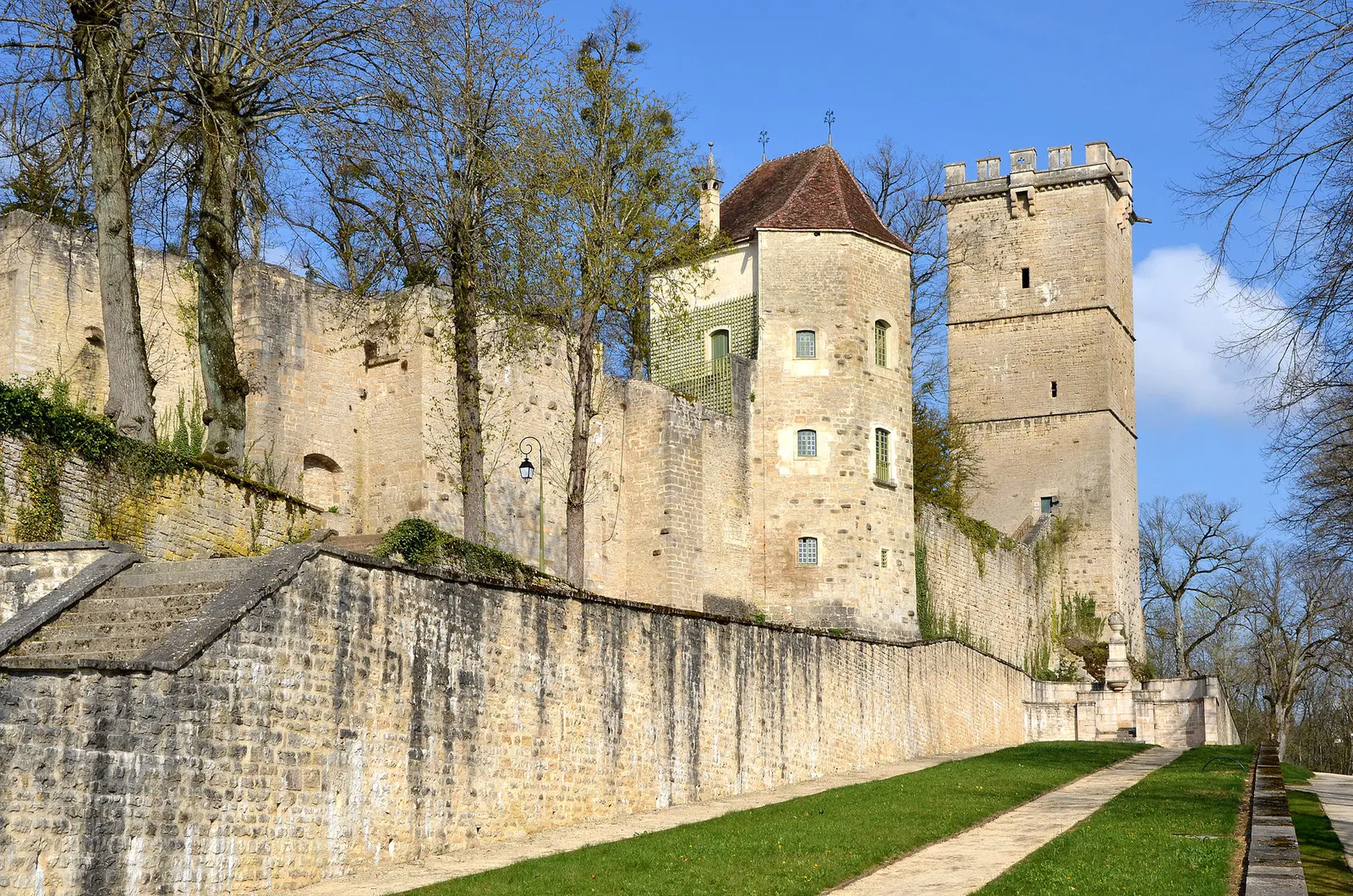
Buffon's terraced park on a ducal castle, free all year, with the study where he wrote his Histoire naturelle.
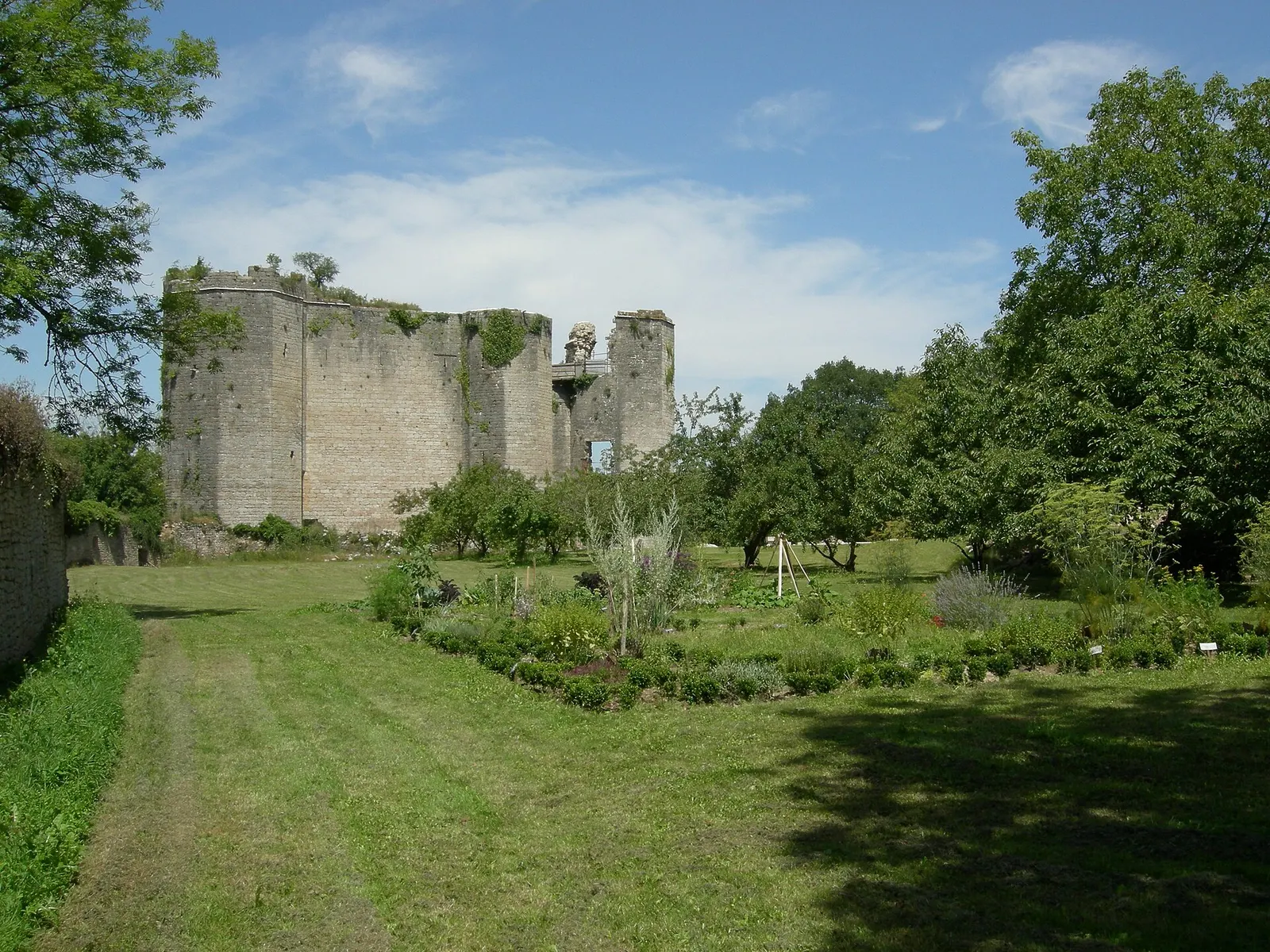
4 km awayRuins on a rocky plateau where the Shroud now in Turin was once kept, shown by the volunteers restoring them.
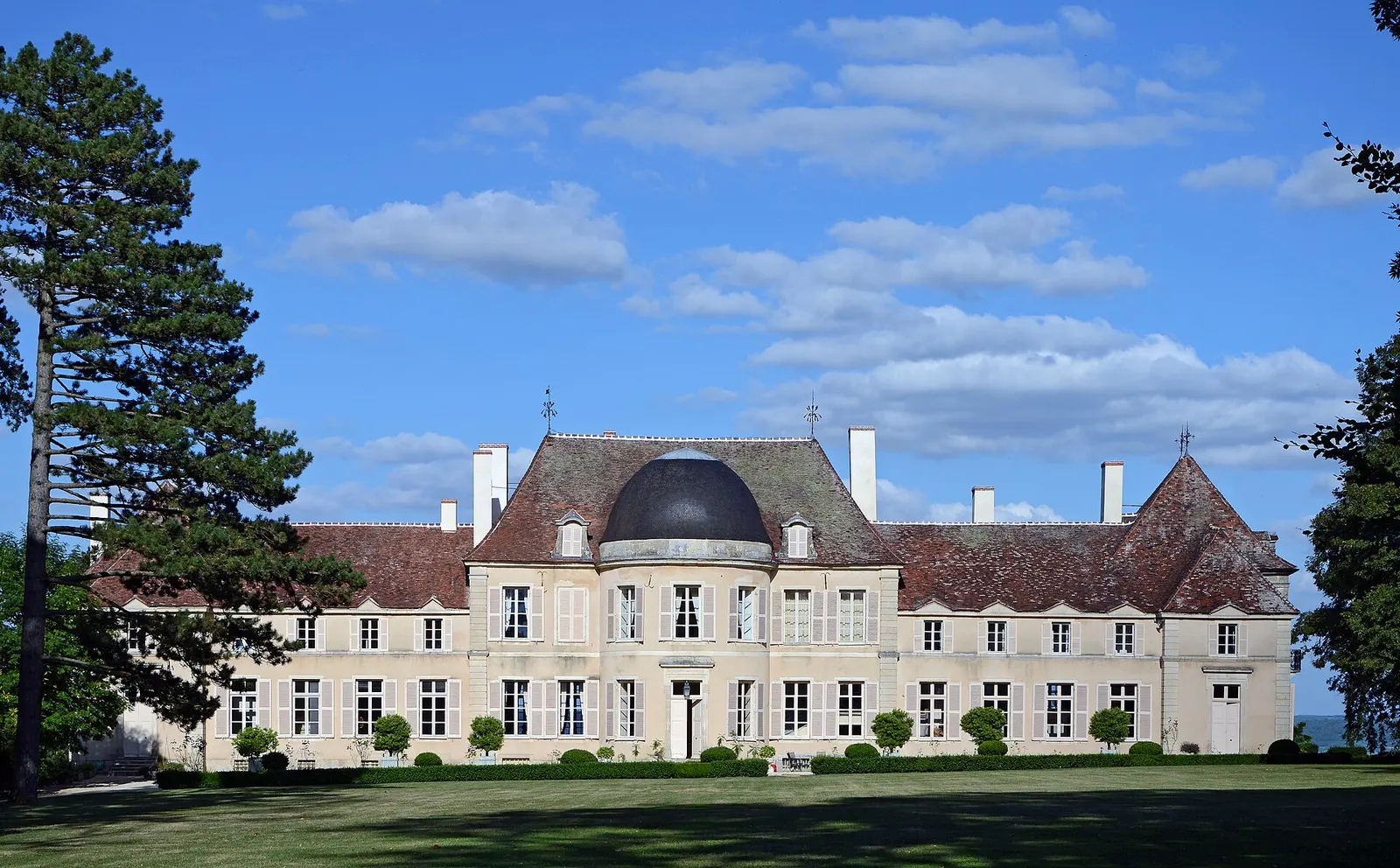
7 km awayThe ‘château of a hundred windows', with a flowering kitchen garden labelled Jardin Remarquable, open in summer.
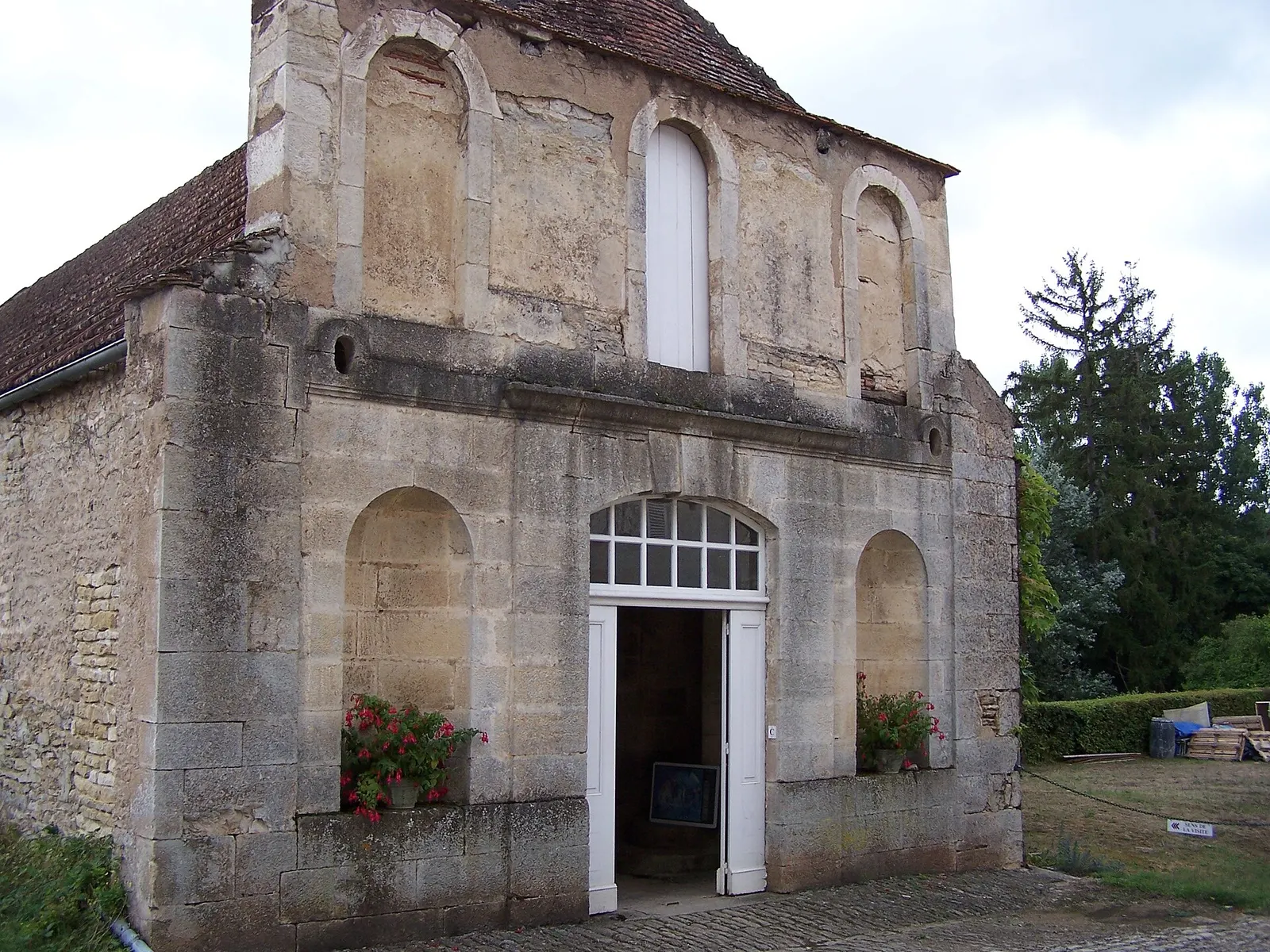
11 km awayAn 18th-century ironworks built by the naturalist Buffon on the banks of the Armançon.
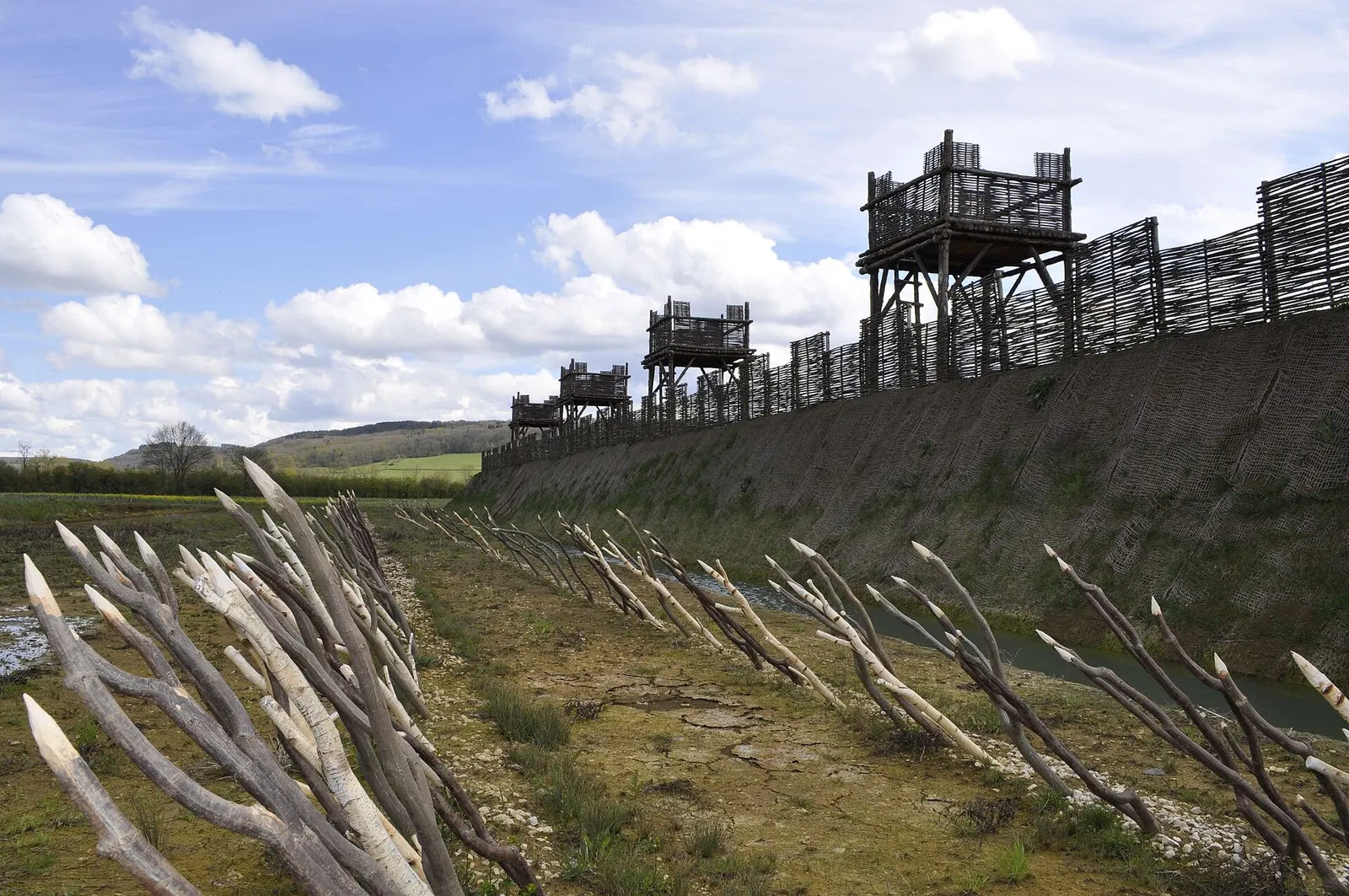
10 km awayWhere Caesar defeated Vercingetorix: rebuilt Roman siege lines, a round museum and a Roman town on the hill.
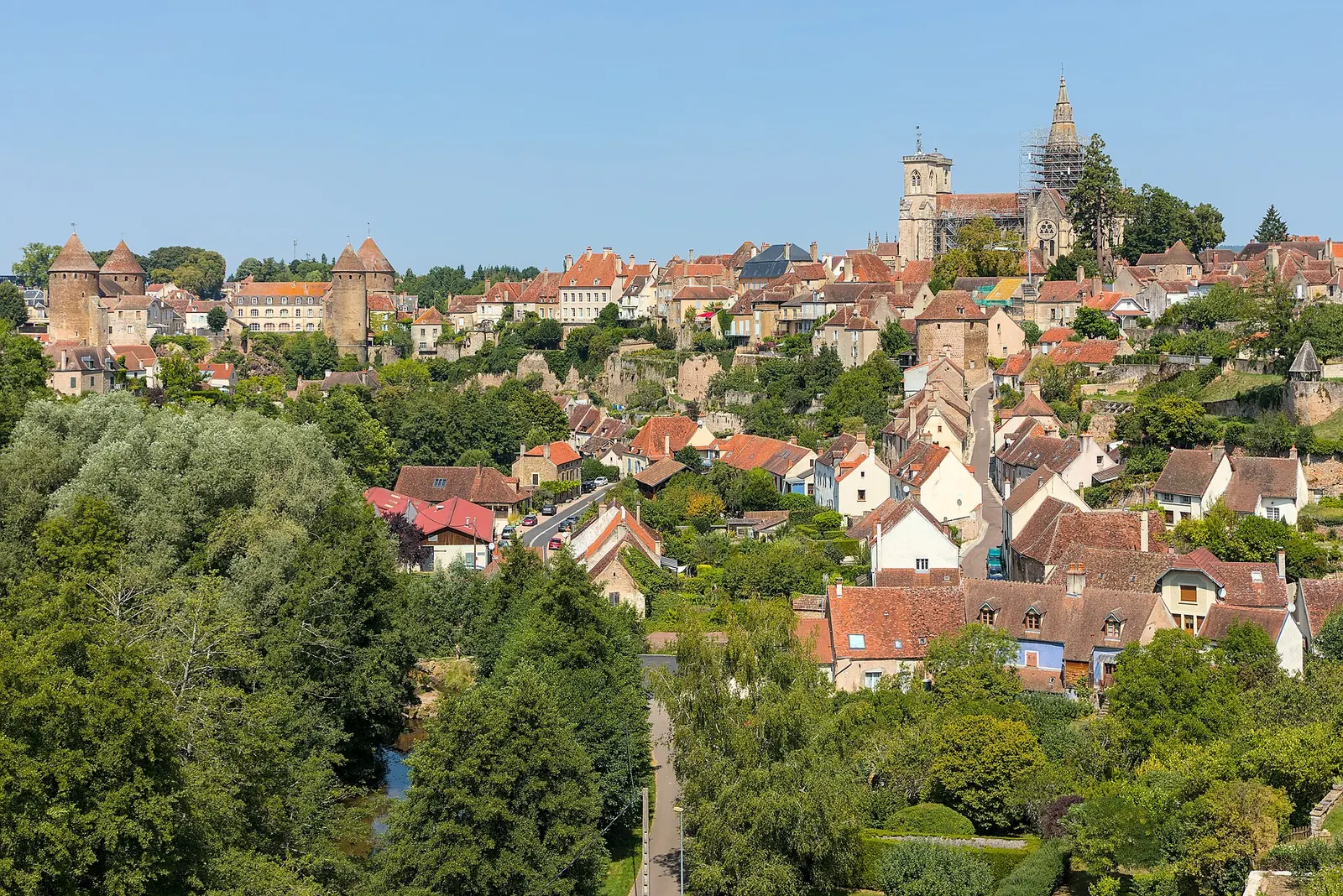
13 km awayThe classic view from the Pont Joly: a pink granite town, its cracked tower and Gothic spire above the Armançon.
17 km awayFontenay Abbey is about 1 h 20 from Beaune by road (100 km). The fares for the car are under “Getting there”, above.
Did you know? Fontenay receives almost no public money. Apart from a few major restorations, the family who owns it pays for its upkeep with ticket sales and its own resources.
Sources
A fixed fare for the car · 1–4 guests · tolls and parking included