History
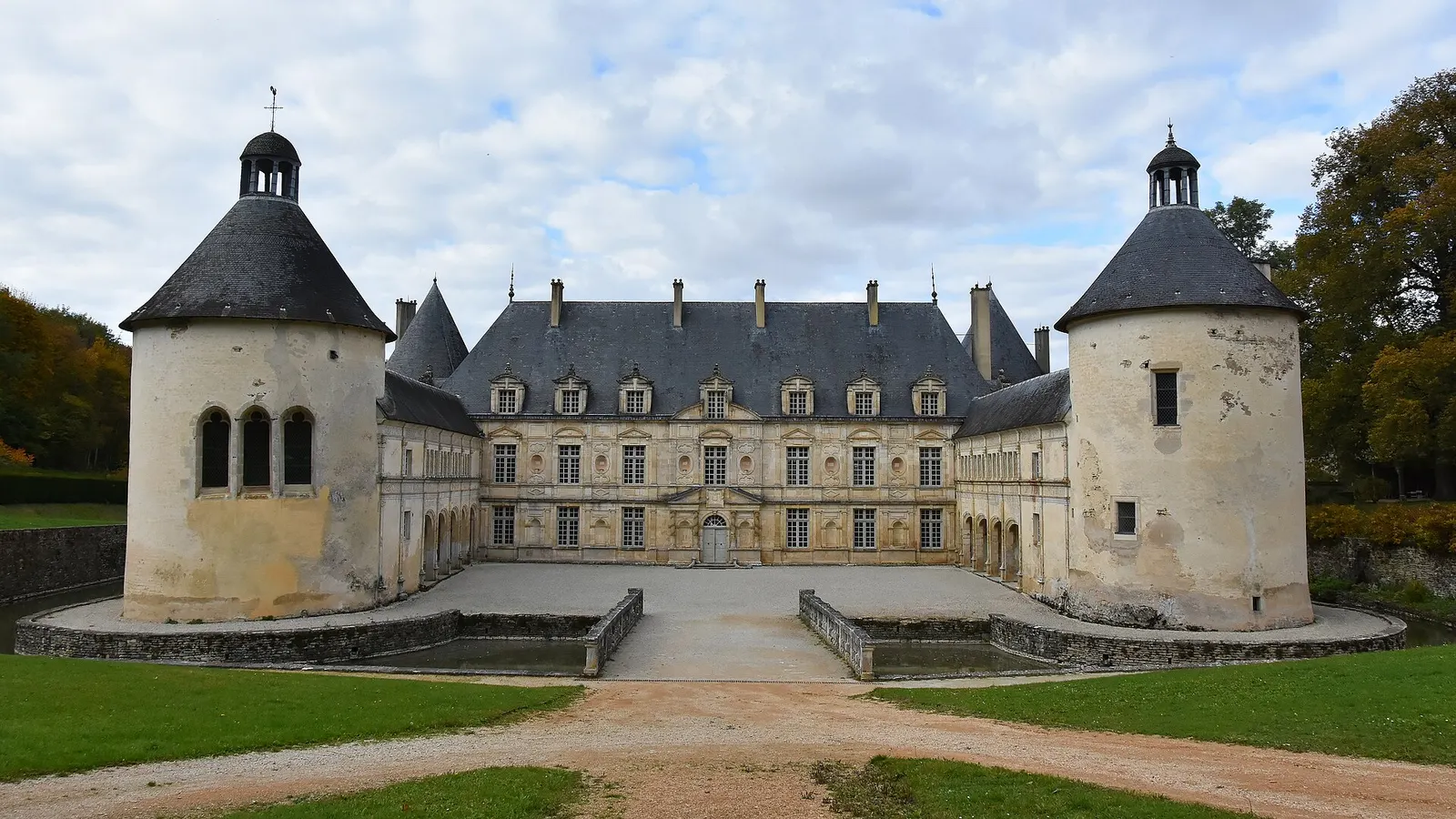
A medieval castle stood here first. It was transformed in the early 16th century, when Renaissance galleries were added, and again in the 17th century. Its most famous owner, Roger de Bussy-Rabutin, was born in 1618 and became one of the most colourful courtiers of Louis XIV. He was also a cousin of the letter writer Madame de Sévigné, and a gifted writer himself.
Around 1660 Bussy wrote the Histoire amoureuse des Gaules, a mocking account of love affairs at court. When it was printed without his consent in 1665, the scandal sent him to the Bastille. The king then exiled him to his Burgundy estate, where he spent about seventeen years. He passed the time decorating his rooms with portraits and allegories. The State bought the château in 1929, and it has been a listed monument since 1862.
Architecture
Bussy grew out of a medieval castle, and Renaissance galleries were added in the 1520s. The real treasure is the 17th-century decoration inside. The Salle des Devises is painted with Latin mottoes and views of royal châteaux, and the Cabinet de la Tour Dorée has a richly painted and gilded ceiling. Other rooms are lined with portraits of the kings of France, great military commanders and ladies of the court.