What you will see
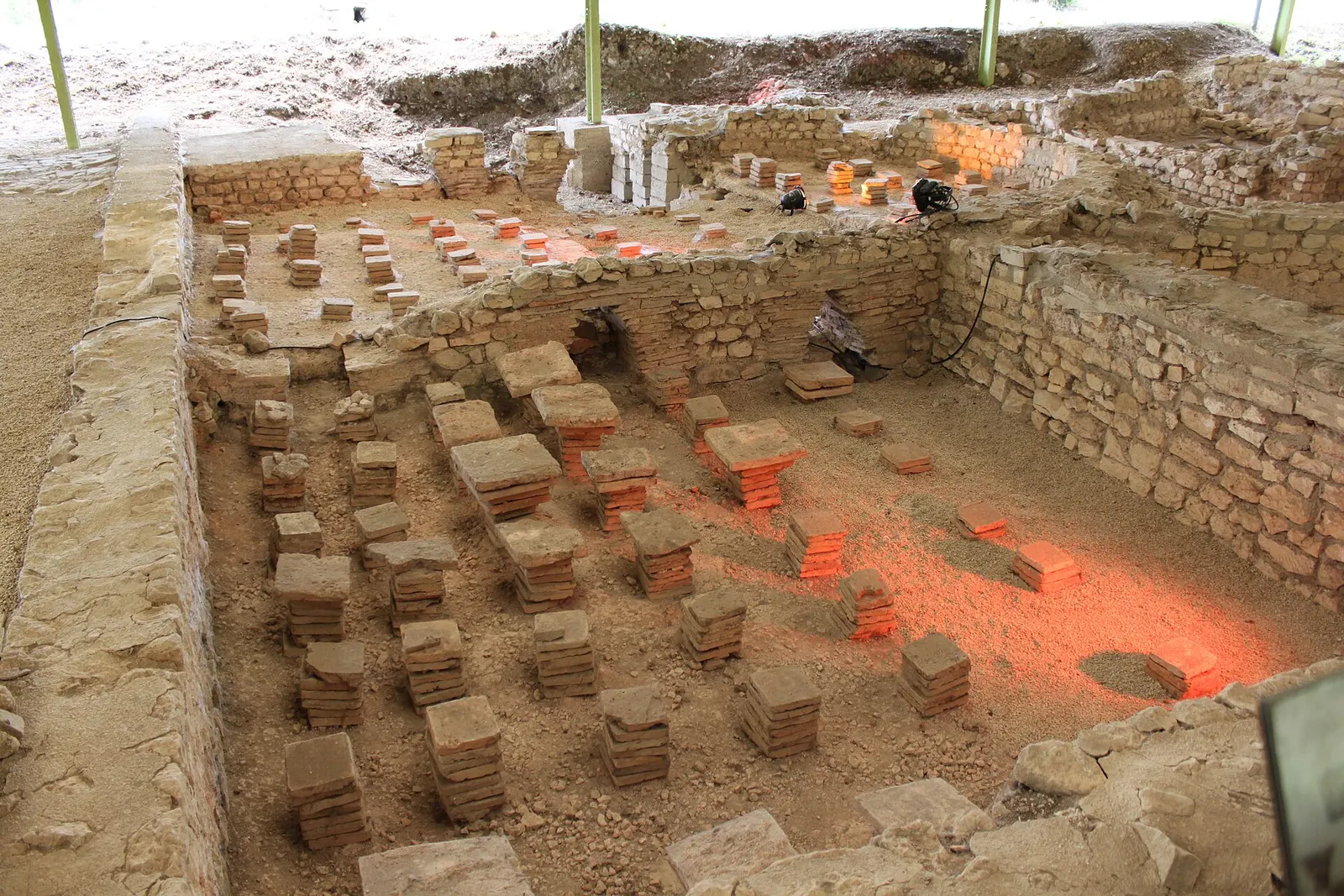
The guided tour walks you through the baths, with their cold pool and the hypocaust that heated the floors, and the spring catchment that fed the villa. In the exhibition, look at the carved blocks from a monument with arches, reused in the bath foundations: friezes and cornices with foliage, mythological figures, gods such as Hercules, and a hare. The waterlogged spring basin preserved rare finds, including a 4th-century leather sandal and a wooden votive offering. The tour also tells the story of the Merovingian cemetery that later filled the ruins.
History
People lived here from the Neolithic onwards, but the site is best known for its Gallo-Roman villa, occupied from the end of the 1st century BC to the 5th century. Its farm and living quarters covered more than four hectares beside the Via Agrippa, the road from Lyon to the Channel begun in 19 BC. Its large baths, rebuilt at the end of the 3rd or start of the 4th century, probably served travellers on the road as well as the owners. In the 5th century the villa was abandoned, and from the late 6th to the 8th century a Merovingian cemetery grew in its ruins, where 354 graves have been recorded.
The site came to light in March 1955, when villagers pulling up a walnut tree saw graves caught in its roots. They called Raymond Kapps, a teacher and amateur archaeologist in Auxerre trained by André Leroi-Gourhan, who led excavations with volunteers and students until 1983. Daniel Prost and then Pascale Laurent continued the work, and field digs ended in 1998. The remains have been a listed historic monument since 1992, and the Société Archéologique d'Escolives, founded by Kapps in 1957, still runs the visits and workshops.