History
The site first held an 18th-century house built by Pierre Larbalestrier, over a small vaulted cellar resting on older pillars. Between 1895 and 1900 its owners, Marie-Louise Bernard and Stephen Huguenin, rebuilt it as the image of their wine business. Only the old gable wall on the street survived. A turret and a small corbelled lookout were added to it, and the Bernard family arms still crown the front door.
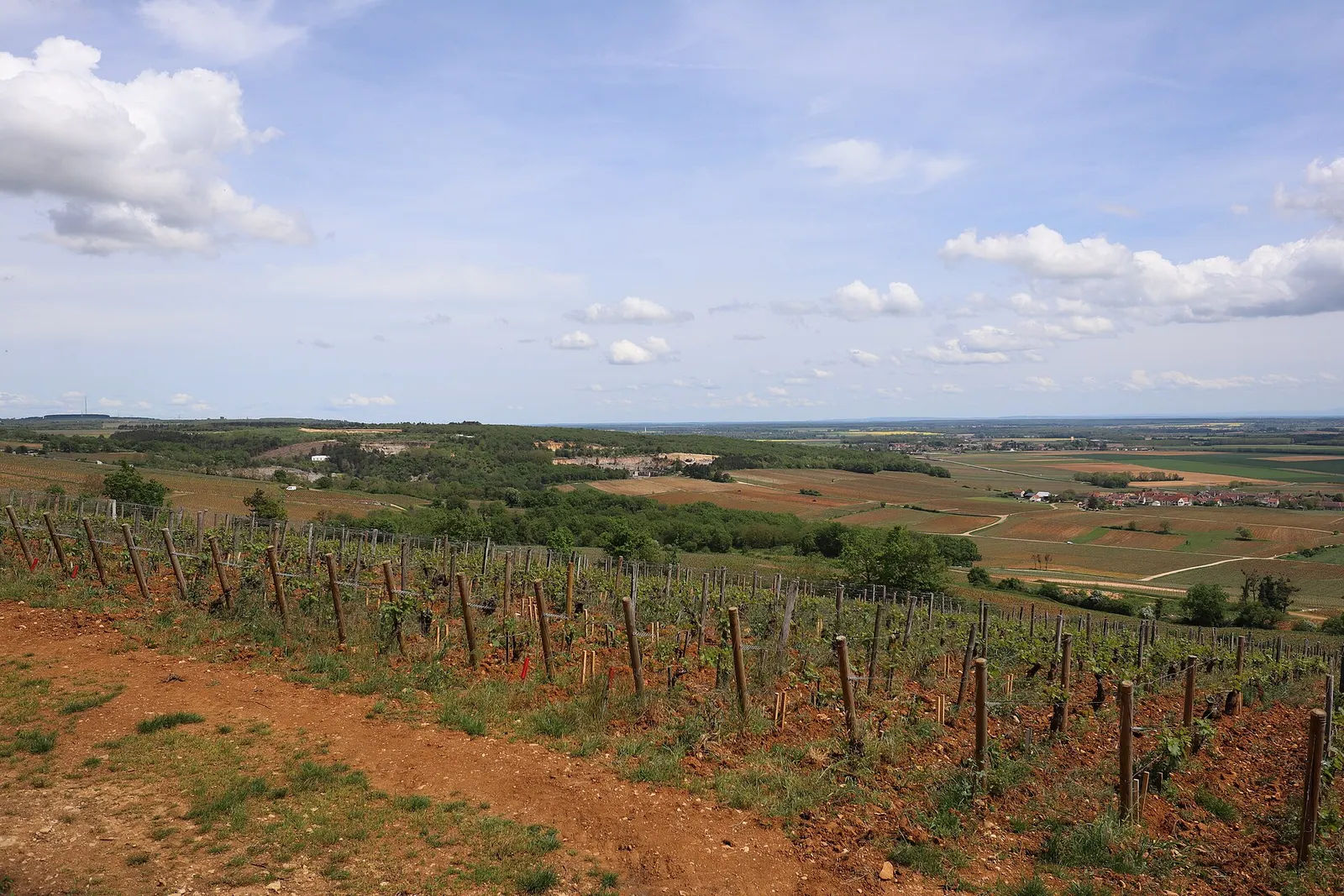
The château was bought by the André family in the 1920s. Pierre André, one of the founders of the Confrérie des Chevaliers du Tastevin, made it the home of his wine house and helped bring Burgundy wine to a wider public. Caroline Frey took over the estate in 2015 and now farms its 7 hectares of vines. The façades, roofs and park railings were listed as a historic monument in 2017.
Architecture
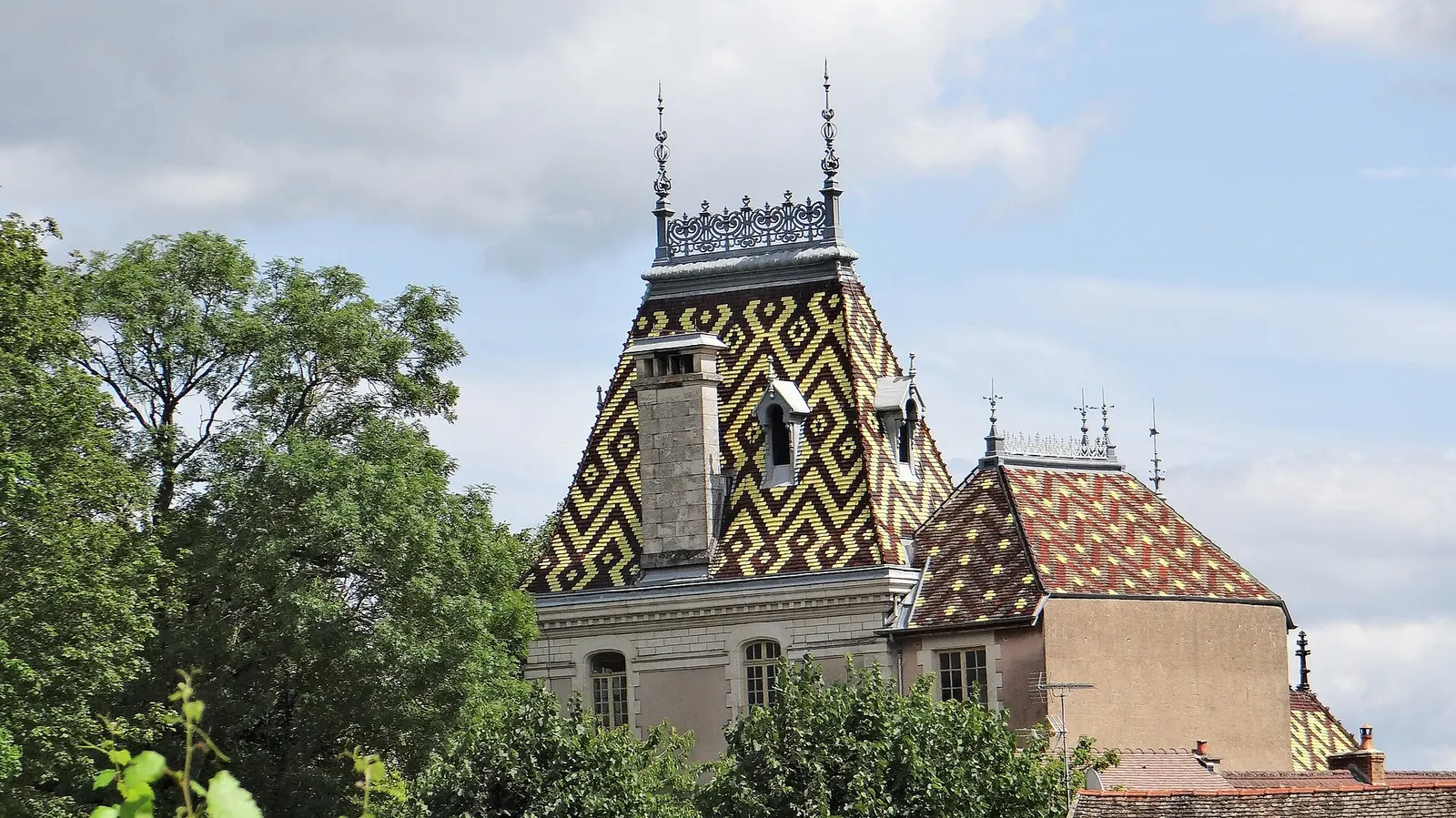
The main block rises from a rusticated stone base, with a projecting pavilion to the west and a turret with a corbelled lookout to the east. The roofs are covered in lead-glazed Burgundy tiles laid in diamond patterns, in the same tradition as the Hospices de Beaune. Carved balconies, stone balustrades and a large wrought-iron gate complete the Belle Époque look.