History
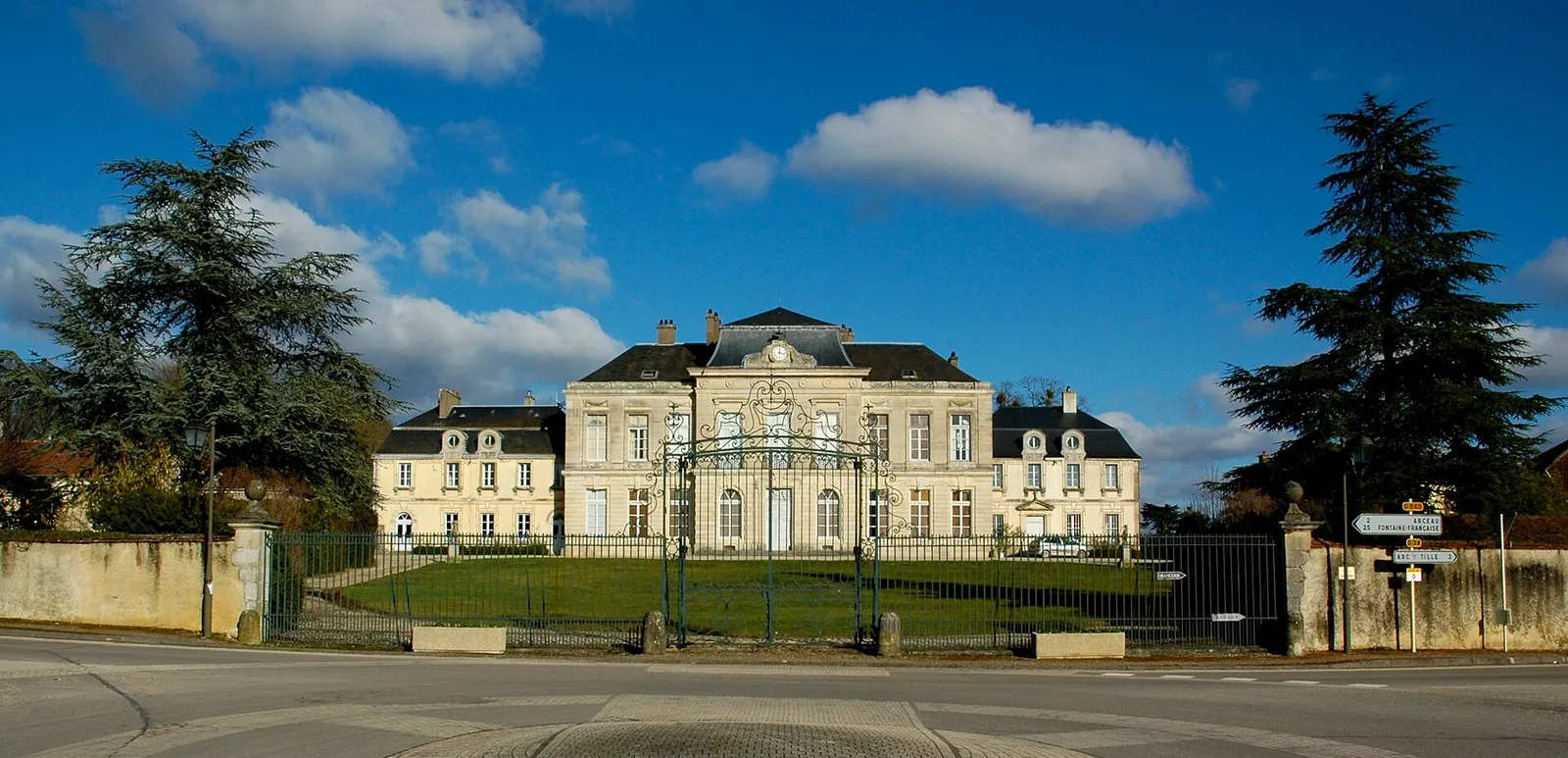
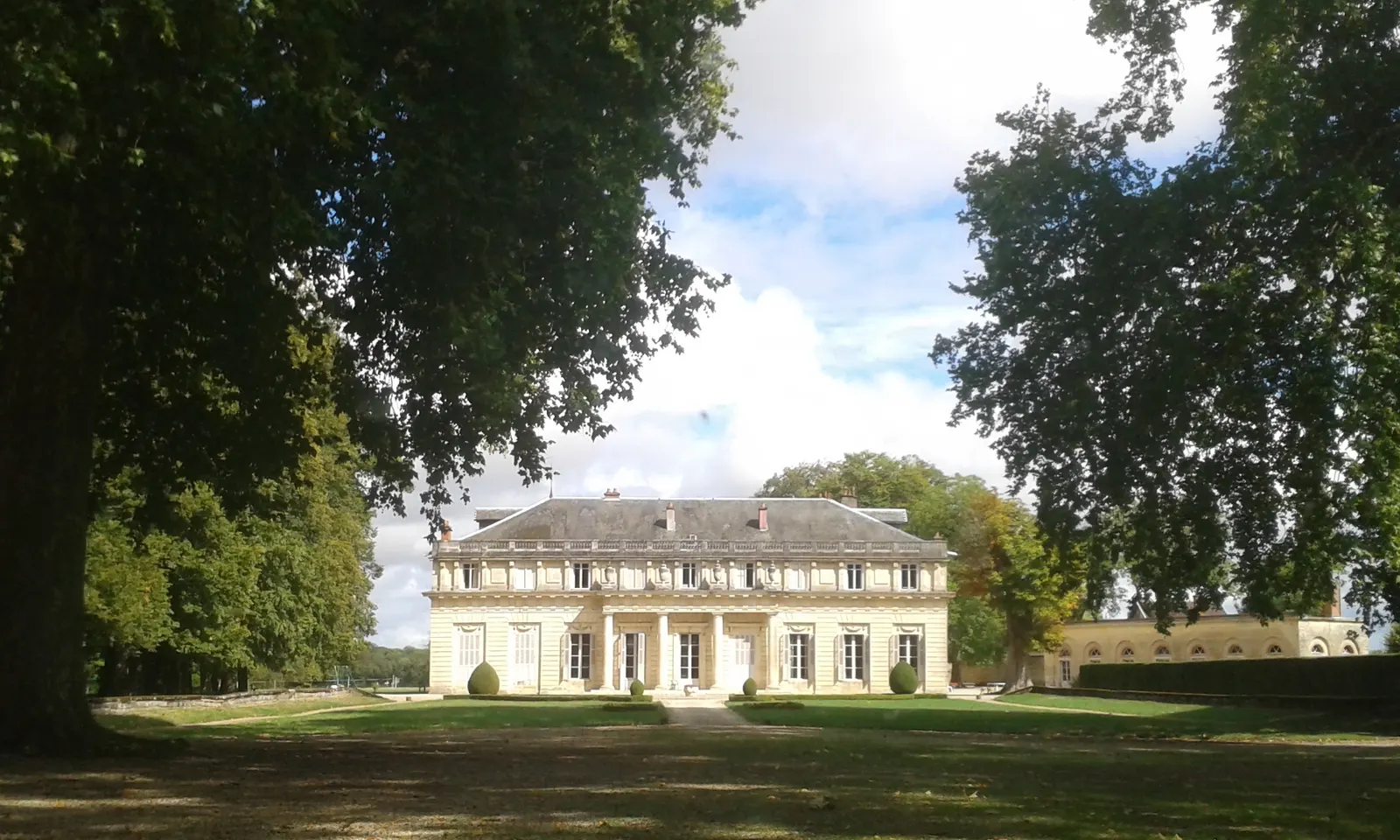
The first buildings, two pavilions housing a hunting lodge and a chapel, were built between 1711 and 1720 by Philibert Verchère. His grandson Philibert II, a councillor at the Parlement of Burgundy, commissioned the present château from Thomas Dumorey, a royal engineer as well as an architect. Built between 1761 and 1765, it is considered the first neoclassical château in Burgundy. The chapel itself goes back to the 13th century.
The formal garden planted in 1760 was turned into a landscape park in the early 19th century by Louis-Antoine Verchère, following plans still kept at the château. In 1781 Antoine-Louis Verchère raised a black marble mausoleum for his wife in the chapel. When Guillaume Verchère died childless in 1870, he left Arcelot to his nephew Ernest de Carrelet de Loisy, whose family still owns it.
Architecture
Dumorey placed the new house between the two pavilions of 1711, which were meant to be demolished but were kept and harmonised. The château has a fine stone staircase with elegant wrought-iron railings and a grand salon of 1764 to 1765 with coloured stucco imitating marble, by the German stuccoist Reuscher. The chapel, founded in the 13th century, was redecorated in the 18th.