Givry
A small wine town of 18th-century monuments, whose red wine is linked by legend to Henri IV.
- Wine village
- 40 min from Beaune
- Red and white wines
- 38 premiers crus
€360for a half-day wine tour plus one hour, from Beaune, up to 4 guests
At a glance
- Appellations
- Givry
- Grapes
- Pinot Noir, Chardonnay
Getting there
Private driver from Beaune: 40 min by road (37 km), €130 one way for the whole car.
Coming by train or plane? Transfers from stations and airports →
About Givry
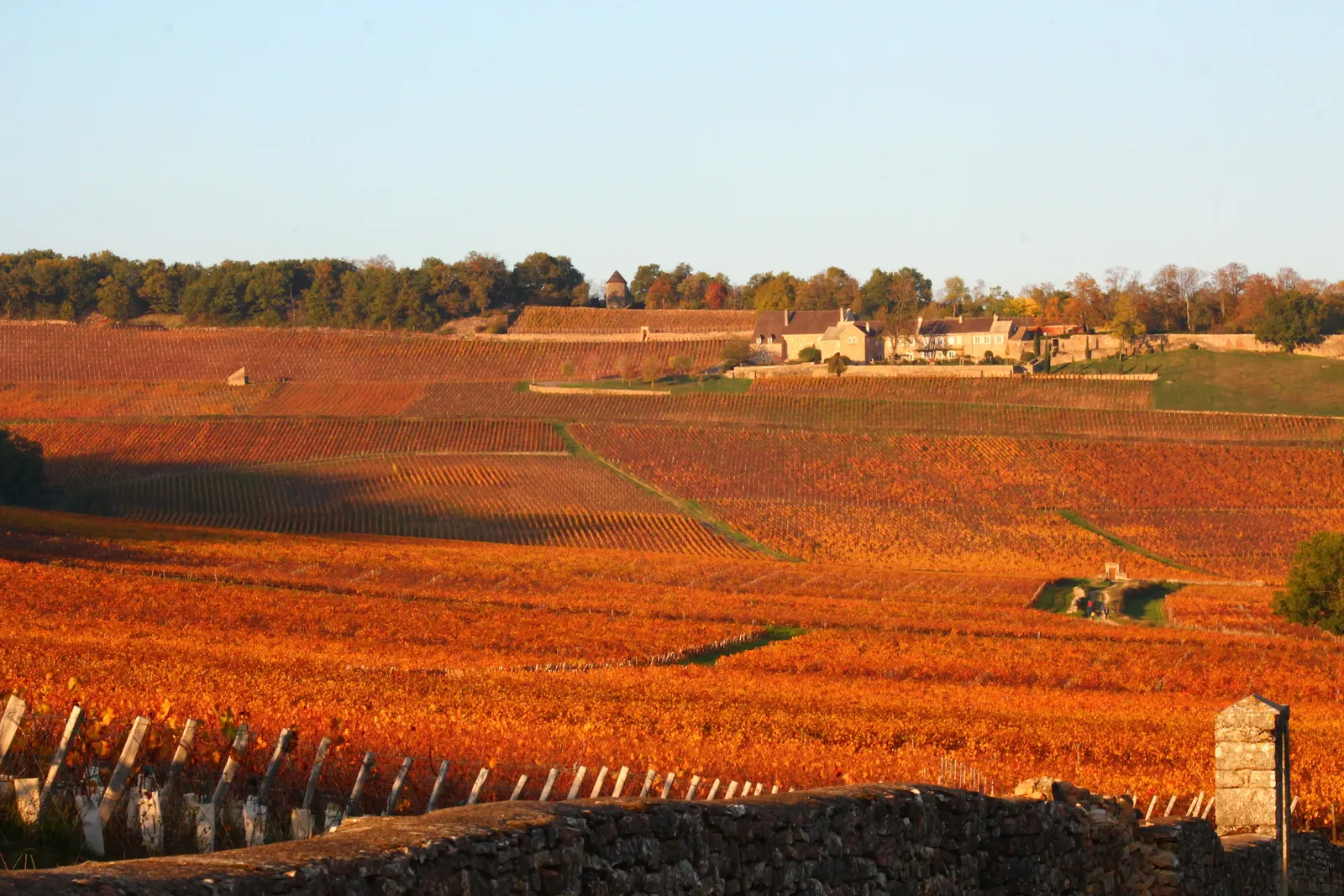
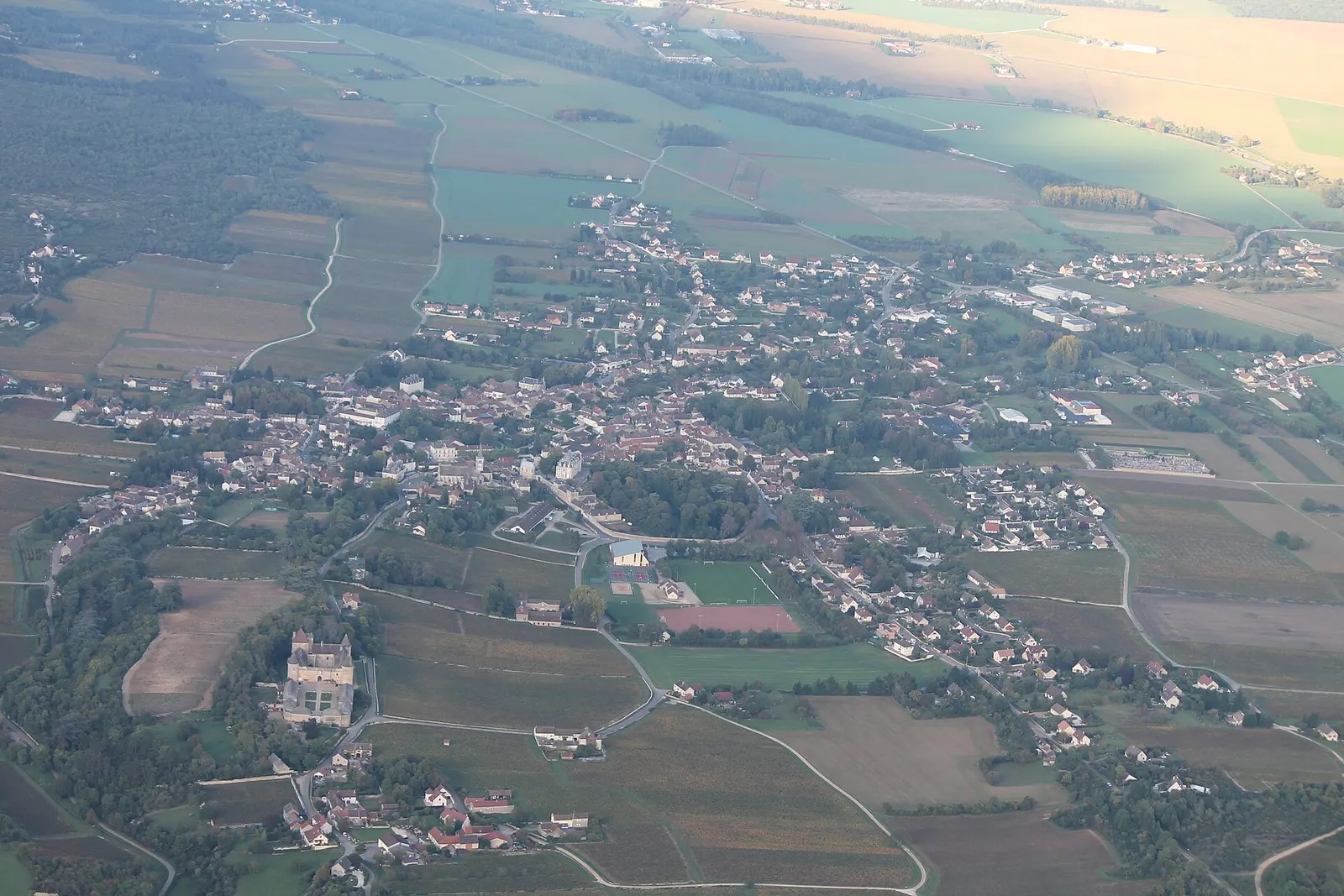
Givry is a small town about 40 minutes south of Beaune, just west of Chalon-sur-Saône. It is mostly red wine country, with 38 premiers crus. Its centre is unusually grand for its size, with a town hall built into a town gate, a round market hall and a church by Émiland Gauthey.
The wines
Givry makes red and white wines on three communes: Givry, Dracy-le-Fort and Jambles. Red Pinot Noir covers about four-fifths of the vineyard, with Chardonnay for the whites. Brown soils come from Oxfordian limestones and clay-limestones, and most vines face east-south-east or south at 240 to 280 metres. The reds show a brilliant crimson colour, with aromas of violets, strawberries and blackberries, sometimes liquorice or spice. The whites are fresh and less common.
History
In the Middle Ages the vineyard grew under the influence of religious houses from Chalon, Cluny and the Cistercian abbey of La Ferté, and the monks' cellar still lends its name to the premier cru Clos du Cellier aux Moines. The Romanesque church of Saint-Martin at Cortiambles dates from the first half of the 12th century. Local tradition, recorded by the historian Claude Courtépée, holds that King Henri IV made Givry his favourite wine.
The 18th century gave Givry its fine centre. The town hall was built from 1759 to 1771 in a former town gate, the work of the Chalon engineers Émiland Gauthey and Thomas Dumorey. Gauthey then led the building of the church of Saints-Pierre-et-Paul, from 1772 to 1791, and the Dolphin Fountain was completed in 1776. The round covered market, first a grain hall, followed from 1825 to 1830. The appellation dates from 1946.
Well-known premiers crusClos Salomon · Clos du Cellier aux Moines · Clos Jus · Servoisine · Clos Charlé · La Grande Berge
What to see
Town hall gate
Completed in 1771 to plans by Émiland Gauthey and Thomas Dumorey, the town hall is built into an old town gate. A listed monument since 1931, it is often counted among the finest in France.
Halle ronde
A circular grain market built from 1825 to 1830 by the Chalon architect Lazare Narjoux, topped by a cockerel weathervane on a sheaf of wheat. It now hosts exhibitions and events.
Church of Saints-Pierre-et-Paul
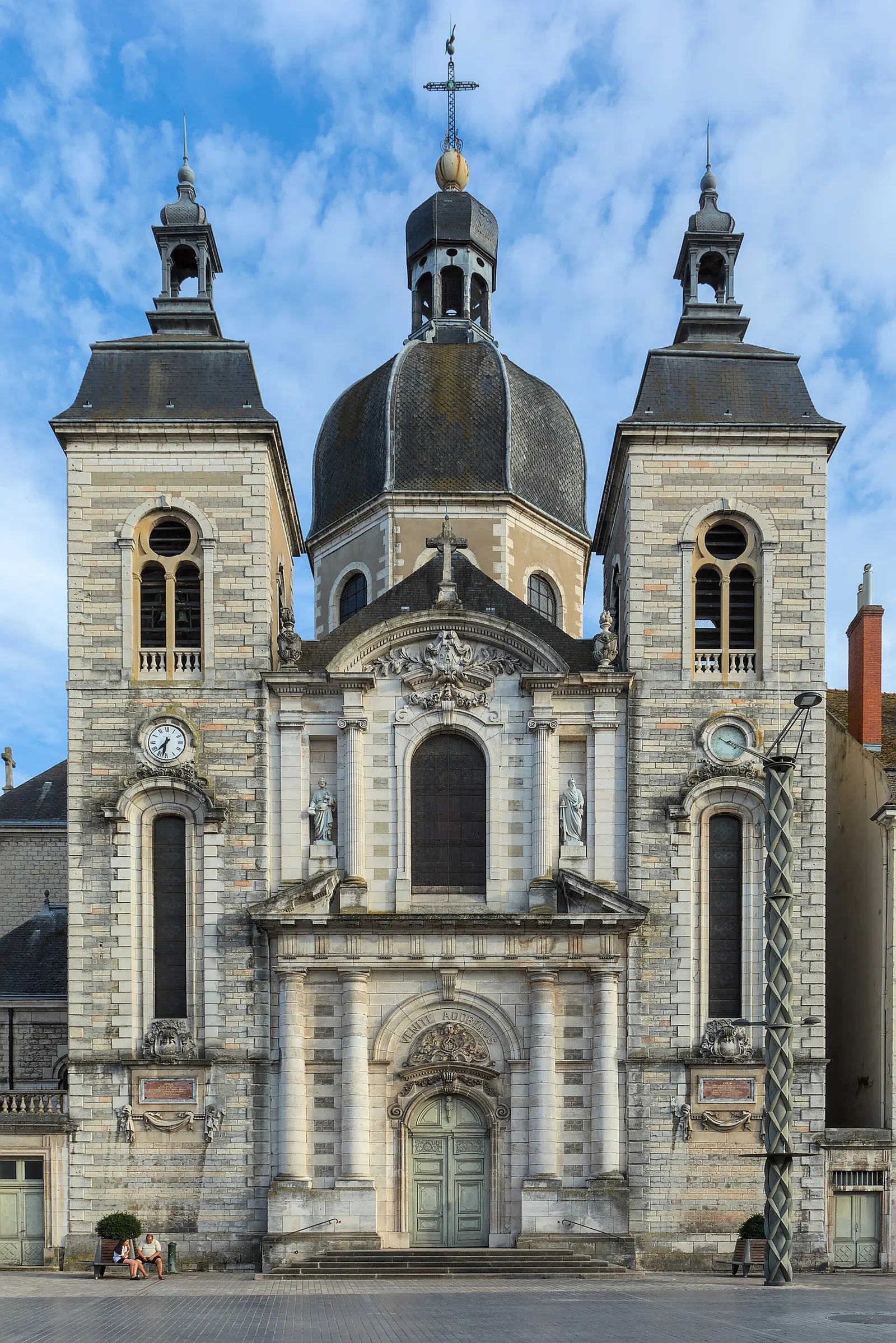
Built from 1772 to 1791 under Gauthey, in Givry stone that is pinkish outside and white inside. It faces south toward the road, and its spire rises 47 metres.
Around here
What to combine with Givry on the same day, nearest first.
Guides about Givry
Questions
Givry is about 40 min from Beaune by road (37 km). With a private driver, the trip from Beaune starts at €130 for the whole car, up to 4 guests.
Did you know? Givry still holds its parish register for 1334 to 1357. Its pages record the Black Death sweeping through the town in the summer and early autumn of 1348.
Sources
Givry with a private driver
Half-day wine tour plus one hour from Beaune: €360 for the car, up to 4 guests