Santenay
Spa town and wine village near the southern end of the Côte de Beaune, known for its reds.
- Wine village
- 23 min from Beaune
- Red and white wines
- 11 premiers crus
€290for a half-day wine tour from Beaune, up to 4 guests
At a glance
- Appellations
- Santenay
- Grapes
- Pinot Noir, Chardonnay
Getting there
Private driver from Beaune: 23 min by road (19 km), €90 one way for the whole car.
Coming by train or plane? Transfers from stations and airports →
About Santenay
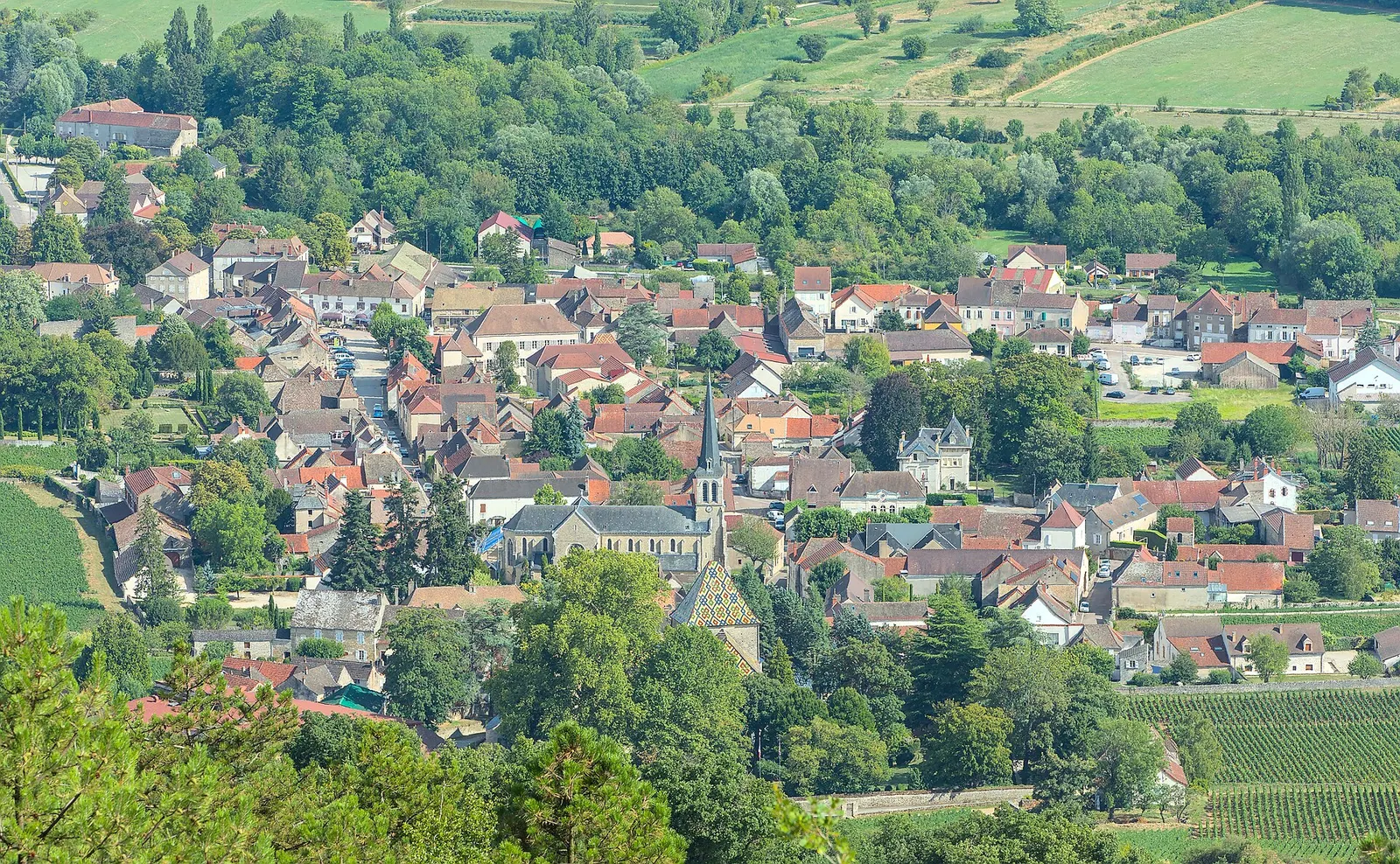
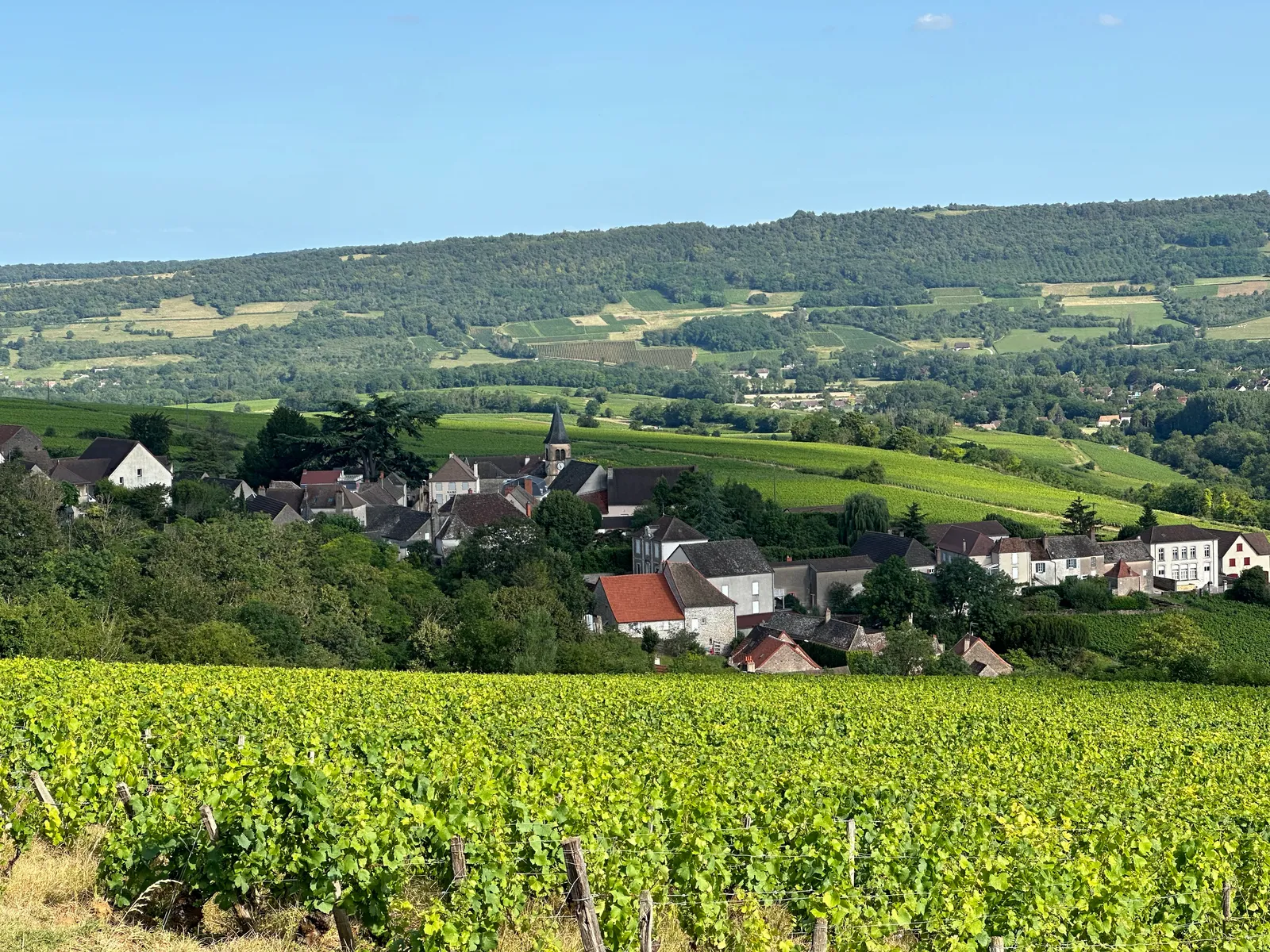
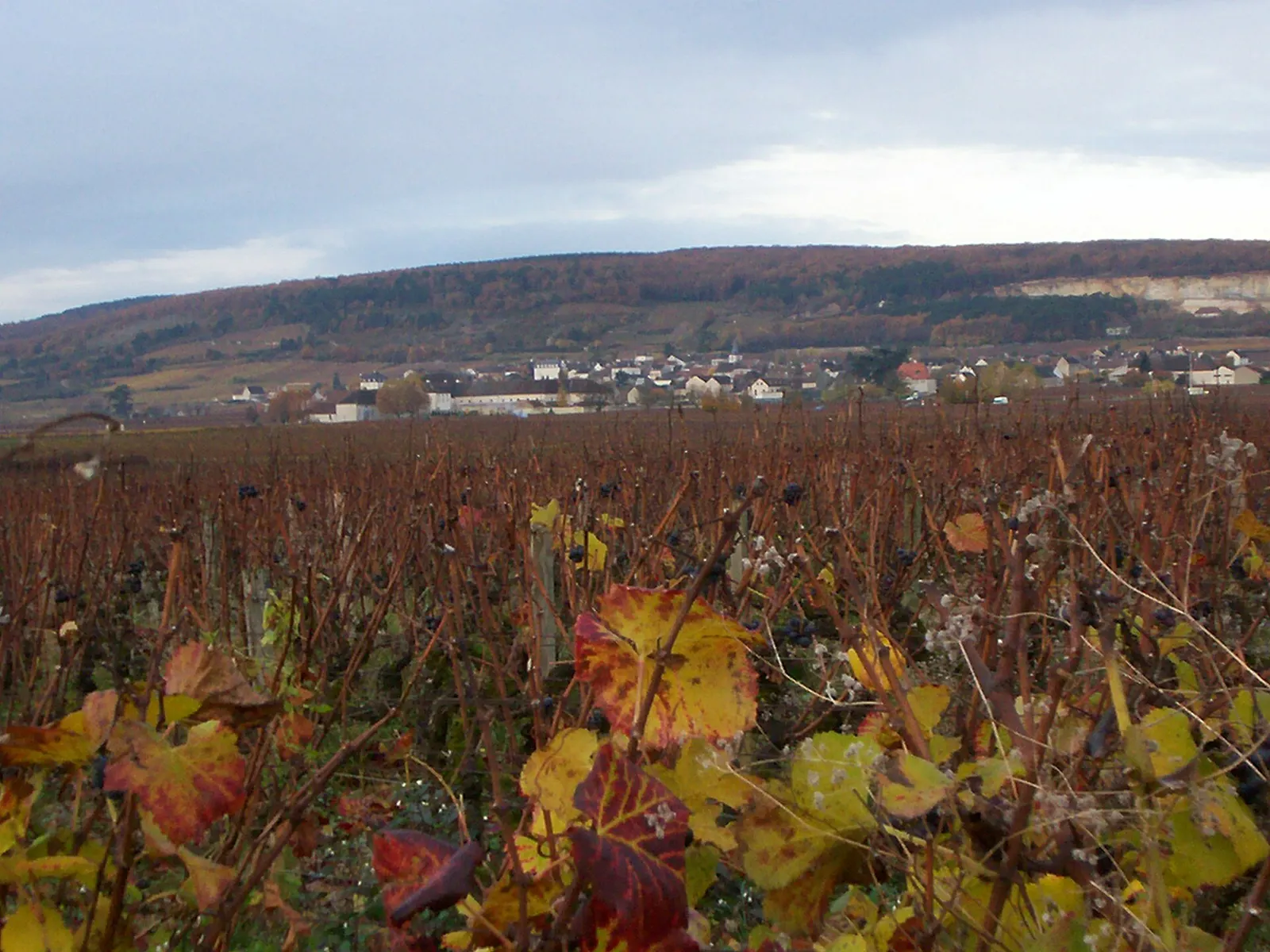
Santenay spreads along the foot of the slope below the Mont de Sène, the hill of the Three Crosses. It is a wine village with a twist: salty springs made it a spa town, and it still has a thermal centre. Most of its wine is red Pinot Noir, with 11 premier cru climats and some fine whites.
The wines
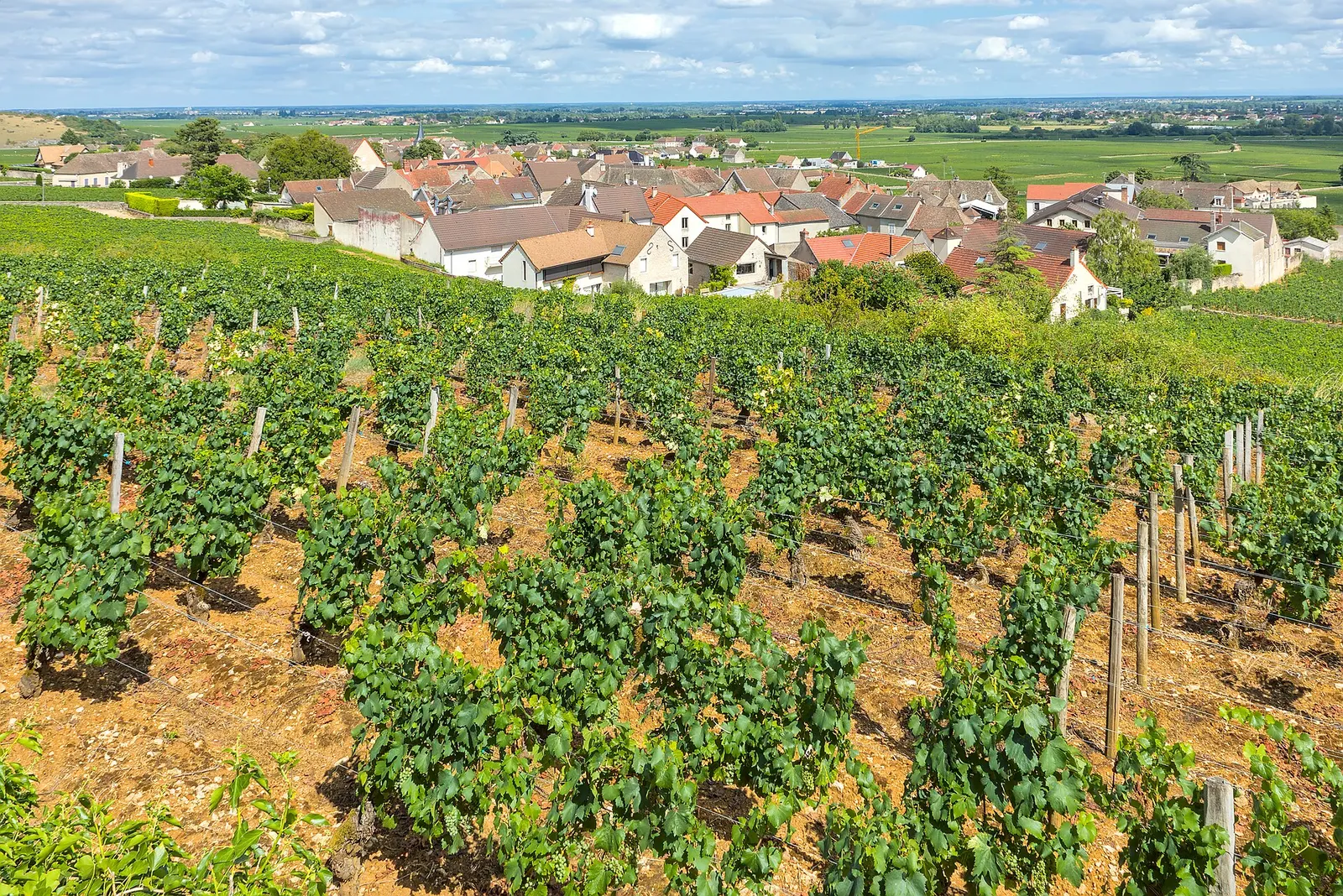
Grey limestone tops the slopes, with oolitic limestone, marls and limestone nodules lower down, and the vines face east to south. Red dominates: in 2022 about 258 hectares of Pinot Noir against 72 of Chardonnay, per the Burgundy wine board. The reds are deep purple, with rose petal, violet, red fruit and a hint of liquorice over fine tannins. The whites are bright, floral and mineral, with notes of fern and hazelnut.
History
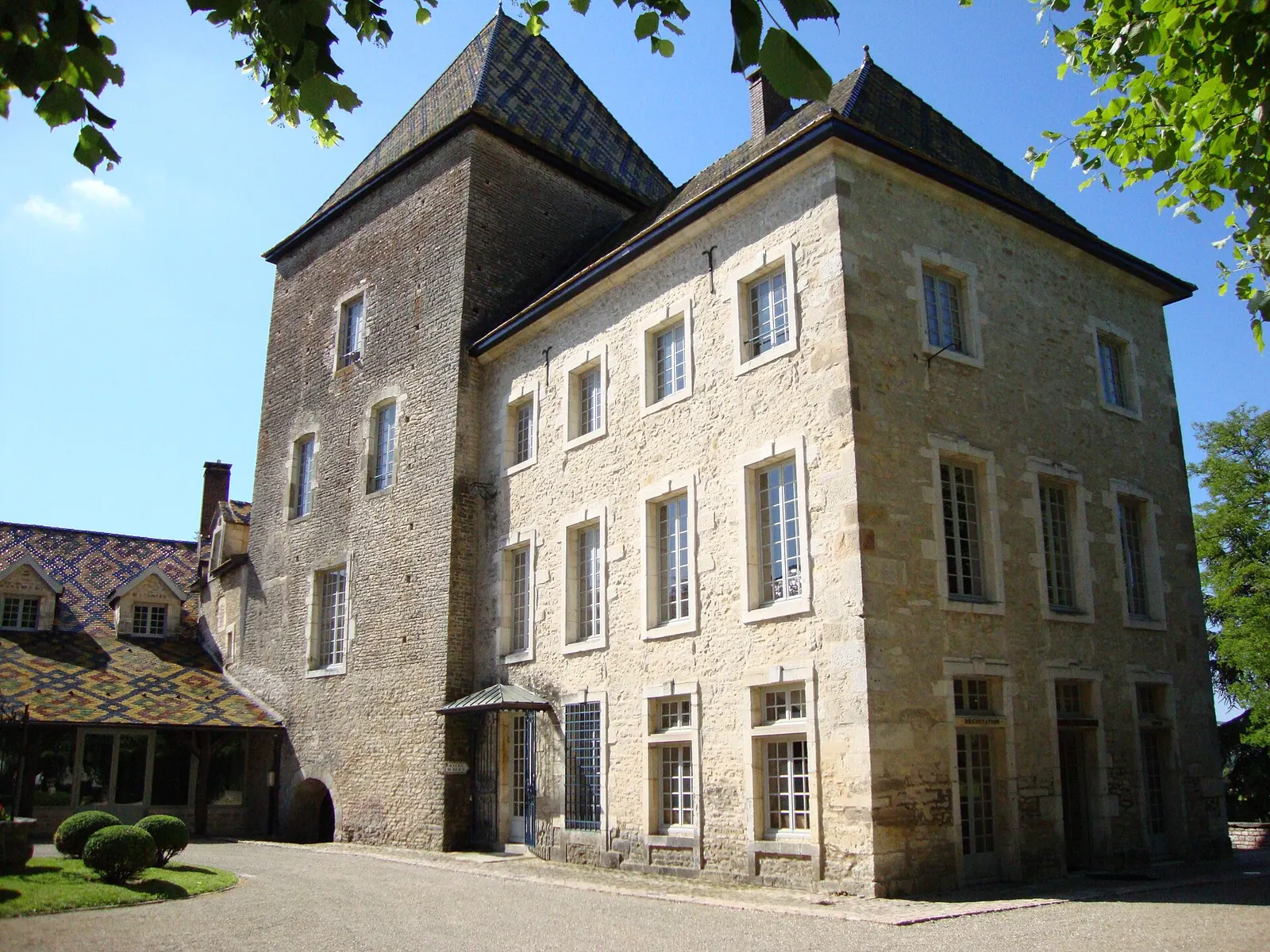
People gathered around Santenay's springs and hills in ancient times. On the summit of the Mont de Sène the Romans built a temple to Mercury, and older dolmens show that the hill was already occupied in the Neolithic. The village castle, a 14th-century fortified house, is known as the Château Philippe le Hardi, after Duke Philip the Bold of Burgundy. He is remembered in wine history for his 1395 order banning Gamay from Burgundy's vineyards in favour of Pinot Noir.
Three tall crosses crown the Mont de Sène, which is why locals call it the Montagne des Trois Croix. The Santenay appellation was created by decree on 8 December 1936, and it also covers part of neighbouring Remigny, in Saône-et-Loire. Eleven climats are classified premier cru. The village has twice hosted the Saint-Vincent tournante, Burgundy's roving winter wine festival, in 1963 and in 1989.
Well-known premiers crusLes Gravières · Clos de Tavannes · La Comme · Beauregard · La Maladière · Clos Rousseau
What to see
Mont de Sène
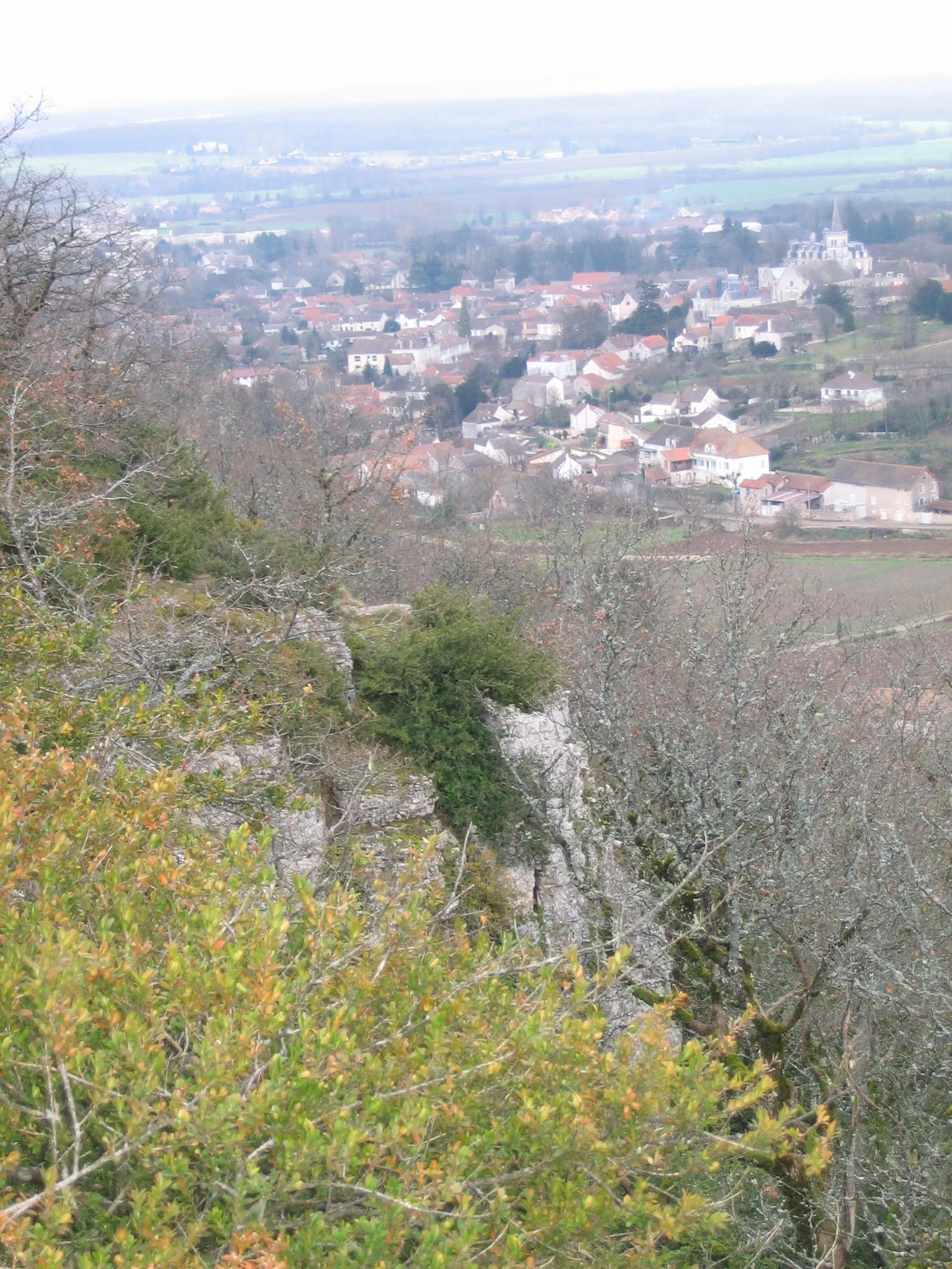
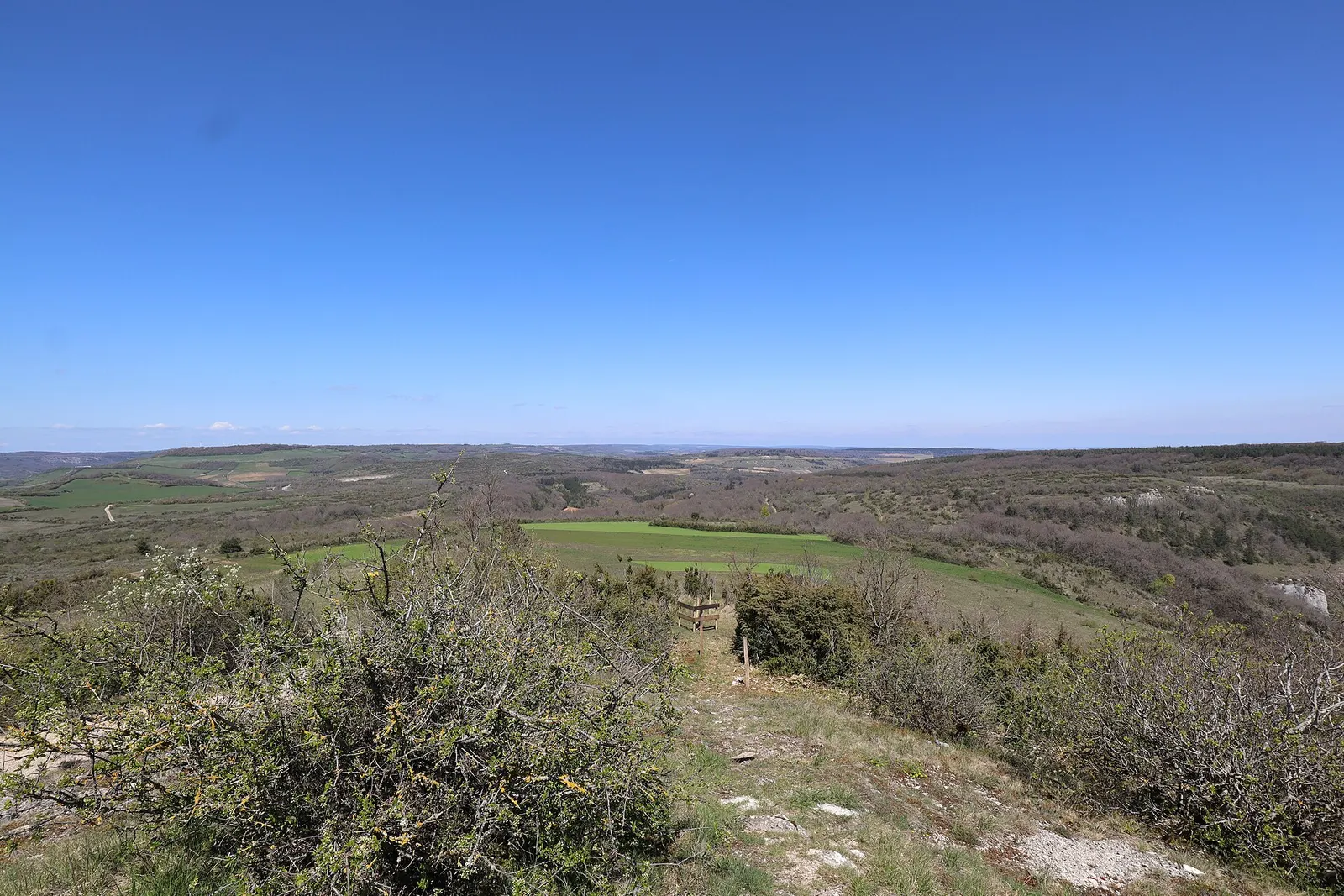
At 521 metres, the Montagne des Trois Croix rises above Santenay and the Maranges. Its summit looks over the Côte de Beaune, the Saône valley and the Morvan, with viewing tables to help.
Moulin Sorine
Built in the early 19th century and restored to working order in the 1990s, this is the only windmill on the Côte de Beaune, according to the local tourist office.
Church of Saint-Jean de Narosse
In the upper village, this church grew from a chapel begun in 1220. A late 15th-century choir and a 16th-century bell tower join a Romanesque porch. It has been a classified monument since 1928.
Greenway to Nolay
A former railway line, now a 13 km greenway, runs from Santenay to Nolay through the Maranges hills. The Voie des Vignes cycle route also links Santenay with Beaune.
Tips for your visit
Allow one to two hours, more if you climb the Mont de Sène for the view. Santenay combines well with Chassagne-Montrachet and with the Maranges villages just to the west, a relaxed end to a southern loop.
Around here
What to combine with Santenay on the same day, nearest first.
Maranges
3 km awayBouzeron
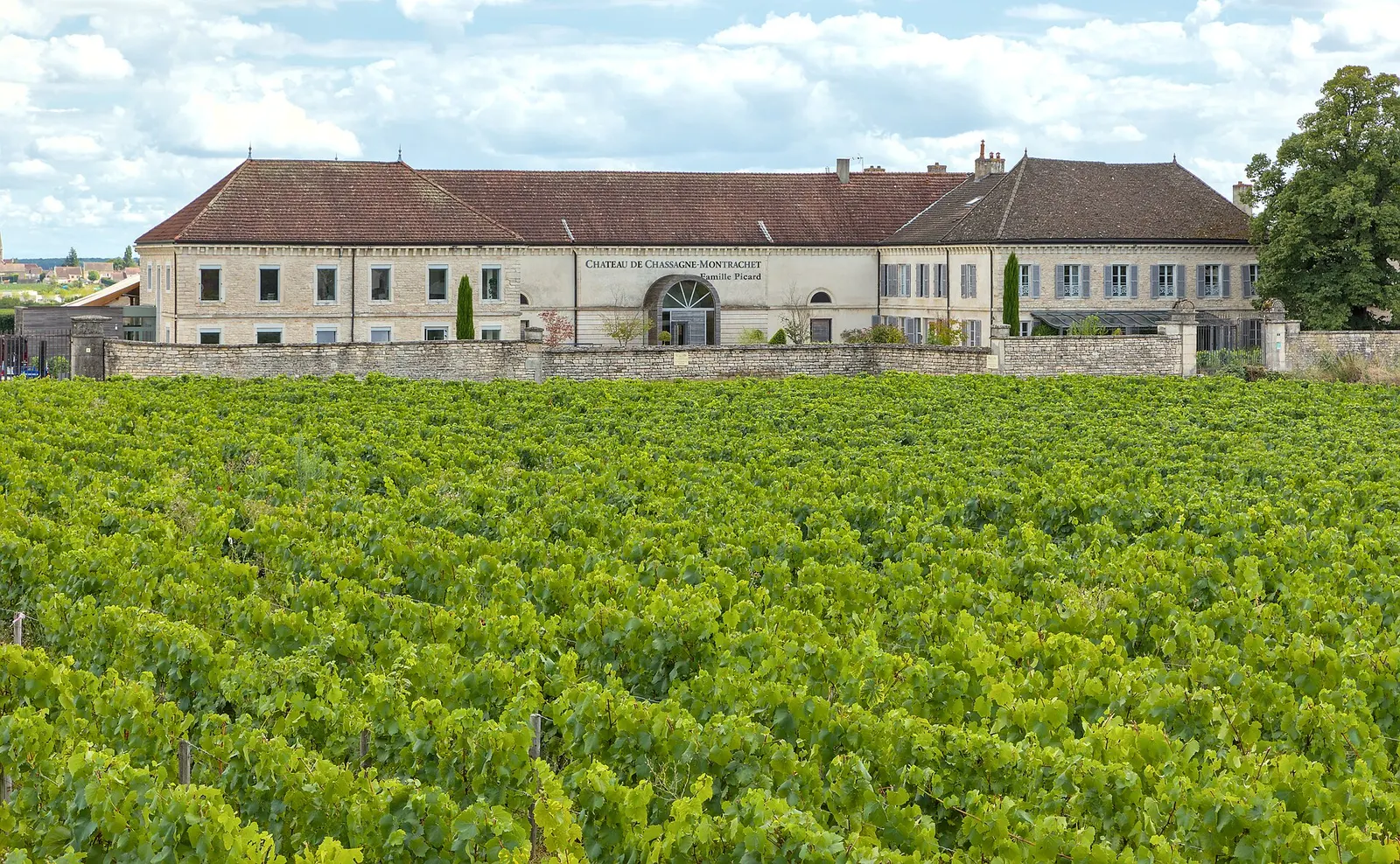
3 km awayChassagne-Montrachet
4 km away
- Nature and viewpoint
Mont de Sène (Hill of the Three Crosses) Mont de Sène (Montagne des Trois Croix)
2 km away
Questions
Santenay is about 23 min from Beaune by road (19 km). With a private driver, the trip from Beaune starts at €90 for the whole car, up to 4 guests.
Did you know? Santenay is also a spa town. Its salty spring, the Fontaine Salée, fed baths in Gallo-Roman times, and a thermal centre still welcomes visitors for cures today.
Sources
Santenay with a private driver
Half-day wine tour from Beaune: €290 for the car, up to 4 guests