Place de la Libération
Dijon's half-moon royal square, laid out by Louis XIV's architect in front of the Palace of the Dukes.
- Heritage site
- 44 min from Beaune
- Allow 20 to 30 minutes
- UNESCO World Heritage
€120one way from Beaune with a private driver
At a glance
- Where
- Dijon · Côte-d'Or
Getting there
Private driver from Beaune: 44 min by road (48 km), €120 one way for the whole car.
Or add it to our full-day wine tour, €560.
Coming by train or plane? Transfers from stations and airports →
About the place
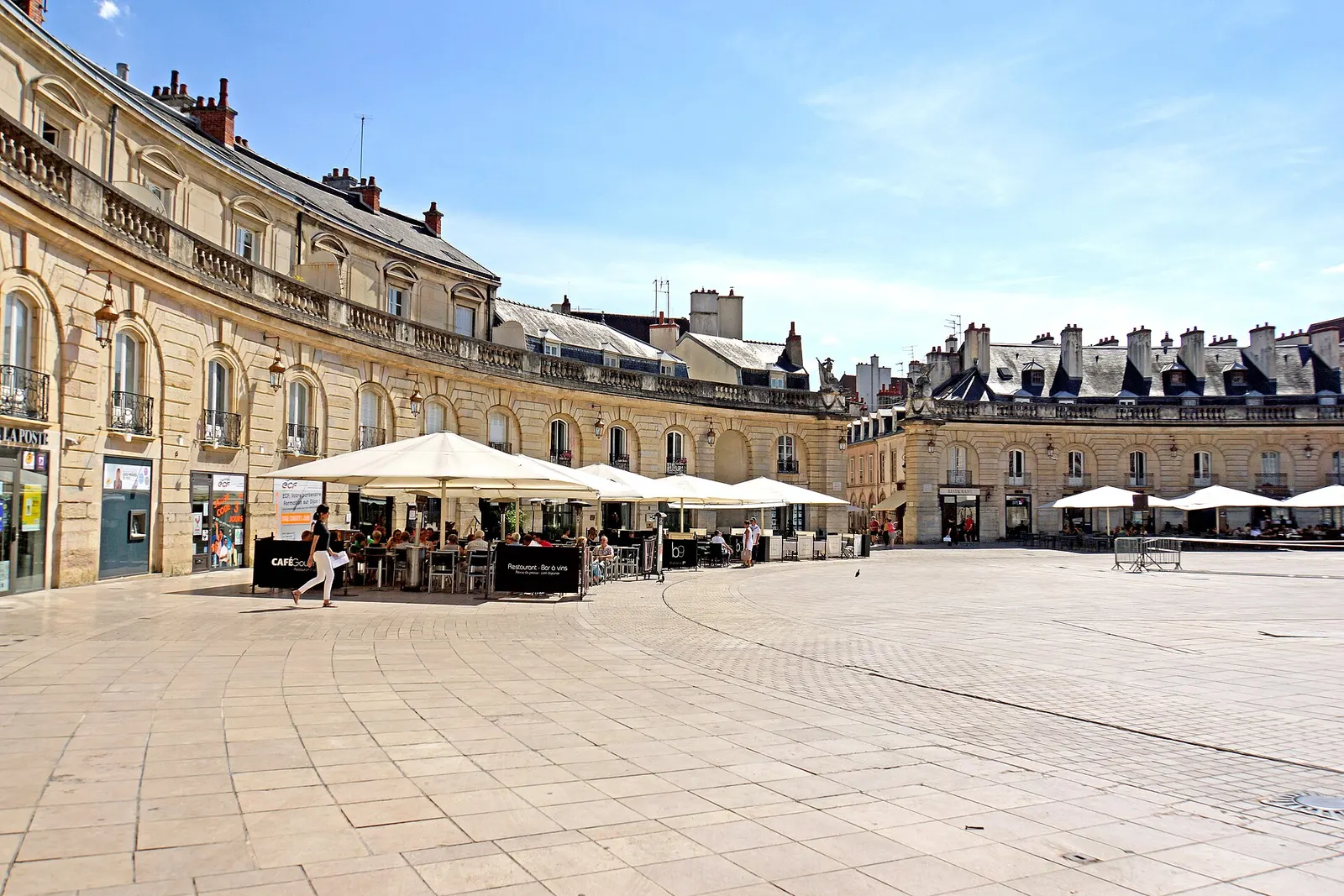
Place de la Libération is the grand semicircular square in front of the Palace of the Dukes and States of Burgundy, at the heart of old Dijon. Jules Hardouin-Mansart, the architect of Versailles, designed it in the 1680s as a royal square. Today it is pedestrian, paved in Burgundy stone and lined with café terraces around three fountains of water jets.
What you will see
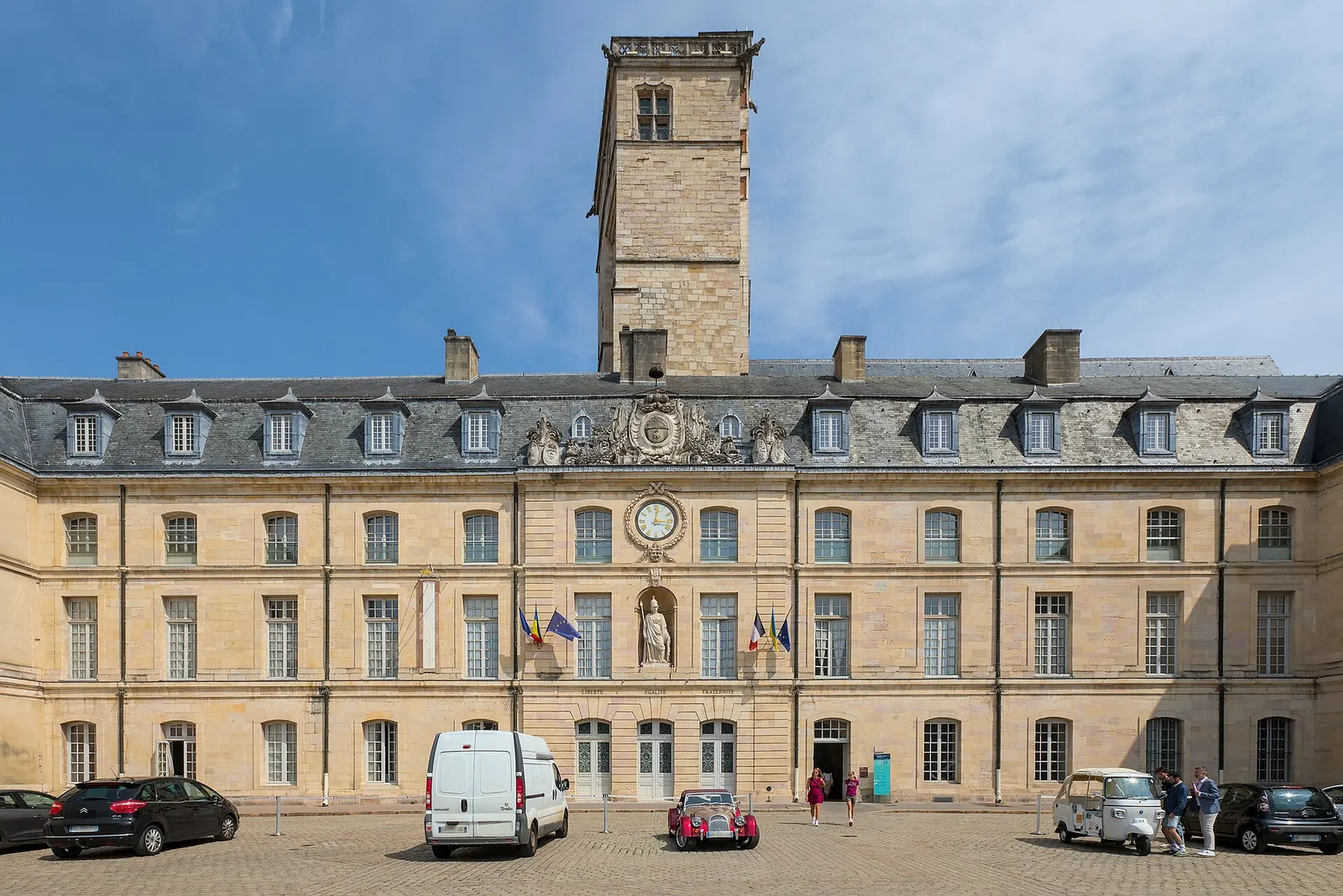
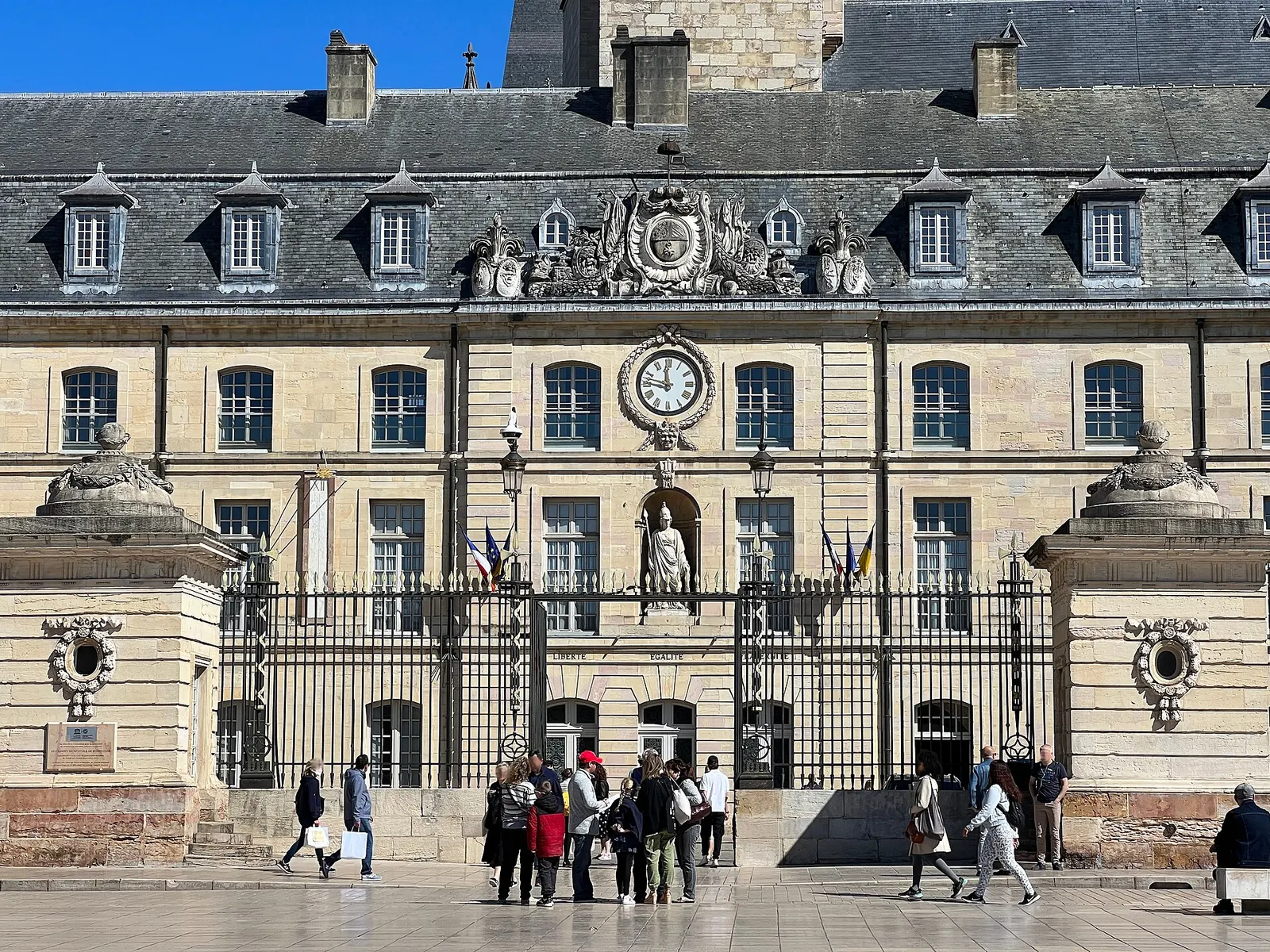
Stand in the middle of the hemicycle and turn slowly. On one side rises the classical facade of the palace, now the town hall and the Fine Arts Museum, with the Tour Philippe le Bon behind it. On the other runs the curve of arcaded houses, with their café and restaurant terraces. Jets of water spring straight from the paving, and in summer children run between them. At night the facades are lit and the square is at its most elegant.
History
The square was laid out between 1686 and 1689 to plans by Jules Hardouin-Mansart, on the site of a small square and old buildings of the ducal palace. It was designed as a setting for a bronze equestrian statue of Louis XIV by Étienne Le Hongre. The statue weighed 26 tonnes. Its journey from Paris began in 1692 but stopped at Auxerre, where it stayed for 27 years before reaching Dijon in 1720. It was inaugurated in 1725 and destroyed on 15 August 1792, and part of its bronze went to the cannon foundries of Le Creusot.
The square's name followed the politics of France. Place Royale became Place d'Armes in 1792, Place Impériale in 1804, Place Royale again in 1814 and Place d'Armes once more in 1831. The town council named it after Marshal Pétain in 1941, and it took its present name at the Liberation of Dijon in September 1944. General de Gaulle spoke here on 23 October 1944. Canon Félix Kir, later mayor of Dijon, lived at No. 4 and survived an assassination attempt there in January 1944.
The facades of the arcaded houses around the hemicycle have been classified as historic monuments since 1937. In 2005 and 2006 the architect Jean-Michel Wilmotte turned the square, then a car park, into a pedestrian space. He replaced the tarmac with Comblanchien stone and added three fountains whose water is collected and recycled. Archaeological remains under the paving ruled out planting trees.
Planning your visit
Tips for your visit
The square is open at all times and free. Allow 20 to 30 minutes, or longer with a drink on a terrace. It is the natural start of a walk through the old town: the Fine Arts Museum is in the palace, rue des Forges and the owl of Notre-Dame are a few minutes away on foot, and rue de la Liberté leads west to the Porte Guillaume. The centre is largely pedestrian, so plan to be dropped off at its edge.
Around here
What to combine with Place de la Libération on the same day, nearest first.
Dijon
1 km awayMarsannay-la-Côte
7 km awayFixin
10 km away
- Heritage site
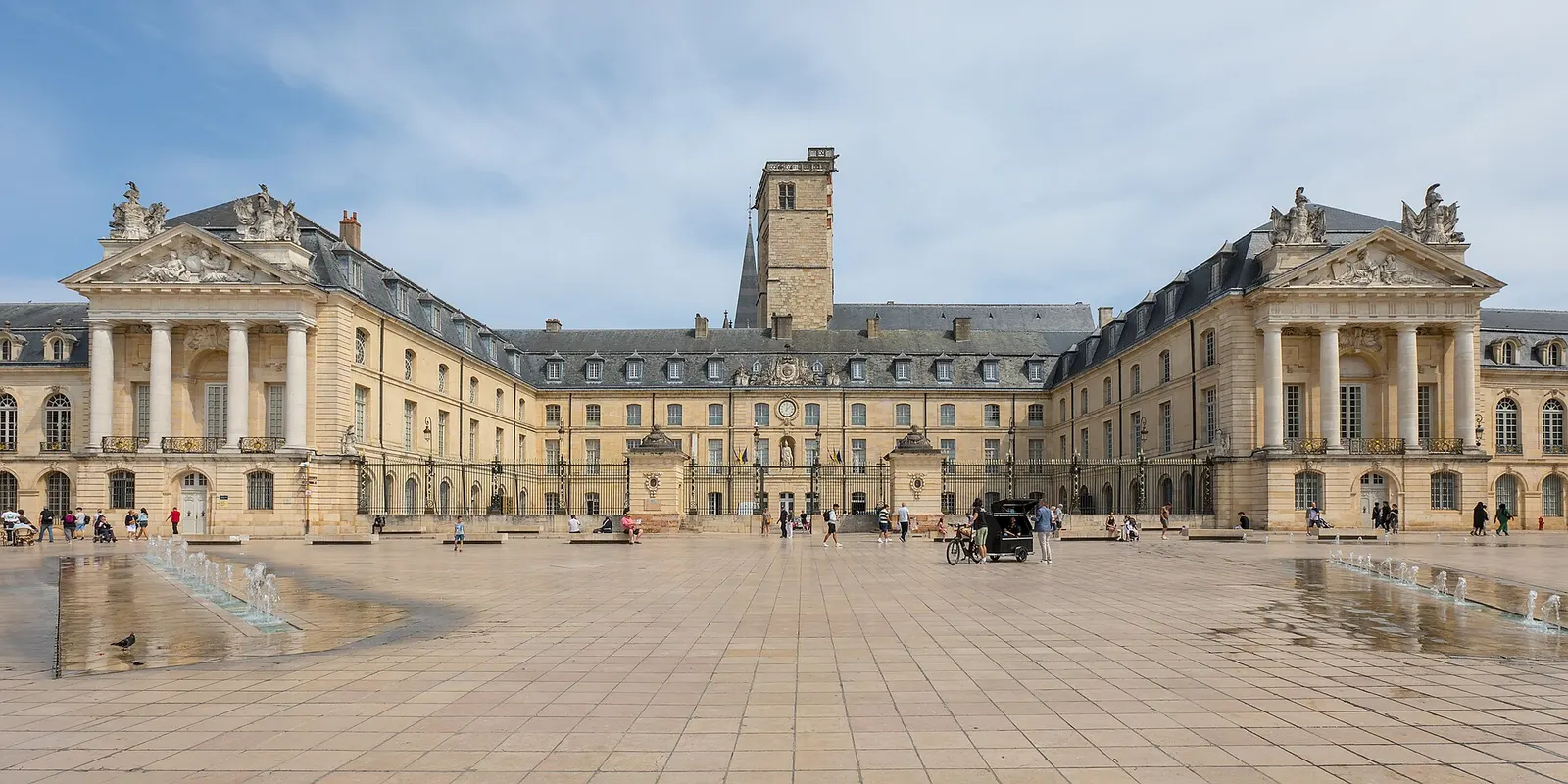
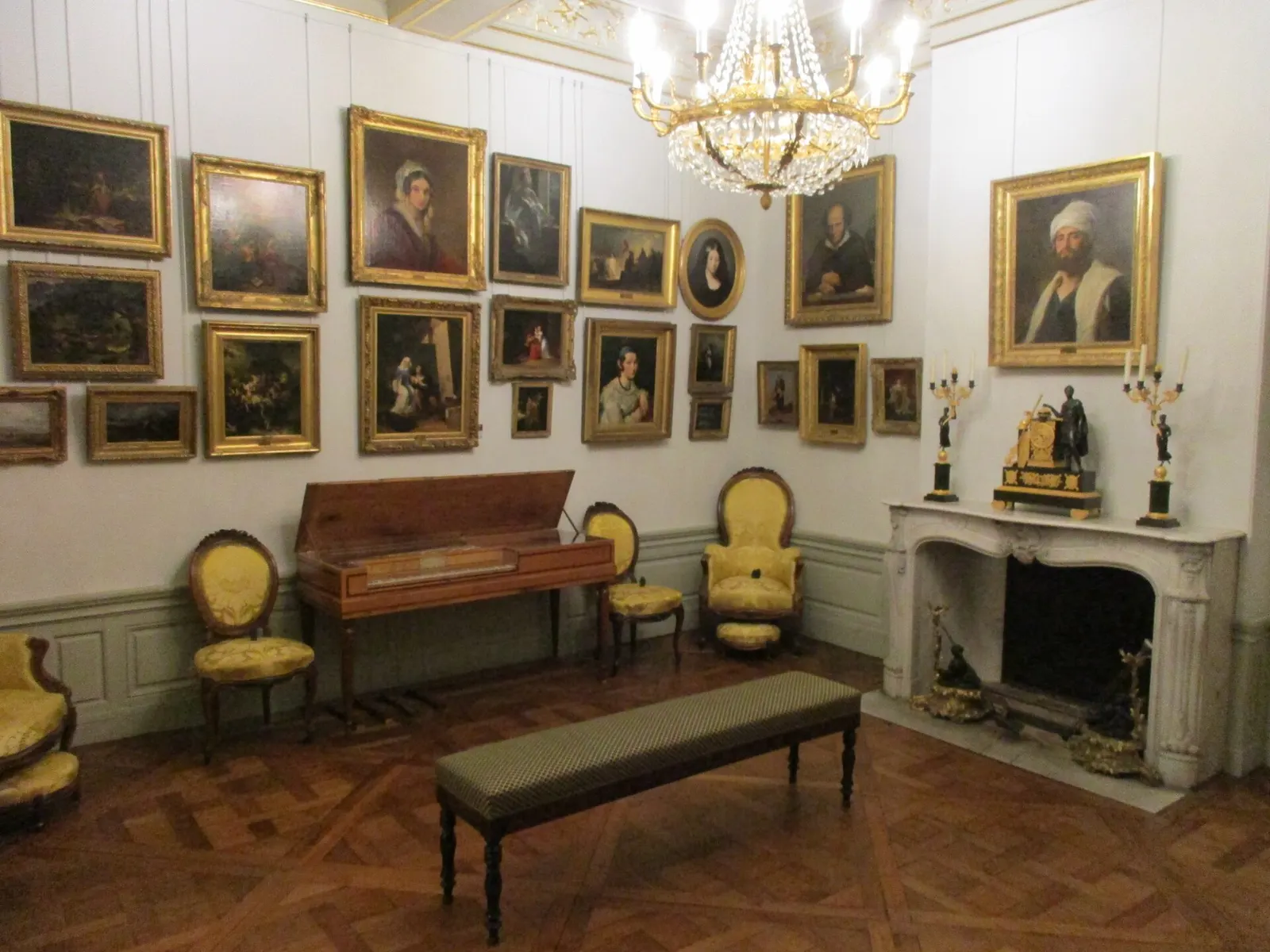
Palace of the Dukes and Estates of Burgundy Palais des Ducs et des États de Bourgogne
1 km away
- Christmas
Les Fééries de Noël de Dijon
Usually from the last Saturday of November to the first Sunday of JanuaryDijon - Tradition
Fête de la Pressée
Usually the third weekend of September, during the European Heritage DaysChenôve
Questions
Place de la Libération is about 44 min from Beaune by road (48 km). With a private driver, the trip from Beaune starts at €120 for the whole car, up to 4 guests.
Did you know? The bronze Louis XIV for which the square was built weighed 26 tonnes. The roads were so poor that it waited 27 years at Auxerre and only reached Dijon in 1720, pulled by twenty pairs of oxen.
Sources
Place de la Libération with a private driver
€120 one way from Beaune · up to 4 guests