Rue des Forges
Merchants' mansions behind the ducal palace, and a Flamboyant Gothic courtyard hidden at No. 34.
- Heritage site
- 45 min from Beaune
- Allow 30 to 45 minutes
- UNESCO World Heritage

At a glance
- Where
- Dijon · Côte-d'Or
- Official website
- destinationdijon.com
About the place
Rue des Forges is Dijon's old merchants' street behind the Palace of the Dukes. You pass houses from the 13th to the 16th century, the paired arches of the Hôtel Aubriot and the carved lion masks of the Maison Milsand, and, through a passage at No. 34, reach the Gothic courtyard of the Hôtel Chambellan with its wooden gallery and carved gardener. A short walk for architecture lovers.
What you will see
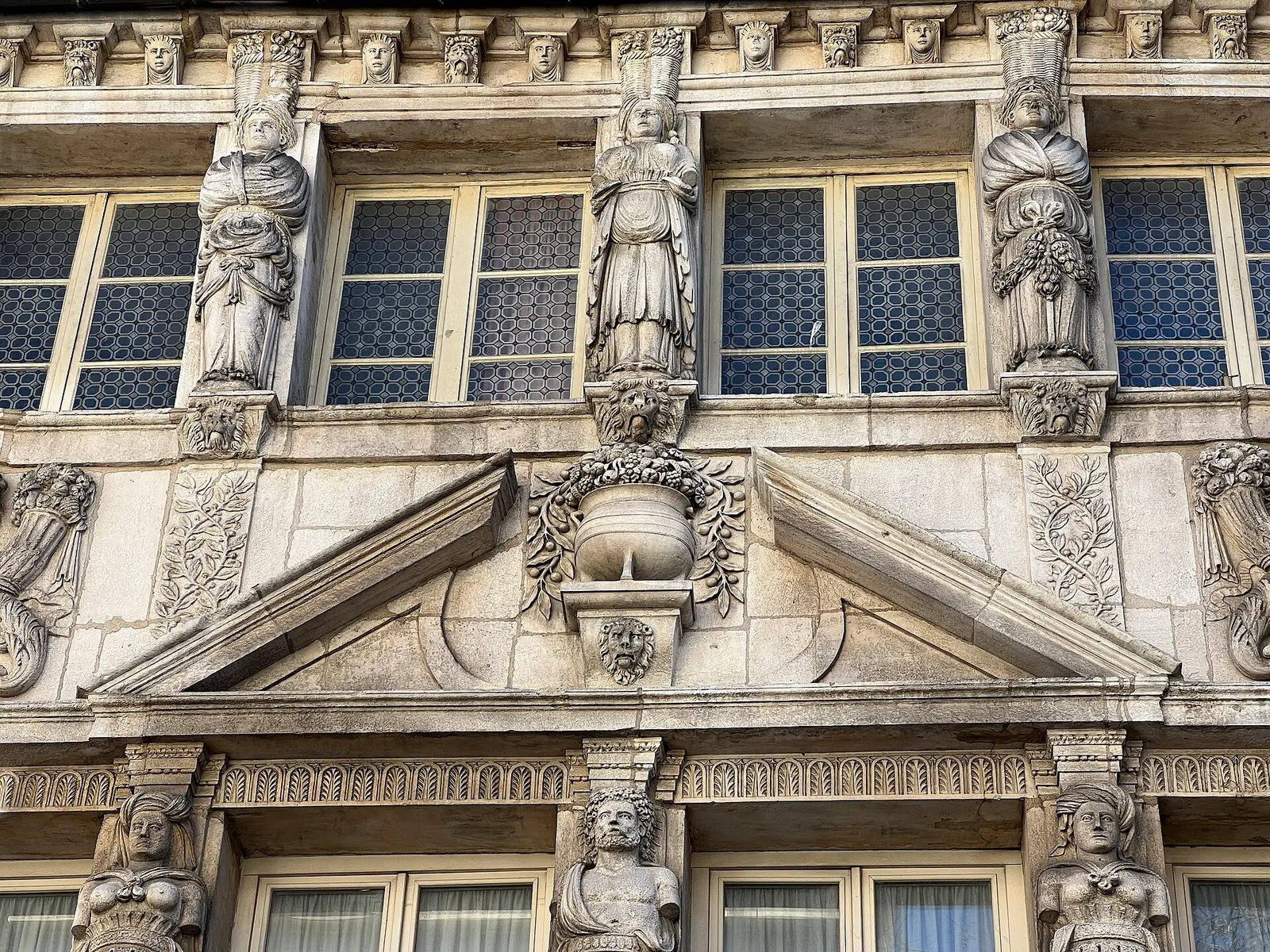
Walk the street slowly and look up. The arcaded windows of the Hôtel Aubriot, the lion masks, garlands and vases of the Maison Milsand and the old shop arches of the Hôtel Morel-Sauvegrain stand side by side. At No. 34, a long vaulted passage leads into the Chambellan courtyard, with a two-storey wooden gallery and a stair tower. At the top of its spiral staircase, a carved figure known as the gardener carries a basket on his shoulder, and the ribs of the vault seem to spring out of it.
History
The Hôtel Chambellan was built in the second half of the 15th century for a family of wealthy cloth merchants. Henri Chambellan, a draper, was mayor of Dijon from 1490 to 1493 and later sat on the Chamber of Accounts. The house was classified as a historic monument in 1913, and its chapel in 1917. The city owned it from 1913 until 2008, when it was sold to a private owner, and it was restored in 2018.
The neighbouring houses tell more of the street's story. No. 38, the Maison Maillard, also called Maison Milsand, was built in 1561 for Jean Maillard, then mayor, and its carved upper facade is attributed to the cabinetmaker and architect Hugues Sambin. No. 40, the Hôtel Aubriot, keeps a 13th-century facade with paired round arches, restored in 1908. Further on, the Hôtel Morel-Sauvegrain at Nos. 52 to 56 dates from around 1475.
Planning your visit
Tips for your visit
The tourist office is at No. 11, so start the Owl's Trail here in the morning and walk on to Notre-Dame and its owl, Place de la Libération and the Halles market, all a few minutes away; lunch at Loiseau des Ducs, close by, rounds off a Dijon morning. The Hôtel Chambellan is private: the tourist office asks visitors to respect the owners' privacy and not to push the doors, so you see the courtyard only when it is open.
Getting there
From Beaune: 45 min by road (48 km), €120 one way for the car, up to 4 guests.
From Paris (Charles de Gaulle, Orly or your address): about 3 h 05 from central Paris, 3 h 35 from Charles de Gaulle; €750 for the car, and the same fare back for your flight.
From Lyon airport and the stations too: all fares Book this ride
Around here
What to combine with Rue des Forges on the same day, nearest first.
Dijon
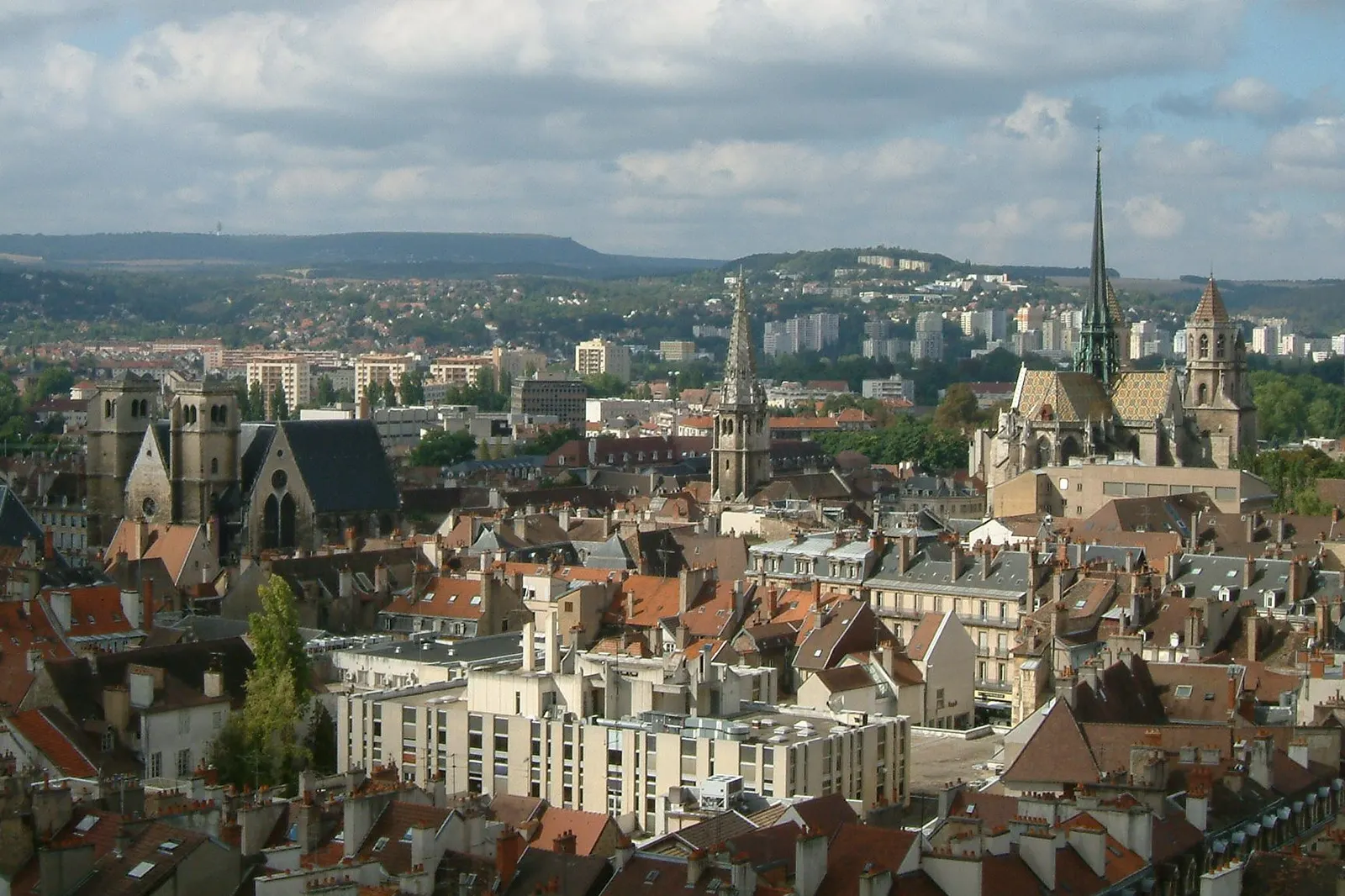
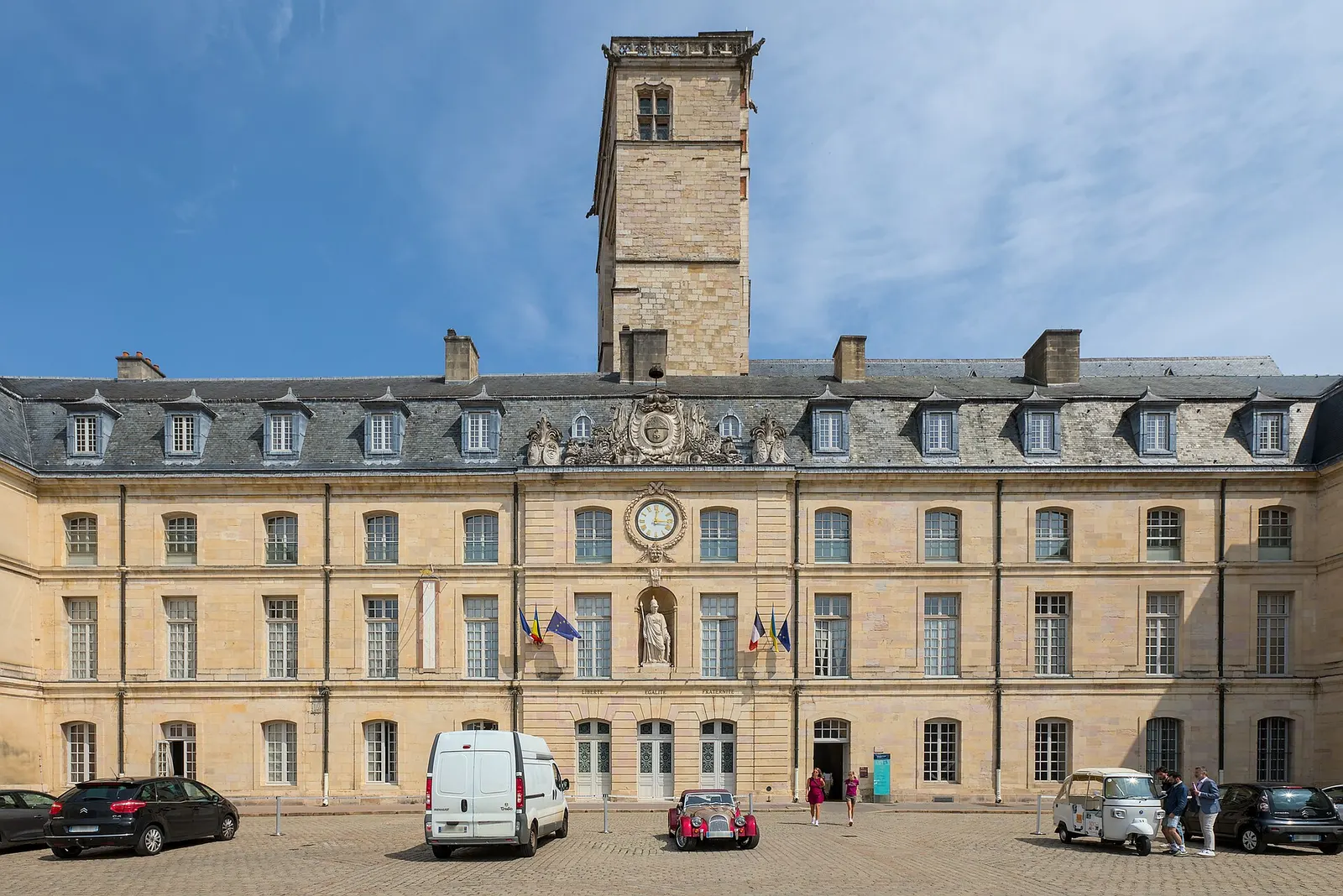
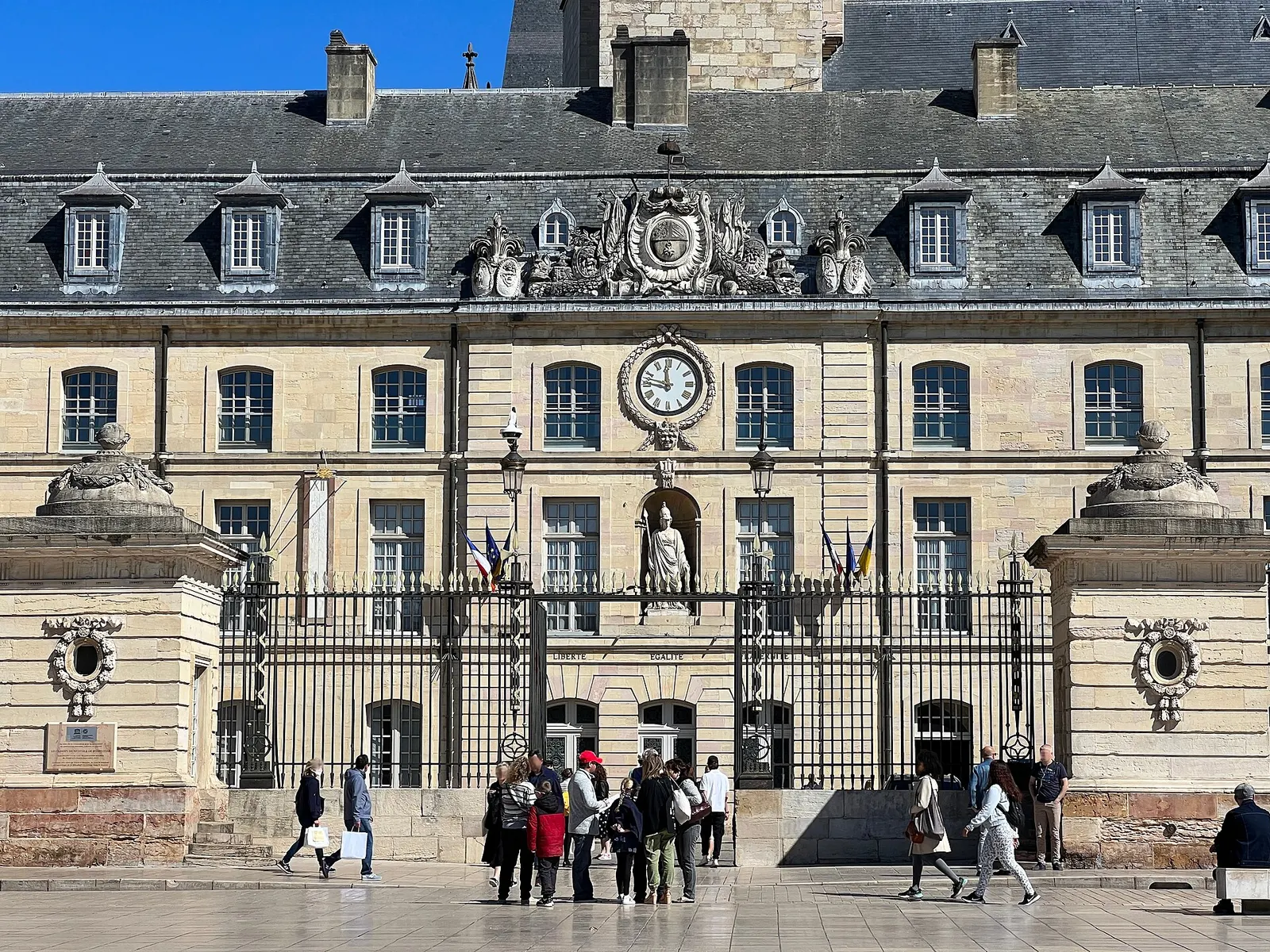
The dukes' capital: the ducal palace, the Owl Trail, Les Halles, and the start of the Route des Grands Crus.
1 km awayMarsannay-la-Côte
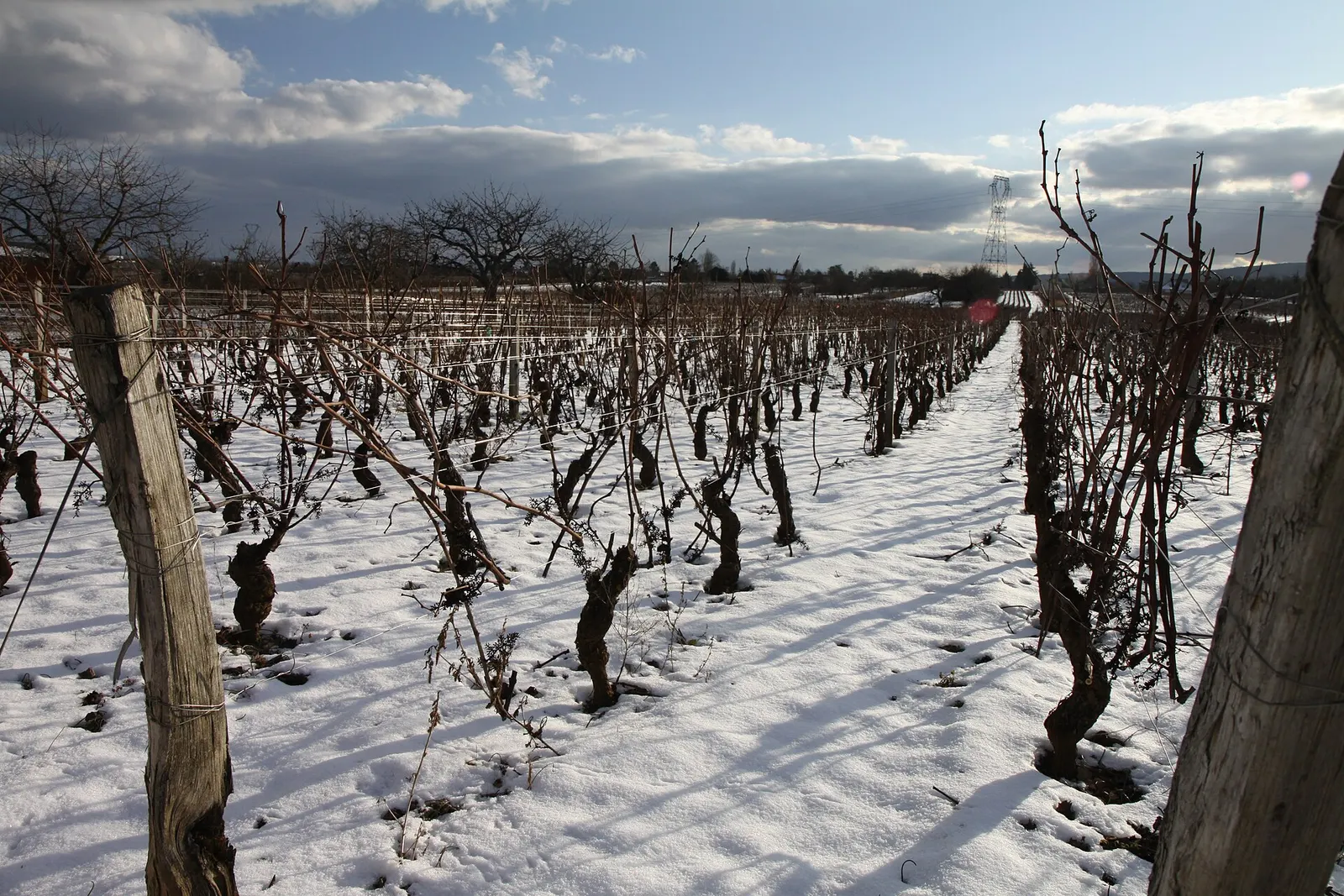
Red, white and rosé under one village name, where the Côte de Nuits begins at the edge of Dijon.
7 km awayFixin
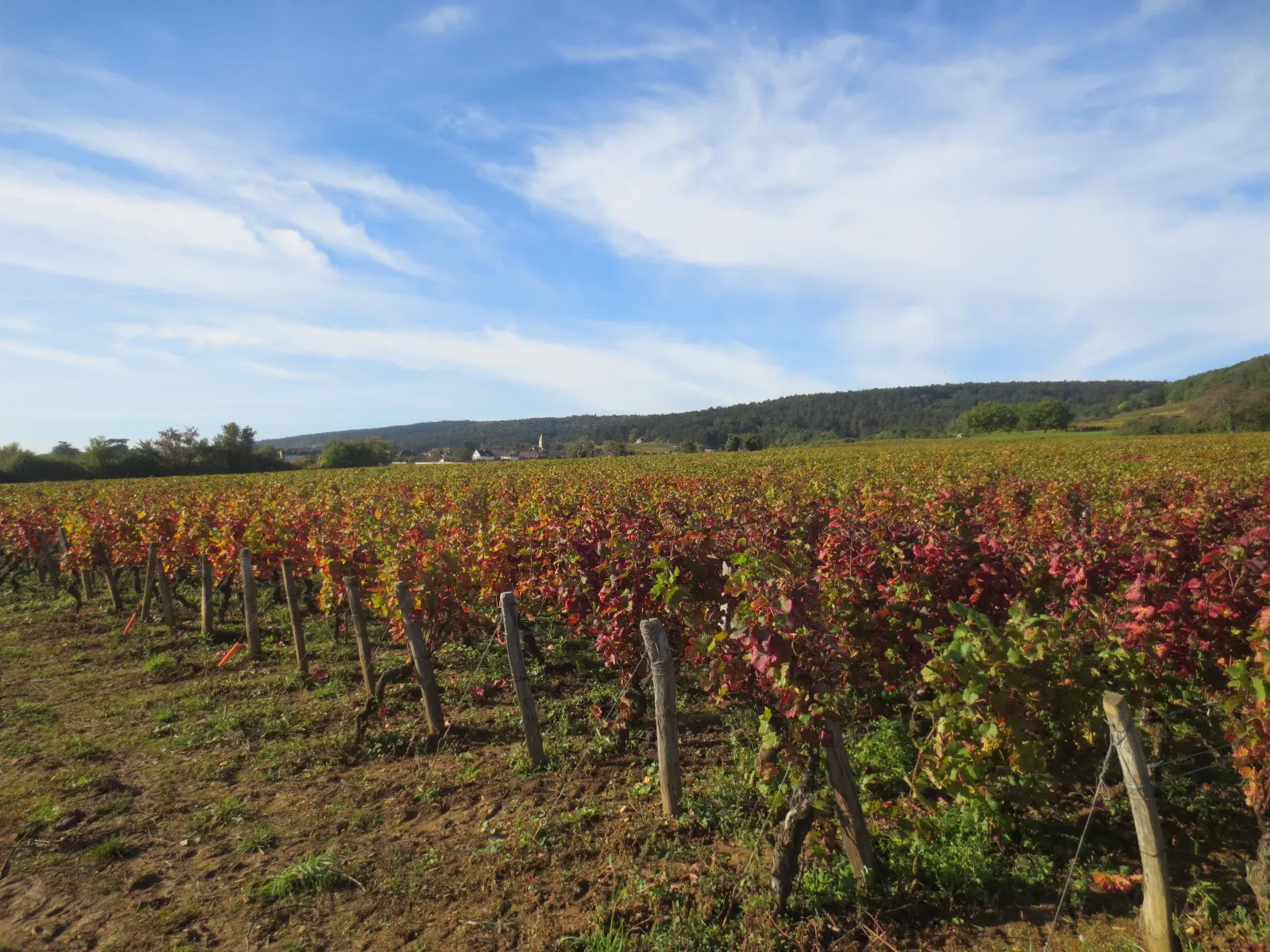
Napoleon's bronze in a wooded park above the vines, a Romanesque church in Fixey and dark reds built to age.
10 km away
- Classical château
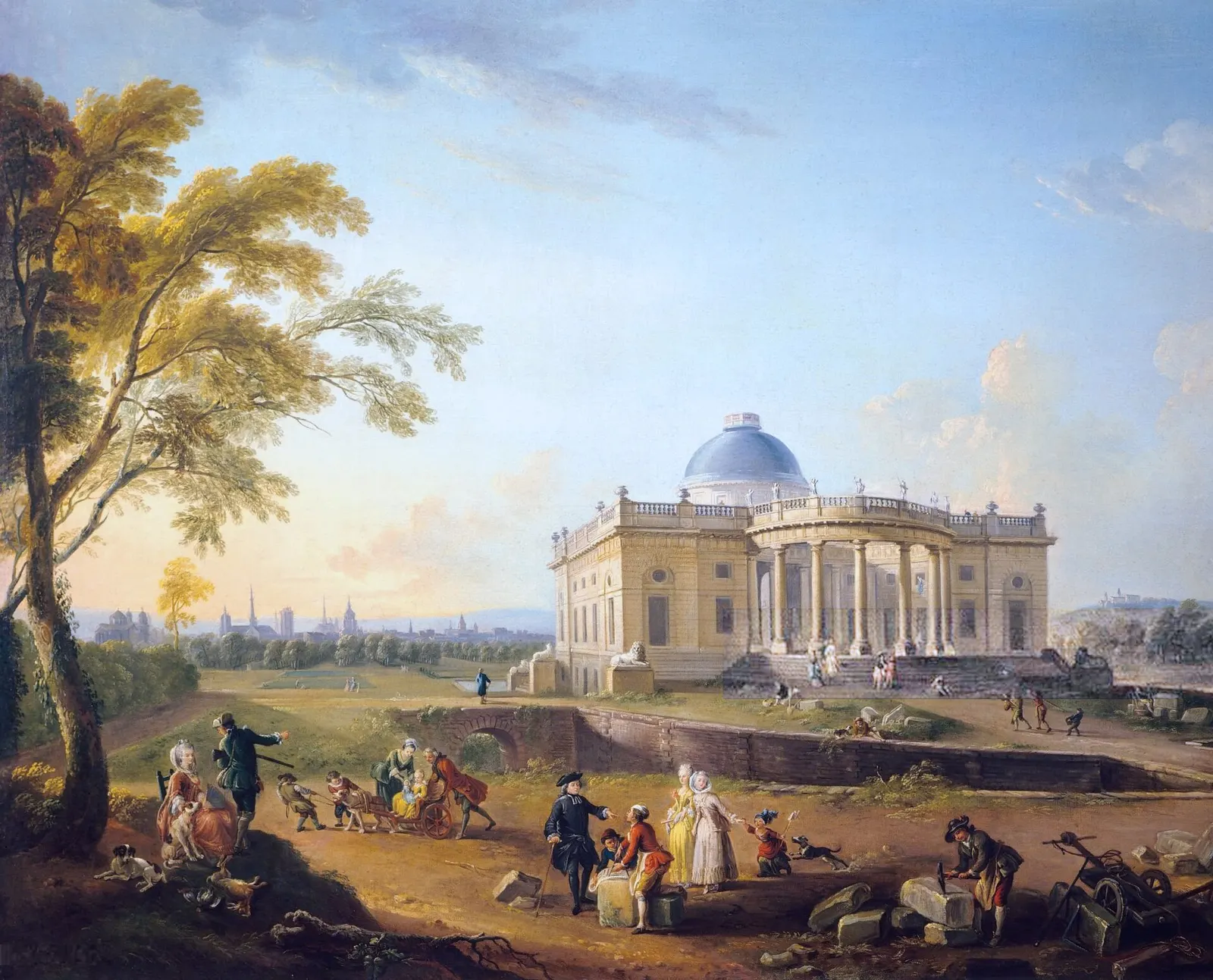
Château de Montmusard
The last wing of De Wailly's domed pleasure house, best seen through its painting in Dijon's fine-arts museum.
1 km away - Medieval fortress
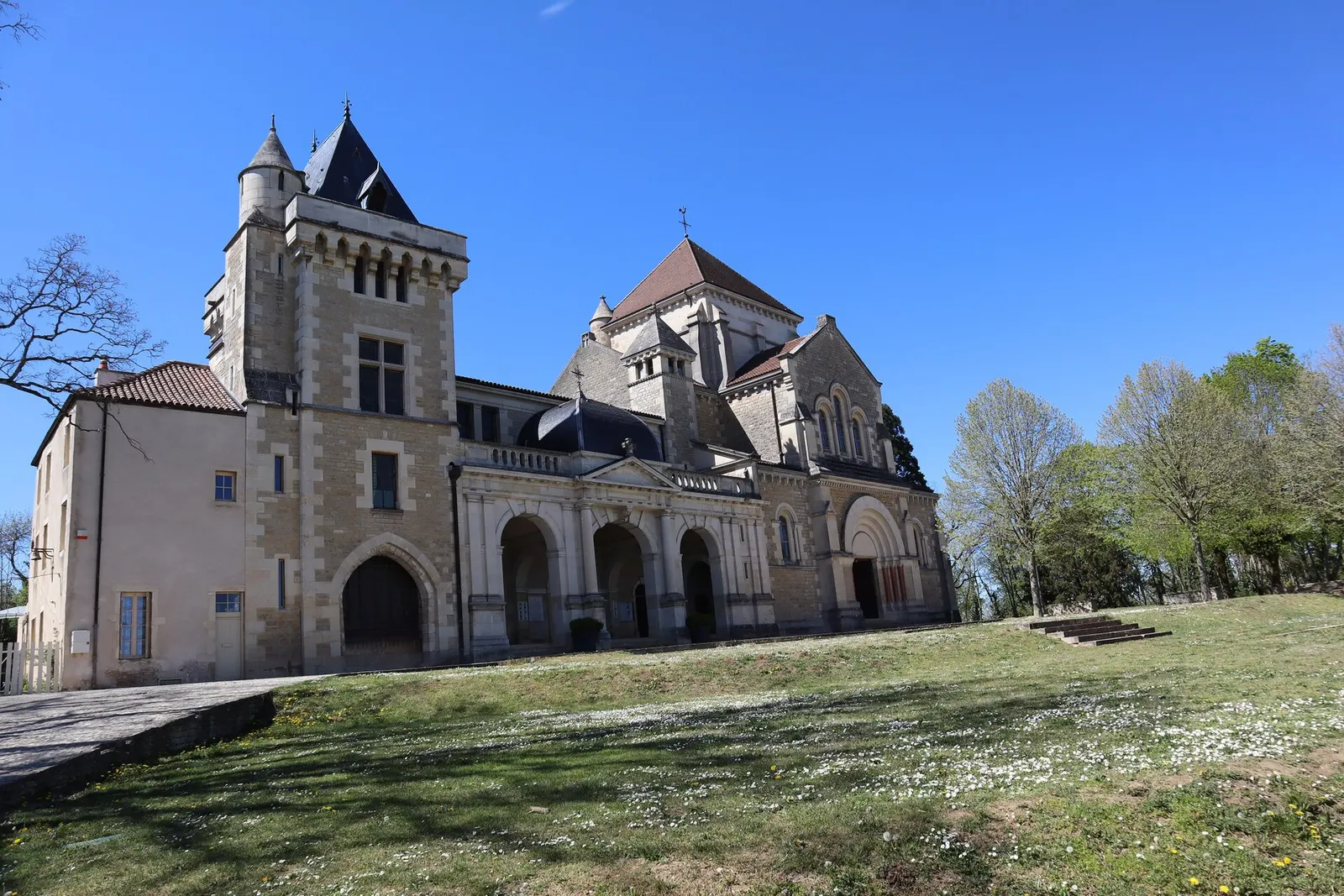
Château de Fontaine-lès-Dijon (Maison natale de saint Bernard)
Saint Bernard's birthplace on a hilltop above Dijon: royal chapels, a basilica and a view, under restoration.
3 km away - Wine château
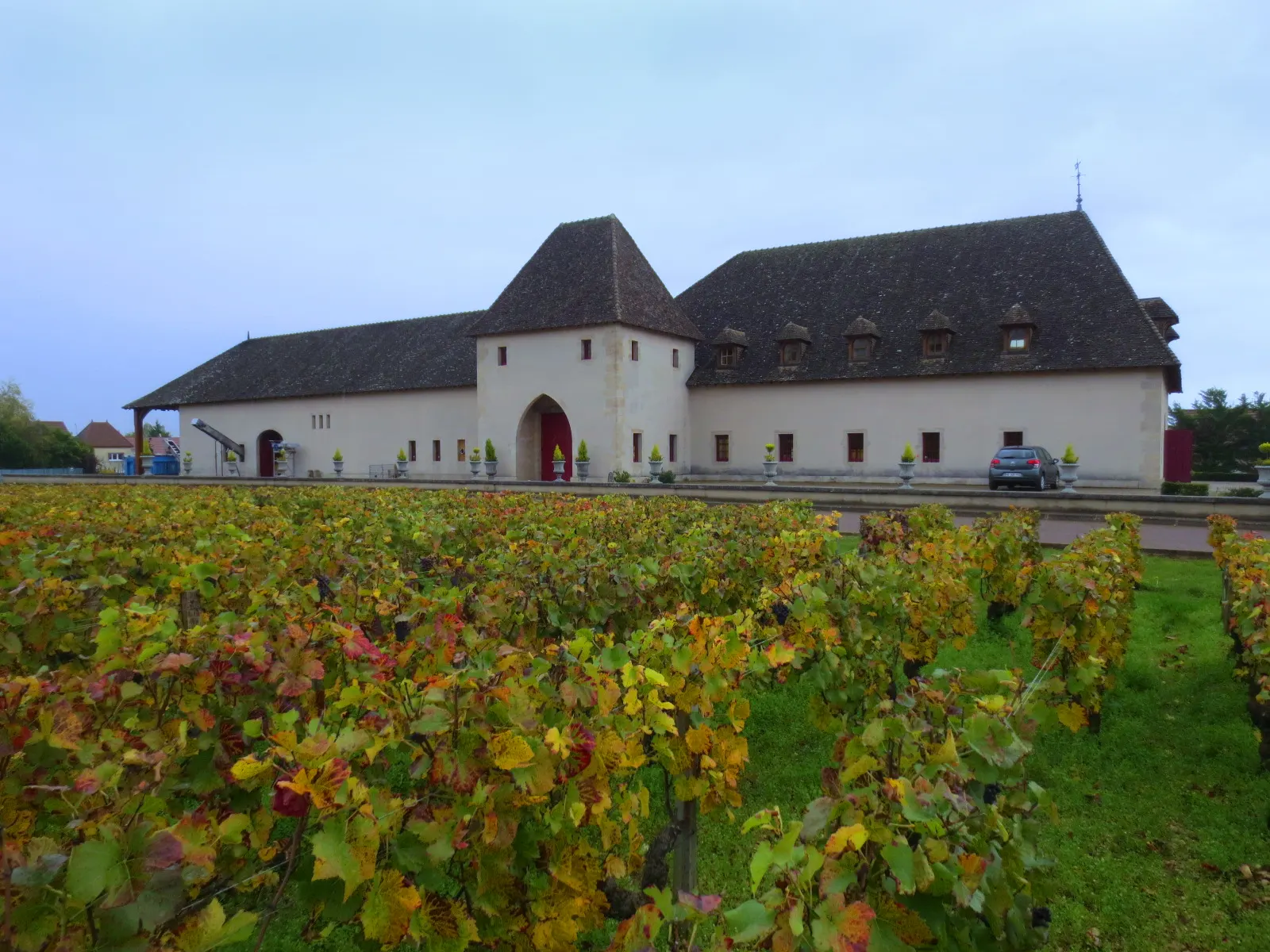
Château de Marsannay
A 1990 winery at the edge of Dijon: cellars of 500 barrels and plots from Chambertin to Échezeaux.
7 km away
- Activity
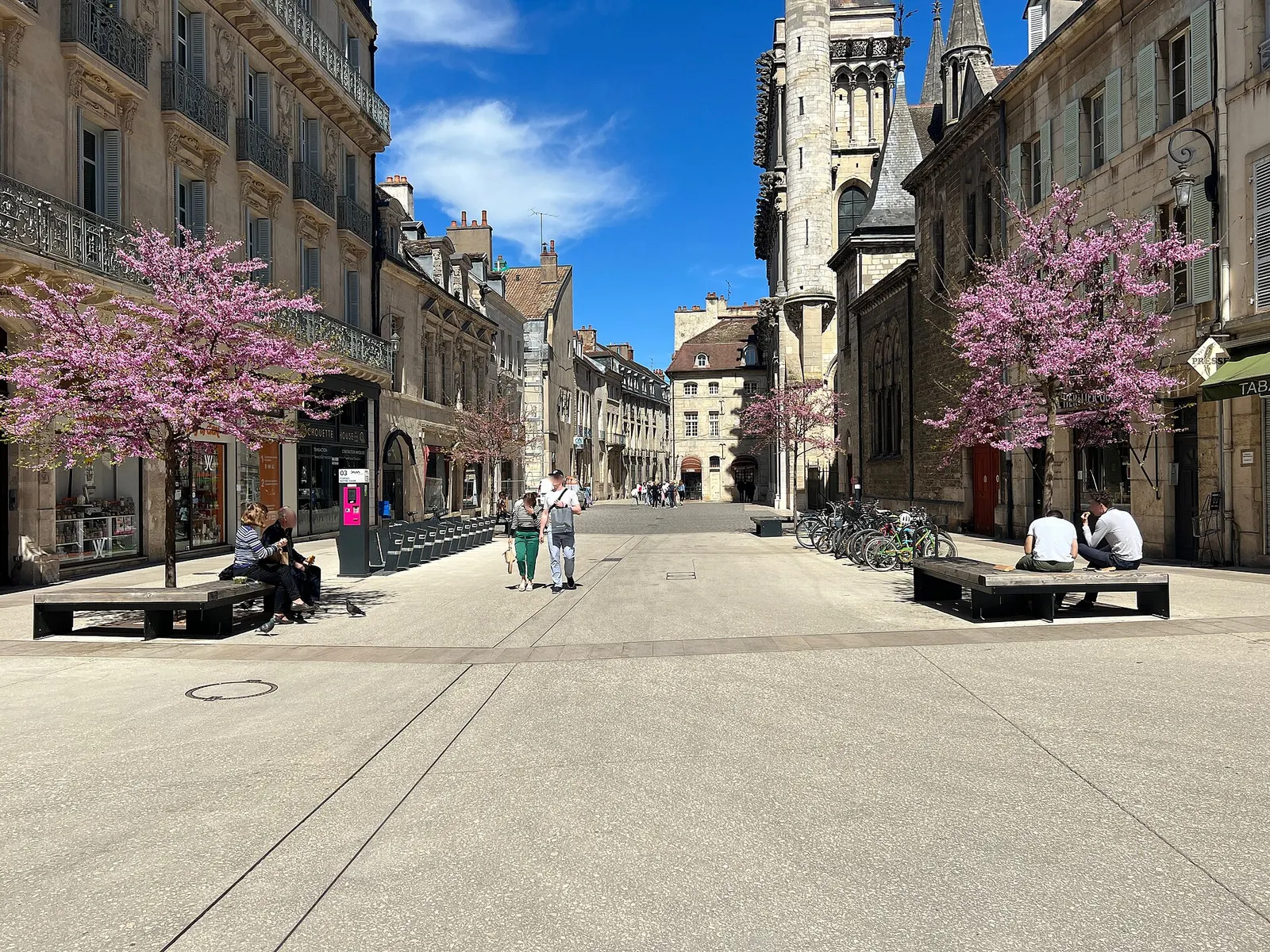
The Owl’s Trail Parcours de la Chouette
Bronze owl arrows in the pavement lead you on a free, self-guided loop of 22 stops through old Dijon.
1 km away - Abbey or church
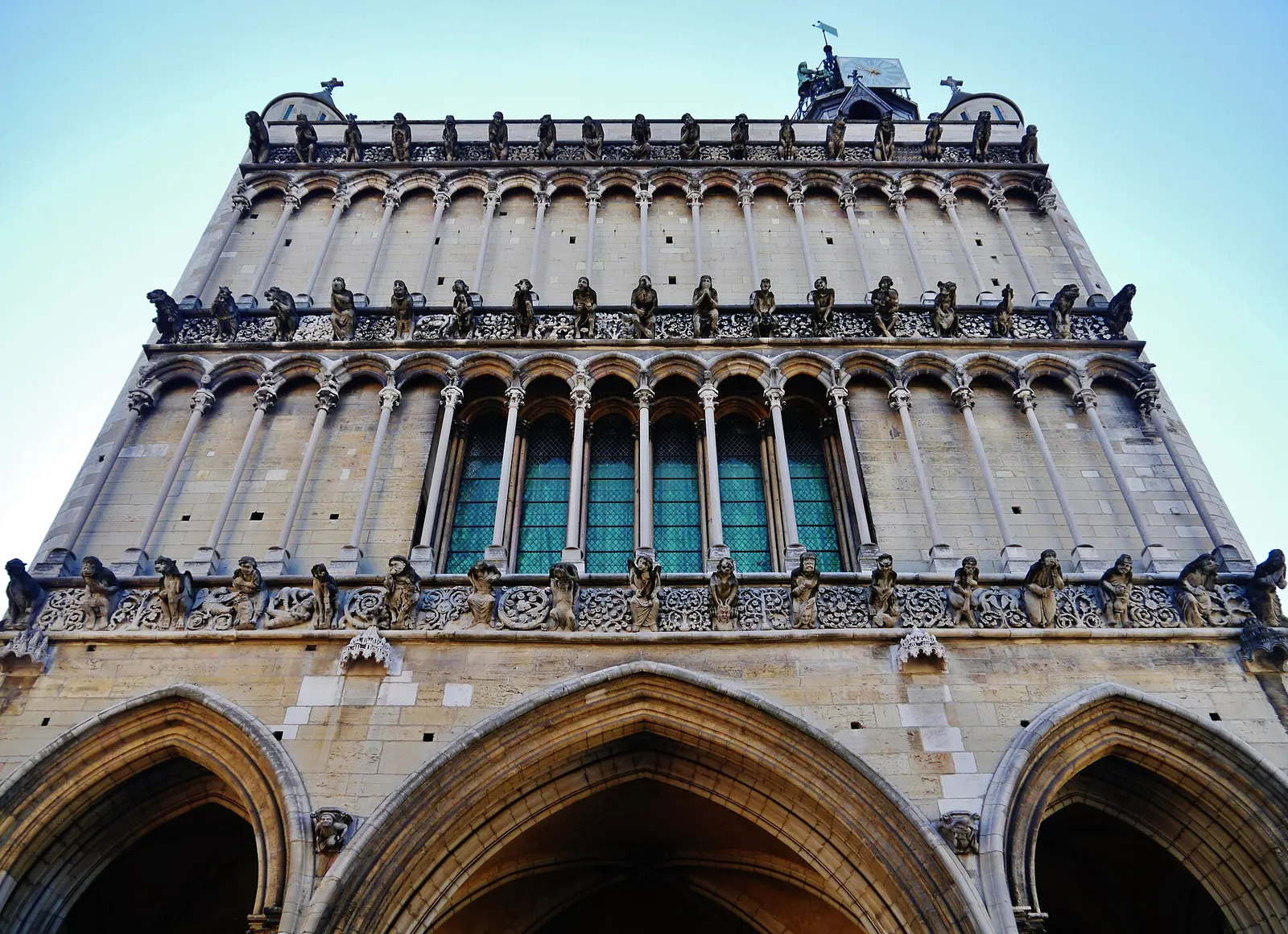
Church of Notre-Dame, Dijon Église Notre-Dame de Dijon
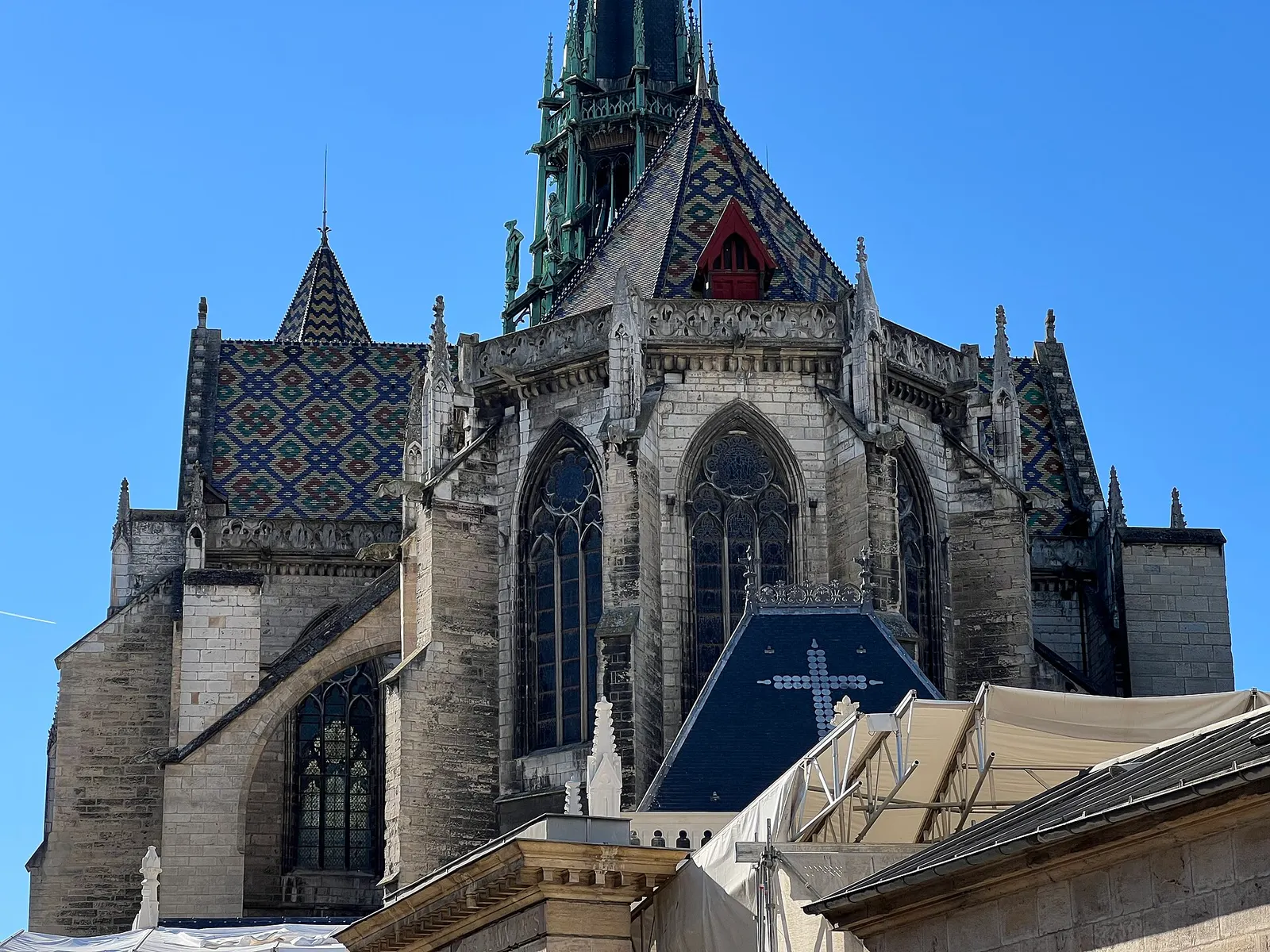
Touch Dijon's lucky stone owl, then watch the Jacquemart family strike the hours above 51 false gargoyles.
1 km away - Heritage site
Tower of Philip the Good Tour Philippe le Bon
Climb 316 steps up the dukes' 46-metre tower for a sweeping view over Dijon's rooftops.
1 km away
- Dijon
Loiseau des Ducs
Bernard Loiseau's sauces and fine Burgundy by the glass, under the vaults of a 16th-century mansion
1 km away - Dijon
La Maison des Cariatides
Carved caryatids on the façade, a Le Bristol chef couple inside: Burgundy with a Mediterranean accent
1 km away - Dijon
William Frachot
Dijon's two-star occasion: Burgundy's classic dishes taken apart and rebuilt, in a coaching inn of 1863
1 km away
- Christmas
Dijon Christmas market Les Fééries de Noël de Dijon
Usually from the last Saturday of November to the first Sunday of JanuaryDijon - Tradition
Fête de la Pressée
Usually the third weekend of September, during the European Heritage DaysChenôve - Wine festival
Salon des Vignerons Indépendants de Bourgogne et du Jura
Usually a weekend in OctoberDijon - Food & markets
Foire internationale et gastronomique de Dijon
Usually twelve days spanning late October and early November, around the 11 November holidayDijon
Questions
Rue des Forges is about 45 min from Beaune by road (48 km). The fares for the car are under “Getting there”, above.
Did you know? Hugues Aubriot, born around 1320 in the house at No. 40, became provost of Paris under Charles V and laid the first stone of the Bastille on 22 April 1370.
Sources
Rue des Forges with a private driver
A fixed fare for the car · 1–4 guests · tolls and parking included