What you will see
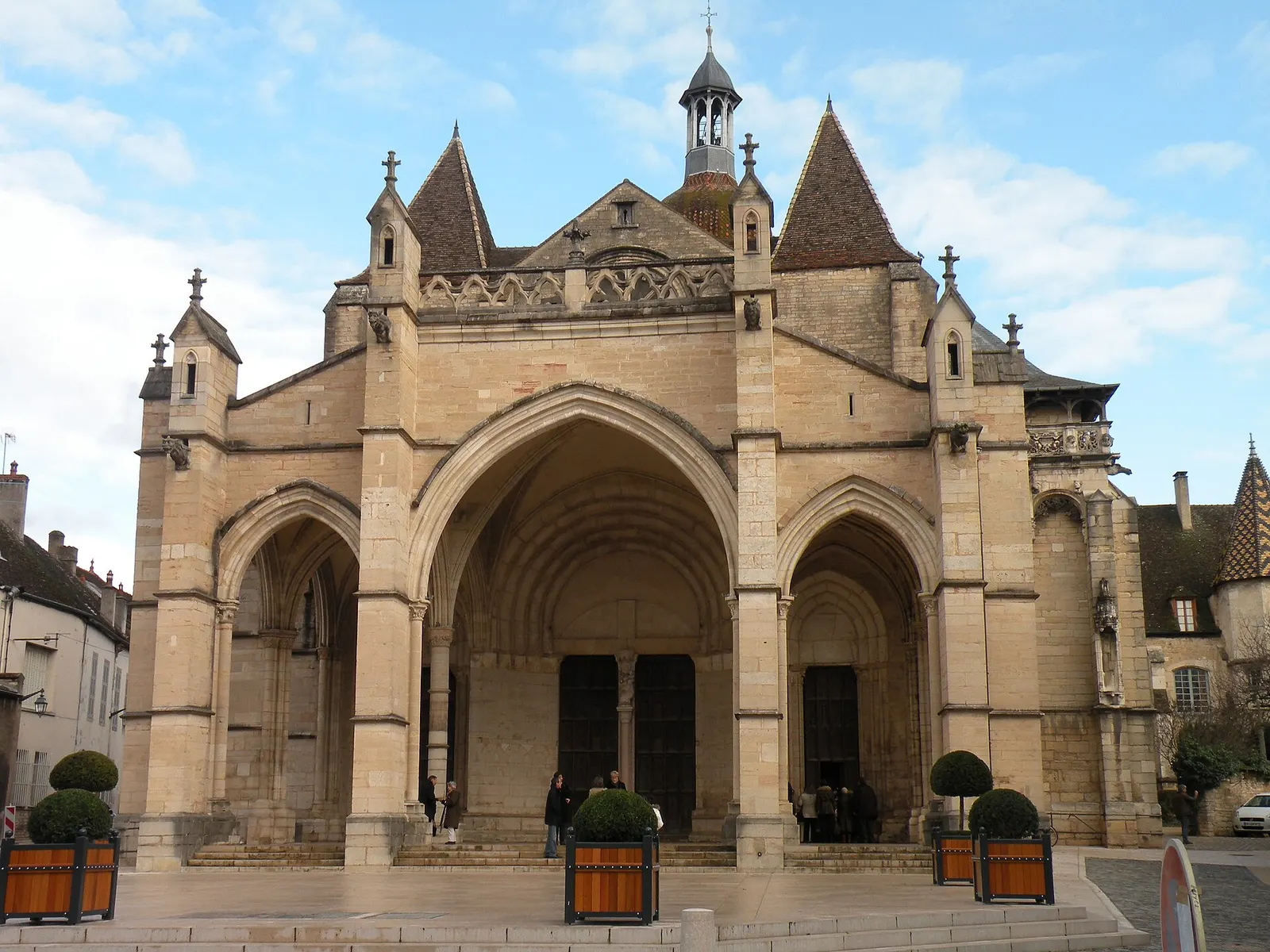
Walk through the vaulted porch into a tall nave covered by pointed barrel vaults. Look for the 12th-century Black Virgin, the painted 17th-century organ and the wall paintings of the side chapels. A door in one transept opens onto a surviving gallery of the old cloister. The highlight is the choir, where five tapestries, each about six metres long, tell the life of Mary in scenes set under arcades.
History
The canons of Notre-Dame began the church in the middle of the 12th century, building from east to west, and finished it early in the 13th century. The porch followed in the mid-13th century. After a fire in 1272, the upper apse received large Gothic windows and flying buttresses. Chapels were added until the 16th century, among them the Saint-Léger chapel with its wall paintings and the Bouton chapel, built between 1529 and 1533.
Between 1580 and 1588 the tower received its distinctive imperial-style roof, designed by Hugues Sambin. The Revolution destroyed the statues of the portal and much of the furnishings. Viollet-le-Duc drew up a restoration plan in 1844, and the work was carried out from 1860 under Maurice Ouradou. The church has been a listed historic monument since 1840. Its organ, first built in the 17th century and altered several times, is counted among the finest in Burgundy.
The tapestries were given in 1500 by Hugues Le Coq, archdeacon of Beaune, who is portrayed on two of the five pieces. Back in 1474 the chapter had ordered designs for stories of Our Lady from the Dijon painter Pierre Spicre, although it is uncertain whether these tapestries follow them. The set was listed as a historic object in 1891 and restored in the 1990s.